The renowned Everest Region is home to countless peaks and high passes. From the famed Everest Base Camp and Kalapatthar viewpoint, the Everest region also shelters a locally popular three-pass itinerary that passes through Renjo La Pass, Cho La Pass, and Kongma La Pass. A difficult yet equally rewarding journey through the whole of the Everest Circuit.


Everest Three Passes Trek - Top Rated Adventurous Trek in 2027
Duration
17 Days
Trip Grade
Strenuous
Maximum Altitude
5545 Meter
Group Size
Min 2 Person
Activities
Trekking
Starts
Kathmandu
Ends
Kathmandu
Best Time
Sept, Oct, Nov, April & May
Everest Three Passes Trek Overview
Everest is home to mysteries, stories, and memories of countless entities. A single mountain that holds significant importance in the hearts of travelers all over the world. A journey that defines travelling in the Himalayas itself.
Located in northeastern Nepal, Everest is part of the greater Khumbu Region of Solukhumbu District. The region became a trekker’s hub after the successful historic ascent of Mount Everest by Sir Edmund Hillary and Tenzing Norgay Sherpa. This route later became the Hillary Steps. Protected and conserved under the laws of Everest National Park, the region shelters ancient history and the liveliness of the Sherpas and their visitors. The trek to base camp itself is an enlightening journey for many, while those seeking thrilling adventure plan more challenging trails such as the Three Passes trek.
The Everest Three Passes trek is a carefully knitted itinerary, focused on pure adventure and an immersive experience of the whole Khumbu Region. The trail follows the standard Everest Base Camp route, passing through the bustling streets of Namche, full of Sherpas and travelers alike. With gradual ascent and acclimatization, the trail goes along prayer flags, mani walls, working yaks, and the world-famous monasteries of Tengboche, Pangboche, and Dingboche. The monasteries hold relics of the Yeti, a mythical creature that dwells in the Himalayas, whose presence marks a blessing and a curse if seen. After Dingboche, the trail winds up and takes a different route, passing the less-traveled yet memorable village of Chukung and the high pass of Kongma La. The route then continues, catching the trails to the viewpoint of Kalapatthar and Everest Base Camp. After that, the trail circles counterclockwise to Cho La, Gokyo, and Rengjo La. The trek ends with a transition from the Himalayas' quietness to the bustling town of Namche and Lukla, marking the end of moments waiting to be turned into memories.
Why three passes on the trek route to the Everest Base Camp?
The standard itinerary to the Everest Base Camp is already a popular trekking trail for its culturally immersive experience of Sherpa settlements and their ancient history and religious significance. The Everest region is a fragment of the greater Khumbu region, and the trail to base camp is part of the trekking routes in the Khumbu. The trail covers most of the highlights of the trek, from the bustling cultural streets of villages to ancient Tibetan Buddhist monasteries and the unparalleled scenery of the Himalayan peaks across all of Khumbu. So, what makes the Three Passes Trek different and worth the value in 2027?
Although widely popular, the customized route to Everest Base Camp covers the region's natural and cultural aspects. The three-pass trekking route offers more insight and deep exploration of the whole trekking region. Our 17-day three-pass itinerary follows a round trek procedure, from low altitude and valleys to highlands and base camps, while also exploring the less-traveled villages and trails. The trek takes you through the world-famous monasteries, viewpoints, towns, and the turquoise lake of Gokyo Valley, with an otherworldly adventure of Everest’s three greatest passes: Kongma La, Cho La, and Renjo La.
The Everest Three Passes trek is the perfect choice for those seeking thrilling adventure, exploration, and scenic trails lined with prayer flags and mani walls. An ideal 18-day journey for spiritual and physical enlightenment.
Everest Three Passes Trek Cost comprehension for 2027 and 2028
A standard packaged trip cost varies depending on service choices and personal requirements. A package trip focused on providing services always aims for quality service at an affordable price. The cost covers the basic lodging, 3 meals a day, documents, permits, and a licensed trek guide. Such an inclusive packaged trip ranges from USD 1300 to USD 2300. Why?
The services provided during the trek on the route are no different across every cost range. The real differences are seen in price details or services included. The cost ranges due to additional services, such as hotel booking in Kathmandu, airport pick-up and drop-off facilities, and private jeep transportation or flight services from Kathmandu to Manthali. The cost is also affected by the number of trekking days, since the longer the duration of the trek is, the more expenses need to be covered.
Booking choices and cost limiting
Trekking is an adventure done with companions, be it family or friends, a large group or a small one. It is also a retreat for physical and spiritual tranquility, booked for private and comfort seekers. The booking choice depends on your preference and the purpose of your trip; that choice also reduces the cost of the trek.
Booking in large numbers, 8-10 or more, is provided with additional benefits or a major discount. It is beneficial for those who seek to conquer the high passes of the Himalayas with friends and family in a group. With every additional trekker, the price becomes more affordable. Comfort trekkers also pay a fair price for quality services.
Booking Procedure for Wilderness Excursion
Booking a trip with us is simple; in just a few steps, your custom-made trip will be ready and depart on the day of your choice. You may also pay only a 15% advance of the total cost for booking your trip and pay the rest before the date of departure. The booking procedure continues with an advance payment for the trek.
- Click "Book This Trip."
- Fill in the form and choose your add-ons, if required. (In case there are no additional services that you personally require in the add-on, you can let us.
- Pay the advance.
- Enjoy the trip.
Fixed trek departure and instant booking
Wilderness Excursion has a fixed departure on each given date for those looking to book and depart on short notice. The trek follows the standard Manaslu Circuit Trek itinerary and includes the services listed in the cost details. If any additional services, such as private transportation, hotel bookings, and pickup in Kathmandu, are needed, they can also be added during the booking, and any other services can be requested in the booking note, which will be arranged subsequently.
Enhance your trekking by adding peak climbing expeditions
To enhance this Everest ultimate trekking adventure, many people add peak climbing that provides two adventure experiences in one. We have a professionally crafted combo package of Everest Base Camp Trek with Island Peak Climbing with 90% success guaranteed.
Many others also combine EBC Trek with Lobuche East Peak Climbing, which brings you to its summit of 6,119 meters (20,075 feet). This provides you with both trekking and climbing experience in a single trip.
Itinerary
Expand allOur very first day of the Everest Three Pass Trek itinerary starts today by driving to Kathmandu domestic airport to catch a scenic mountain flight to Lukla and then trekking to Phakding.
Your three-pass trek assigned guide by Wilderness Excursion will pick you up from your hotel at around 6:00 AM and take a short drive to the domestic terminal Airport for a thrilling mountain flight, which takes 35 minutes, landing at Lukla on a precarious, tiny airstrip of tarmac overlooking the Dudh Koshi River.
Upon landing at Lukla, we meet our helpers and then have lunch there, then begin the hike on a pleasant trail descending Chauri Kharka and continue walking to Phakding. This trek winds through the farmlands of the Sherpa people, passing a series of traditional villages along the way. Today, many Sherpas rely entirely on trekking for their livelihood, and the trail offers plenty of chances to stop at local tea houses for refreshments and conversation with residents.
Along the route, we’ll encounter prayer engraved stones walls of Tibetan script, and countless strings of prayer flags fluttering overhead. Our day ends at a lodge beside the Dudh Koshi River at the beautiful hamlet of Phakding, where we’ll spend the first night of our three-pass trek.
Today begins with the gentle sounds of birdsong and the steady murmur of the Dudhkoshi River, a natural wake-up call that sets a peaceful tone for the day. After a hearty breakfast, we set off along a trail that winds through fragrant pine forests, hugging the riverbank and crossing numerous suspension bridges along the way.
The most iconic of these is the Hillary Suspension Bridge, named in honor of Sir Edmund Hillary, who—alongside Sherpa Tenzing Norgay—made history as the first climber to summit Mount Everest. As we continue, the trail opens up to reveal sweeping views of Mt. Thamserku (6,618 m), before guiding us through the charming villages of Benkar, Chumoa, and Monjo, just shy of the entrance to Sagarmatha National Park.
Our final village before the ascent is Jorsale for the lunch break, after which we push deeper into the forest, crossing several more bridges until we reach the confluence of the Dudh Koshi and Bhote Koshi rivers. From here, a steep 2 to 3 hours hike up rewards us with our first breathtaking glimpse of Mt. Everest in our Everest Three Pass Trek with Wilderness Excursion, poised dramatically above the Lhotse-Nuptse ridge. At Chautara (the stone-built resting place), we pause once more to capture the unfolding panorama with our cameras.
We then continue for roughly another hour and a half, finally arriving at Namche Bazaar—the vibrant gateway to various Everest trekking Routes and the region’s bustling trading heart. Tonight, we rest in this iconic mountain hub, surrounded by the spirit of the Himalayas.
This day is separated as an extra day to acclimatize at Namche Bazaar at an altitude of 3440 meter above sea level. Why is it important to rest and take an acclimatization day here?
It is very important for the trekkers to schedule an ‘acclimatization day’ to acclimatize our bodies and to avoid Altitude Mountain Sickness, generally known as AMS. Higher in the mountains above 3000, the air is thin, but our body as capability to adapt to its environment if we allow the time without rush so taking proper acclimatization is crucial for a successful trek of happy ending.
And taking a rest (acclimatize) never means we have to stop walking, but it is always advised to hike to a higher elevation and sleep at lower so we can go hike and explore Everest view hotel for panoramic and spectacular view of mountains, walk to twin Sherpa village (Khumjung and Khunde) and vist Sherpa museum or stroll around at Namche Bazar. There are several restaurants, lodges, bars, boutiques, souvenir shops, groceries, and even a bakery in Namche Bazaar.
Leaving the Sherpa town of Namche Bazaar behind, the trail continues up until reaching Kyanjuma (also spelled Kyangjuma), and it takes about a 1.5-hour pleasant walk to Sanasa on a pleasant trail through the mountain slope, offering fresh air and views of Everest, Lhotse, Amadanalm, and several other peaks. Sanasa is the crossroad that leads to Gokyo Valley and Everest Base Camp. Then the journey of the three-pass trek via the Everest Base Camp trail drops down to the Dudh Kosi River and crosses by suspension bridge at Phungi Thengna. We can see a series of picturesque water-driven prayer wheels. Then your guide from Wilderness Excursion will probably arrange a lunch break here if you are hungry.
Today, you have chances of spotting wildlife, such as musk deer, Himalayan Thar, and colorful pheasants from Kyangjuma to Phungi Tenga section. Then the steep ascent trail for about 2 hours brings us to Tengboche - sitting on a prominent forested ridge at 3,867 meters (12,687 feet) in the Khumbu region of eastern Nepal. Upon arrival, check in, and after a nice cup of tea, we can go explore the region’s most active Buddhist monastery and surrounding beauty.
The monks open the Gompa at 3 pm for visitors, and we can also visit the sacred land exhibition center. In the afternoon, our guide will arrange a visit to the monastery to witness a religious ceremony by the monks. Again, the views of the mountains are fabulous all the time when weather permits. We get to see some of the most spectacular views of Mt. Everest, Mt. Nuptse, Mt. Lhotse, Mt. Ama Dablam, and a close-up view of Thamserku (6608m). We spend the night at a lodge here in Tengboche.
Wake up and enjoy the brilliant sunrise on Mount Everest, and the monastery complex is even more fabulous, giving you a perfect photo opportunity of the surrounding scenery and monuments. After breakfast, with mountains in the background, we hike toward Dingboche, leaving Tengboche. The trail first goes gradually downhill to Deboche, we the cross suspension bridge over Bhote Koshi, and then take the higher trail that provides us with better views as we head to Lower Pangboche village.
After breakfast, with the mountains standing tall behind us, we set out from Tengboche and begin our trek toward Dingboche. The trail eases downhill at first, leading us through serene forests to Deboche, where we cross a suspension bridge over the Bhote Koshi River. From there, we ascend onto a higher path that rewards us with increasingly expansive views as we make our way toward Lower Pangboche village. Along the route, we pass through several monuments like chortens and mani walls, stone-carved prayers etched into the landscape—and wander through several small, traditional settlements. Our guide from Wilderness Excursion will arrange a nice lunch break, and enjoy a close-up view of the majestic Mount Ama Dablam towering just in front of us.
In the afternoon, our journey of Everest Three Pass Trek resumes again toward north-west Dingboche, though we also have the option to take an eastward trail that runs beneath the soaring north face of Ama Dablam. The walking remains relatively gentle as we enter the widening Imja Valley, where the terrain gradually opens up the closer we get to the Lobuche River.
After descending to the riverbank, we face the steepest climb of the day—a steady push upward that finally brings us into Dingboche at the elevation of 4410 m. This high-altitude settlement is distinctive for its stone-walled fields, carefully built to protect barley, buckwheat, and potato crops from grazing animals and fierce winds. As night falls, we settle in for a well-earned rest in this unique Himalayan village.
This is second acclimatization day today, it is very essential to allow another acclimatization day for a our smooth three pass trek without altitude related problem. This will allow us to acclimatize before climbing high pass all above 5000 m passes. Our Everest Three Pass trek guide will arrange a short day hike to the Nangkartshang Peak at the height of 5100 meters which is 700 meter climbing from Dingboche which offers some amazing views of Mt. Makalu and helps us to acclimatize by hike higher and sleep lower method.
Medical experts recommend being active rather than sit idle when spending time during this process of acclimatization and this is more crucial to undertake Everest 3 Passes (also called Ultimate Everest Circuit Trek). Overnight in Dingboche in teahouse.
From Dingboche to Chhukung Village, it is a short trek, so today we can trek leisurely. Chhukung is the last village of the Imja Valley before the Island Peak (also known as Imja Tse ), with its magnificent view of snowcapped mountains, with Mt. Makalu in the east. After arriving at Chhukung, we can rest or hike to Chhukung Ri for more amazing views of the mountains. It will also allow us time to prepare for our early morning departure to Kongma-la Pass.
Today, we cross Kongmala Pass (5535m), one of the three high passes. Our day at Chhukung begins very early at around 5 AM, trekking along a grassy meadow and an icy path, and then a rocky trail section beneath Kongma-La Pass and its Kongma Peak– also known as Mehra Peak.
We then reach Kongma-La Pass at 5,535 m, nestled between Mt Nuptse Wall, Mihara, and Pokalde peaks. We share our joy of being successful at the Kongma La Pass Top. Our guide manages some hot drinks and packed meals for this day.
After a strenuous climb towards the Khumbu Glacier and moraine (rocky ground), we take a fairly steep trail up to the base of the Khumbu Glacier, arriving in Lobuche for an overnight stop in the comfort of a warm lodge.
After breakfast at Lobuche, we set off to Gorakshep, which is an exhilarating journey that brings us closer to Everest Base Camp. We take it as a day excursion in the afternoon; it is a journey that will test your endurance and reward you when you find yourself at the Base Camp of the world’s tallest peak. The trek covers a distance of approximately 14.5 kilometers, taking 7 hours including the EBC excursion.
As you climb through the rugged terrain, you'll be captivated by panoramic vistas of snow-capped peaks and the magnificent Khumbu Icefall. Upon reaching Everest Base Camp at 5364 meters, you'll feel a sense of accomplishment amidst the towering giants of the Himalayas. After enjoying the stunning scenery, retrace to Gorak Shep for a well-deserved rest, reflecting on the day's awe-inspiring exploration. In the evening, after dinner, our guide will brief you for early morning Kalapatthar hiking, which is one of the highlights of our Everest 3 Passes Trek.
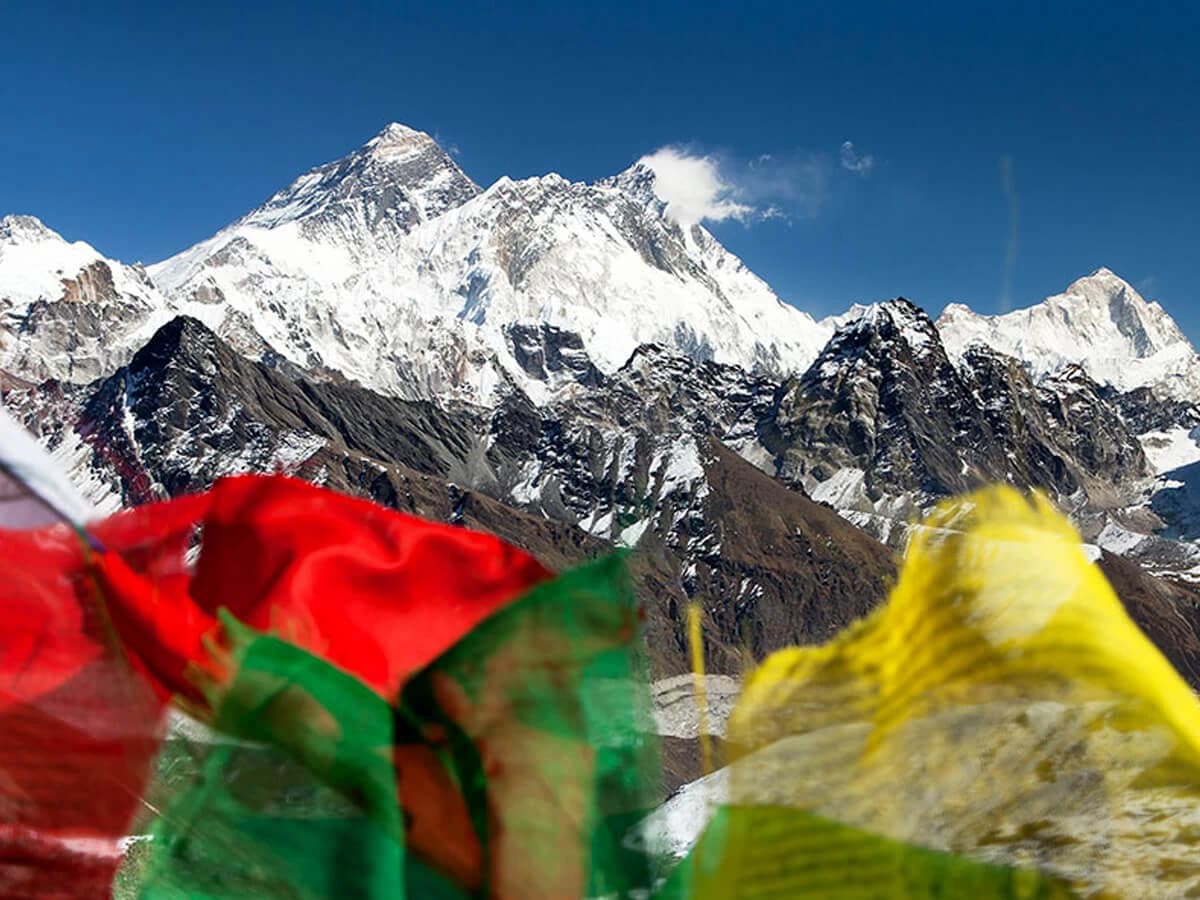
Today, before dawn, your guide will lead you hiking up to Kalapatthar, which sits at an altitude of 5545m; meaning black stone. It is a 400m ascent from Gorakshep to Kalapatthar viewpoint. Climbing about 1.5 hours brings us to the summit, offering the view is 360˙degreet view of Mt. Everest, Nuptse, Lhotse, Khumbutse, Pumori, Lingtren, Amadablam, Thamserku, Lobuche Peak, and other peaks all around.
There is also an unobstructed view of sunrise and sunset if you can hike in the evening. If you take an evening excursion for a perfect sunset opportunity, do not commit the mistake of going without a guide. Many people go missing while returning to the tea house at dusk due to finding the trail difficult.
After the worthwhile Kalapatthar excursion, we then walk down to the hotel for breakfast and pack up, and continue our 3-pass trek to Dzongla, passing through Lobuche. It takes about 4 hours to get to Dzongla from Gorakshep. Stay overnight in a lodge.
Another adventurous day starts by rising early. We then trek toward Thangnak (also called Dragnag) and get a wonderful view of Mt Cholatse Peak (6440m). The trail goes in a westward direction from Dzonglha, a pleasnt gradual meadow trail leading high slowly to Chola Pass (5420m).
You may find it a demanding day of our trek as we head to Cho-La Pass, which is the 2nd pass of 3 passes in our Ultimate Everest Circuit Trek. On reaching the highest point of the valley, we begin our trek through the pass, taking in some amazing views of Chola Lake and Mt. Amadablam. The climbing can be quite challenging due to being rugged and with rocks glazed over with ice. Upon reaching the top of the pass, we then head downhill to Thangnak – a more soothing, easy walk
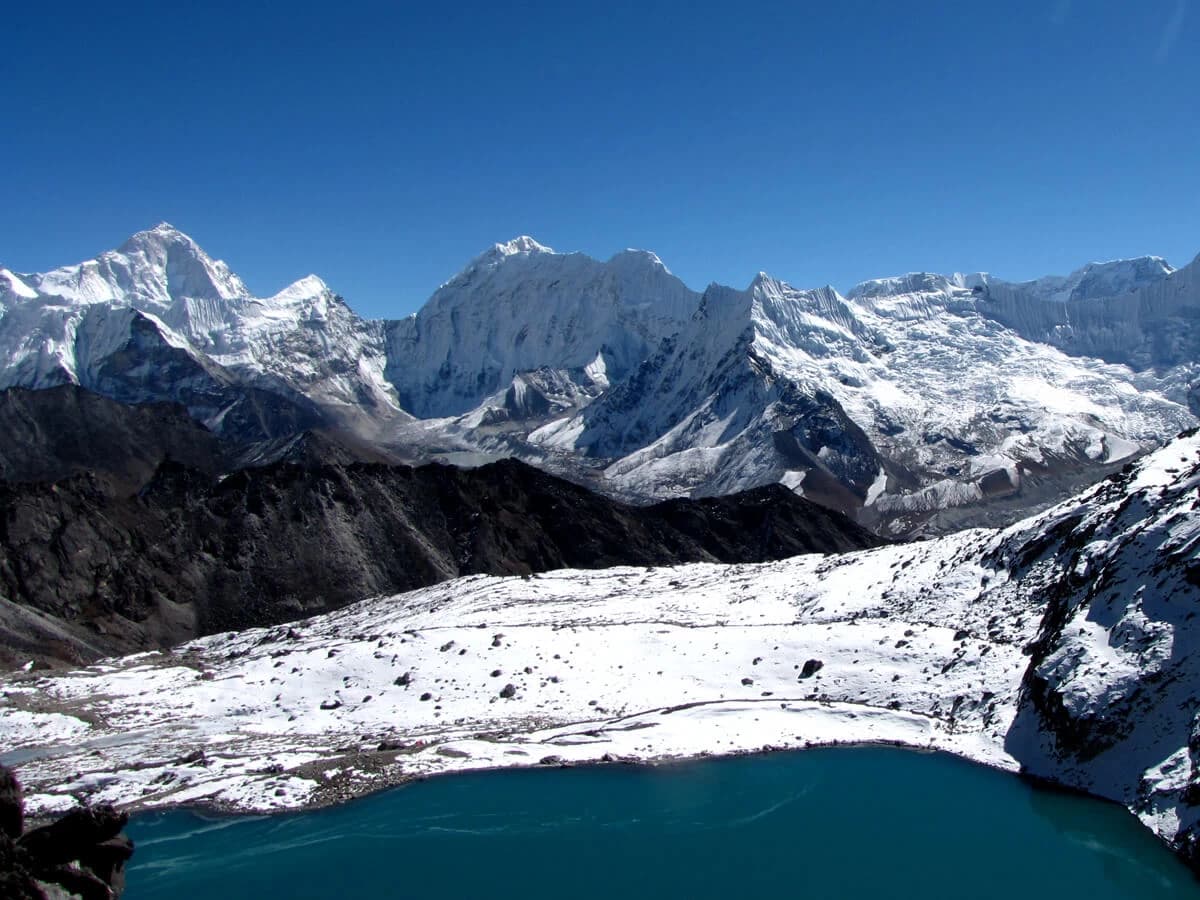
After breakfast, the trail continues gently up and down by crossing the Nzojumba glacier until reaching Gokyo, which takes about 2 and a half hours. Now you have a great view of Cho-Oyu and other peaks. You can see the second lake during the trail before reaching Gokyo. Gokyo Lake is the third lake, which is also known as Dudh Pokhari, meaning milk pond. You have a lunch break and take a rest. After lunch, walk to the fourth or fifth lake with your guide to explore. Stay overnight in the lodge.
Hike up to Gokyo Peak or Gokyo Ri/5357m. About 2 hours climb up; for sun rise view and incredible mountain. The view is far better thanr Kala Pathar in your trekking. You have an excellent view of four of eight, eight-thousanders including Mt Everest/8848m, Mt. Lhotse/8510m, Mt. Makalu/8463, Cho Oyu/8153m, Pumori, Amadablam and other peaks. You have also unobstructed view of Sunrise from the top. Come back to hotel and stay there overnight.
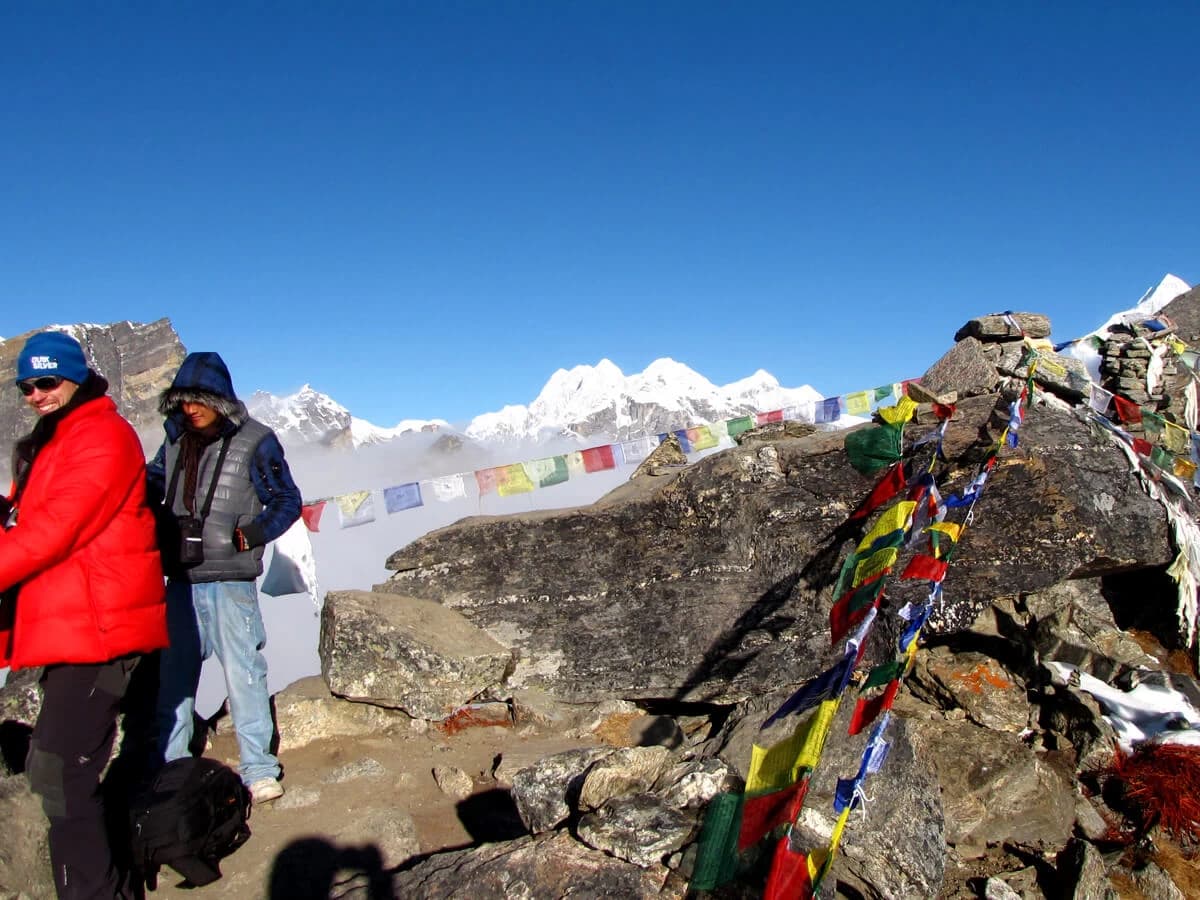
Before dawn, leaving Gokyo, we set out toward our last high pass, following the trail that winds beyond the end of Gokyo Lake. Along the way, we’re treated to breathtaking views of Everest, Cho Oyu, Lhotse, Cholatse, and Taboche — a stunning prelude to the ascent of Renjo La Pass (5417 m).
This stretch is among the most challenging of the entire trek, but reaching the summit rewards us with sweeping 360-degree panoramas of Cho-Oyu and the surrounding giants. After a short rest and taking photos, we descend past the frozen lakes below the pass, then continue on a long downhill trek to the small settlement of Lungdeng, nestled near Nangpa-La Pass. The route finally leads us to Marlung village, where we spend the night perched just above the Bhote Koshi River.
Leaving Marlung behind, we trek toward Namche, and the trail follows a gradually ascending trail until we reach the village of Thame with its own mini hydropower producer. On the trail, we pass several Sherpa villages and pine and rhododendron forests just before reaching Namche Bazaar. Our trek continues as we head back to Monjo near the Sagarmatha National Park, where we stay the night.
After breakfast set off to trek to Lukla via Jorsalle, Manjo, Phakding, Ght and Chhplung. Hang around in Lukla Bazzar. There are bars, cyber café, banks, restaurants, curio shops and groceries. Stay overnight in lodge.
This morning, we bid farewell to the Himalayas and fly back to Kathmandu, concluding our challenging but yet life-changing Everest Three Pass Trek. Upon arrival, the afternoon is ours to unwind or explore the vibrant streets of Thamel for some last-minute souvenirs.
Tonight, we raise a glass to celebrate the completion of this unforgettable journey—an experience that has left us with memories to treasure for a lifetime. Our adventure with Wilderness Excursion concludes here.
Update on Lukla Flight Diversion via Manthali 2026
Because of high air traffic congestion at Kathmandu’s only airport, that is for both international and domestic flights. CAAN (Civil Aviation Authority of Nepal) decided to continue the Lukla flight from Manthali in the Ramechhap district during the peak trekking season in 2026 as well. This flight diversion has significantly altered the logistics for the Everest treks. To accommodate this change, we will have to adjust your departure schedule on the first day of your journey. Our guide from Wilderness Excursion will pick you up from your accommodation around 1:00 to 2:00 AM and drive to Manthali (132 KM / 3 to 4 hours drive) to catch a morning scenic flight to Lukla
A good option! Going to Manthali a day before your flight to Lukla for comfortable travel rather than rushing up. This will require an extra day. Speak/write to your trip planner before booking the Ultimate Everest Trek.
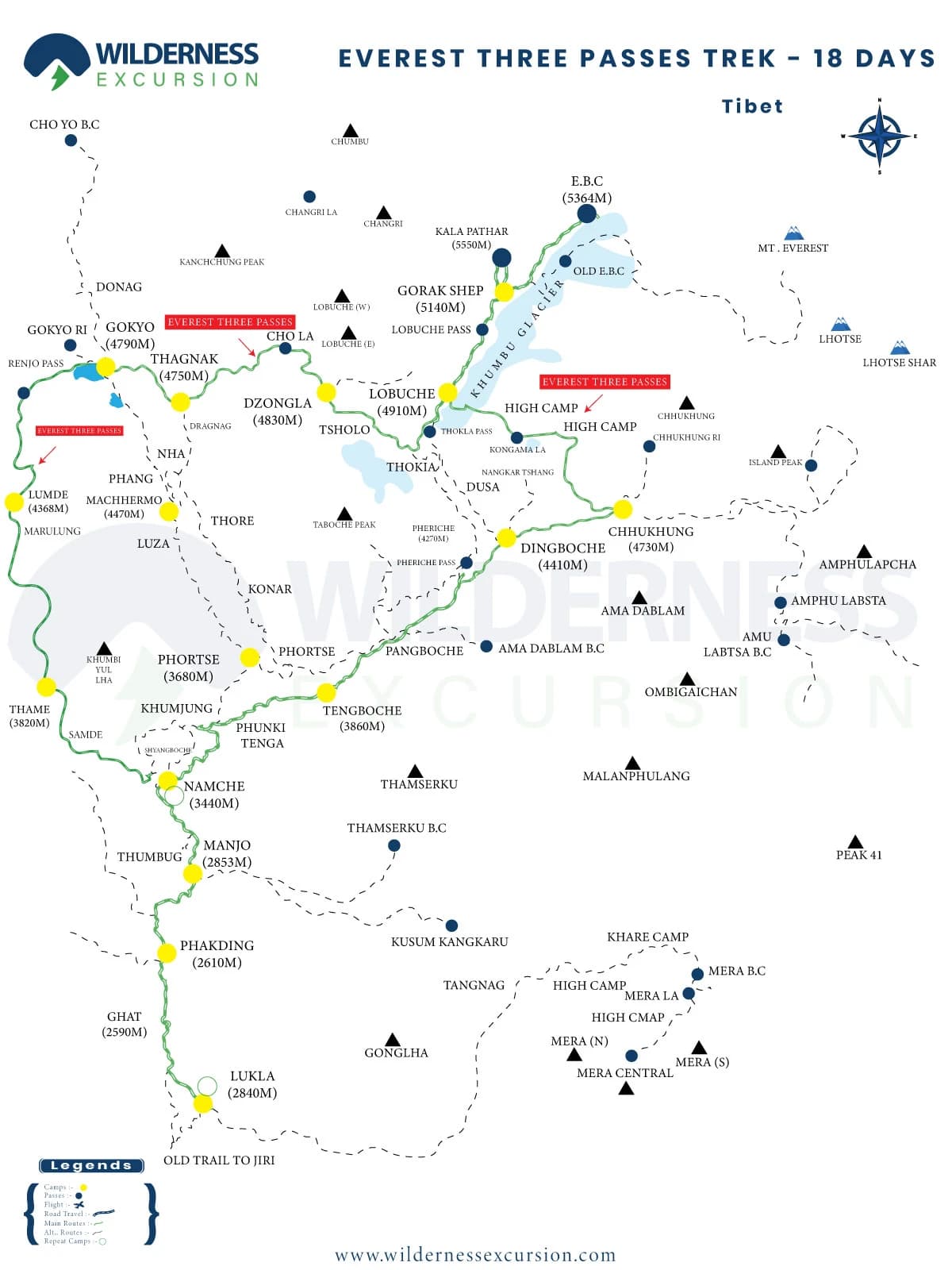
Route Map
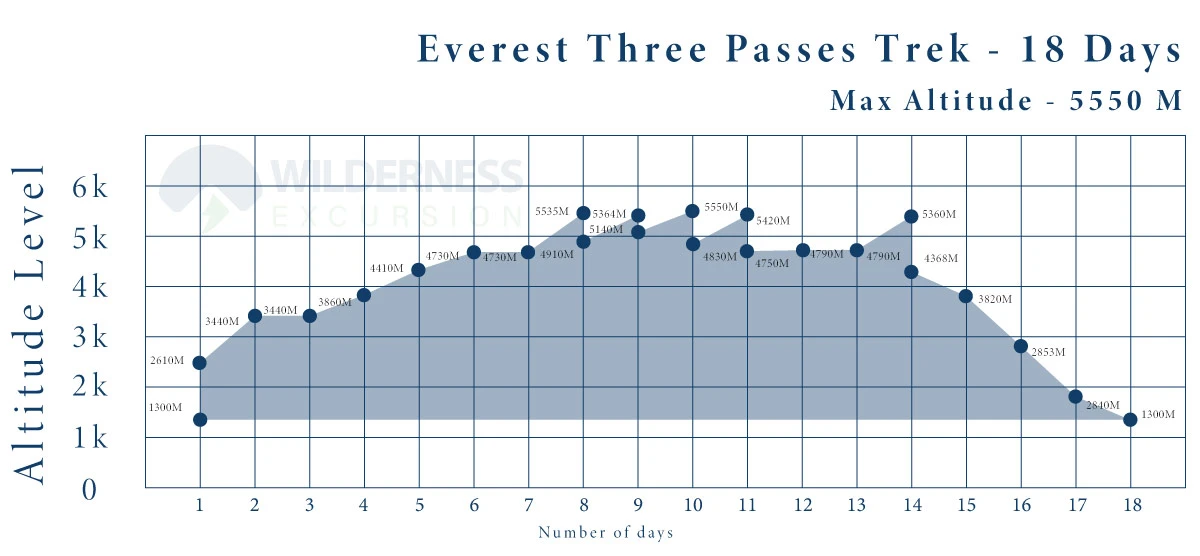
Altitude Chart
Still Confuse?
Download brochure or customize your trip.
Cost Details
Includes
Transportation:
- International (TIA) and domestic airport shuttle by private car/van to your hotel
- Lukla round-trip flight fare (cost: USD 514.00) per person, and airport taxes.
- Flight fare for your guide and airport taxes.
Accommodations/Lodging:
- Lodge accommodation during the trek on a twin or triple-sharing basis.
- Accommodation for guide and porters
Food / Meals:
- Standard full-board meals: (17 breakfasts, 17 lunches, and 17 dinners), with one main course per meal during the trek.
- Water purification tablets for safe drinking water.
- Seasonal fresh fruits every day
Guide/Support Staff:
- An experienced, certified private Everest Three Pass Trek guide.
- An assistant guide if the group size exceeds 6 Pax.
- One shared high-altitude porter for 2 trekkers to carry the luggage.
- Guide and porter's fee with all their expenses.
- Insurance and trekking gear for the guide and porter.
Trek Permits and Taxes.
- Everest Three Pass Trekking permits and National Park ticket.
- Paperwork charges and local taxes included.
- Office service charges and government taxes.
Excludes
- Accommodation, meals, and transfers in Kathmandu.
- Bar bills, beverages such as Coke, Fanta, and mineral water
- Hot shower, battery charging, and hot water during the trekking
- Personal travel insurance, internet, phone calls, and laundry service.
- Rescue operation charge in case of emergency.
- Additional porters will be hired if needed.
- Tipping your guide and porters (recommended).
Add-ons & Options
To make your Everest Three Passes Trek booking easier and offer you a preference option, we offer you a selection of add-ons (Extra services with additional cost) that you can opt for while booking this Ultimate Everest trek with Wilderness Excursion.
- Helicopter ride from Kathmandu to Lukla USD 550: Take a shared helicopter flight to Lukla from Kathmandu rather than the regular Lukla flight, which often gets delayed even in the peak trekking season. The cost is USD 550 per adult shared among five people.
- Helicopter Flight to Kathmandu from Lukla USD 550: Conclude your Everest Three Passes Trek with a scenic and exciting Helicopter Ride from Lukla to Kathmandu. Cost USD 550 per person.
- Accommodation Booking in Kathmandu USD 45: We can handle your accommodation booking for pre- and post-trekking stay in Kathmandu. It will cost USD 45 for double occupancy and USD 35 for a single room with breakfast. The accommodation will be centrally located in Thamel in the 3-star category. Also, we can assist with booking a 4 to 5-star hotel as well.
Dates & Availability
Select Departure Dates
Nov 2026
Dec 2026
Jan 2027
Feb 2027
Mar 2027
Apr 2027
May 2027
Jun 2027
Check our published date! If it doesn’t match, we are happy to customize your tour perfectly to suit your interests and needs, creating a unique travel experience for you
Essential Information
Everest Three Passes trek difficulty
Determining trek difficulty in the Himalayas is tricky. The simplest method is to check the maximum altitude and duration. That does provide a basic understanding of trek difficulty, but other factors include uphill, acclimatization, average walking hours and distance, food and accommodation comfort, and personal fitness.
The 18-day Everest Three Passes trek is above beginner’s capacity. The three-pass itinerary follows multiple high passes of the Everest Region without a side trail to base camp. Although the itinerary is customized for comfortable travel with multiple rest and acclimatization days, and the Everest region is one of the most developed trekking regions providing quality lodging services, the trek duration and constant uphill with 4 major high passes to base camp can be difficult for beginners. The trek is only recommended for those with experience of high altitude and long trek duration.
Cost covered by the USD 1599 Package Trip
The affordable cost of USD 1599, provided by Wilderness Excursion, is for an 18-day inclusive package trip. The cost covers your trekking documents, lodgings, food (breakfast, lunch, and dinner), flight cost to Lukla from Manthali, transportation from Kathmandu to Manthali, 1 porter for 2 trekkers, and trek guides with all their expenses and insurance being covered. With exclusive services such as complimentary tea with breakfast and fresh fruits, the package trip is available for your booking.
The cost excludes expenses for personal items such as sanitary needs, donations, tipping, and other expenses. We provide complimentary tea on a daily basis, but the cost won’t cover any additional bars and beverage bills. So, carrying extra cash is recommended for spending wisely in the Himalayas, where every good and service is expected to be more expensive in comparison to towns and cities.
Permits and documents required for the trek
The Everest region is protected and conserved under the law of Sagarmatha National Park. Thus, trekkers are required to obtain the national park ticket along with TIMs (Trekkers Information Management System). There are also municipal entry fees imposed during the trek after certain camps that can be obtained during the trek. The national park entrance fee costs around NPR 1500 for SAARC nationals and NPR 3000 for other nationals. TIM's card costs around NPR 2000. SAARC countries must pay Rs 300 for TIMS cards, while FITs from the SAARC region must pay Rs 1500 each.
For more updated information regarding permits and ticket fees, follow the link given.
- Nepal Tourism Board
- Wilderness Excursion – Nepal trekking permit and fees
Lukla flight diversion
The Nepal Government Civil Aviation Authority has announced issues in flight operations from Kathmandu to Lukla; thus, all flights now operate from Manthali, which is a 130 km drive from Kathmandu. The trekkers are required to depart early from Kathmandu for the flight to Lukla.
An alternative of a helicopter can also be arranged on a 5-person sharing basis with an additional charge of USD 500 for a one-way flight. The alternative is not 100% guaranteed, unlike the road transportation to Manthali, but arrangements can be made with prior notice. The flight to Lukla is one of the most dangerous aviation operations in the world; a small change in weather can cancel the flight. Travelers are requested to inform us of the preferred alternatives for the flights to/from Lukla affected due to possible delays or disruptions.
Everest Three Passes preparation tips
The Everest Three Passes Trek crosses remote high-altitude terrain over Kongma La, Cho La, and Renjo La, where freezing temperatures, glacier sections, strong winds, and long walking hours demand proper layering, dependable gear, and smart personal essentials. Solid physical conditioning, mental readiness, and careful budgeting help trekkers handle altitude changes, technical paths, and limited facilities comfortably without unnecessary risk or stress.
Preparation Tips
- Build strong cardio endurance.
- Strengthen legs and knees.
- Practice hiking with a backpack.
- Budget daily personal expenses at 10 USD per day.
- Prepare mentally for basics.
Packing Tips
- Insulated down jacket.
- Waterproof, windproof essentials.
- High-ankle trekking boots.
- Warm gloves, hat, and buff.
- Sleeping bag.
- Trekking poles for passes.
- Water bottles, purification tablets.
- Headlamp with spare batteries.
- Sanitary items are recommended to be bought in Kathmandu.
Everest Three Passes Trek - Top Rated Adventurous Trek in 2027 FAQs
As it is titled “Everest Ultimate Trek,” the three-pass trek is labeled "demanding.”. It is a serious adventure trek crossing over high altitude passes (Kongma La 5535 m, Cho La (5420 m), and Renjo La 5417 m).
It requires previous trekking experience in the Himalayas or Alps to be in good physical shape. If you are not well acclimated and need to make yourself fitter, then Wilderness Excursion suggests you start the trek lower at Phaplu (see our Phaplu to Namche Bazaar Everest Base Camp Trek). This trek is not technical, but sometimes it may require some basic equipment, such as an ice gripper, an ice axe, and trekking poles if you are trekking in late October, November, or early March.
Best time to trek to Everest three passes is September and early October and from Mid March to June. Trekking in November is still not bad. Heavy snowfall blocks the trail and warn to go back so check the weather forecast before heading to trail head.
Monsoon rain may affect the views if you are trekking in June, July and August. Lukla flights may get delayed and cancelled in rainy season. Everest region gets extremely busy during the month of April from mountaineering expedition teams.
The Everest Three Passes Trek is some 170 km (105 miles approximately). Take a scenic flight from Kathmandu (from Manthali in peak seasons), and the trek strats at Lukla, where you catch a light to KTM/Manthali again. Nepal is the country where trekking duration is measured in days, so the Three Passes Trek, aka Everest Ultimate Trek’s length depends on from where you start the trek. Still many people start this trek at Jiri and walk to Lukla/Namche. Also, you could start this trek from Phaplu. Then your trek will be some three weeks long or more. We also offer tailored-made itineraries that suit your requirements.
The highest point you will reach in the Everest Three Pass Trek is Kalapatthar, which is 5545 meters (18188 ft) above sea level. However, all three passes are above 5000 meters and base camps as well.
You do not require any special trekking permits, but ordinary trekking permits are mandatory. You will need the Sagarmantha National Park entrance ticket, and the Pasang Lhamu Municipality entrance fee can be bought at Lukla. TIMS Card is optional. We will obtain these permits if you decide to trek with us.
In such a dire situation, the guide will get in touch with the team in Kathmandu right away to set up a rescue or airlift, and your travel agency will get in touch with your insurance provider back home. Booking is contingent upon having sufficient insurance coverage for this kind of thing, since your insurance provider will have to reimburse you for these costs. There are health posts in the more popular areas that have been established by the Government of Nepal, foreign physicians, and overseas staff members who are well aware of the Himalayan Rescue Association.
Wilderness Excursion provides one shared porter between two trekkers, and the weight limit is a maximum of 20 kg (10 kg per client) plus 5 to 7 kg of his own pack.
No problem; you will have to tell your guide or contact the service provider back in Kathamdnu. We can extend the trek and change your flight date if the trek is extended.
It is okay to do this trekking clockwise (crossing Renjo La first) or counterclockwise (crossing Kongma La first). But our standard itinerary will be anticlockwise to allow for proper acclimatization. If you cross Kongma La first, you can climb to high elevation at a sensible rate and incorporate at least two acclimatization hikes into your itinerary if necessary.
Trekking in Everest does not require a guide. You are trekking in the region's most epic area that provides the best scenery, glacier lakes, high mountain passes, and the best view ever, but equally, it can be unsafe if you miss the right track and other possible hazards that may lead to serious problems. Wilderness Excursion strongly suggests hiring a guide. Safe and Happy Trek.
Wilderness Excursion highly advises our clients doing an adventure trekking in Nepal to get insurance that can cover emergency air evacuations up to the highest trek altitude and medical expenses. Helicopter evacuation is compulsory as there are no sufficient treatment centers in the trek region.
The weather conditions in the Everest region, particularly the Three Passes, vary by time of year. The daytime temperatures at higher altitudes can vary from 0°C to 10°C (32°F to 50°F) during the hiking seasons, which are spring and autumn. Temperatures can drop dramatically during the night, particularly at high passes. At Everest BC, wintertime lows of -18°C are not uncommon. The midday high in the summer can reach about 20°C.
Most visitors can obtain a tourist visa at different Nepali border entry points or upon arrival at Kathmandu's Tribhuvan International Airport. Some nationals, nonetheless, are not eligible for an on-arrival visa; therefore, they need to get in touch with the nearest Nepali embassy.
For more information on obtaining a Nepal Tourist Visa for trekking purposes in Nepal.
What Our Clients are Saying?
based on 5 reviews
19 Days Everest Three Pass Trek
Everest Three Pass Trek - Very challenging but excellent experience!
I found it (Everest Three Passes Trek) very challenging but worth it, as this trek rewards you with a life-changing adventure and superb views that I have never seen, though...

Nils Martin- Sweden
May 14, 2025Experiencing 3 Pass Trek and Island Peak Climbing
I did the Everest Three Passes Trek and an Island Peak Climbing with my 3 friends. We had to skip the acclimatization day at Namche because of a flight cancelation from Kathmandu and had to go to Manthali for the...
Martin Fric- Czechia
November 30, 2024Everest Three High Passes Trekking (May 2024)
Everest Three Passes Trekking - The Ultimate Everest Trek in Nepal
We were very pleased with the professionalism and attention to detail displayed by the staff when we finished the Everest Three Passes Trek with Wilderness Excursion at the end of...
A
Alicia J- New Zealand
June 21, 2024Adventures Tailored for You
Need Help? Call Us+977 9851042153