From the gateway to Annapurna, Poon Hill lies in the Northwest of Pokhara and in the Central part of Nepal. Globally known for its unparalleled view of the Annapurna Range, including other prominent peaks, and the cultural beauty of the indigenous people of the hills. The 5-Day Poon Hills trek offers stunning views of the Himalayas, blending natural and cultural scenery.


Ghorepani Poon Hill Trek - 5 Days
Duration
5 Days
Trip Grade
Moderate
Maximum Altitude
3210 Meters
Group Size
Max 15 Person
Activities
Trekking, Hiking
Starts
Birethanthi
Ends
Dhampus
Best Time
March-June, September-November
Photos
Introducing the Ghorepani Poon Hill Trek
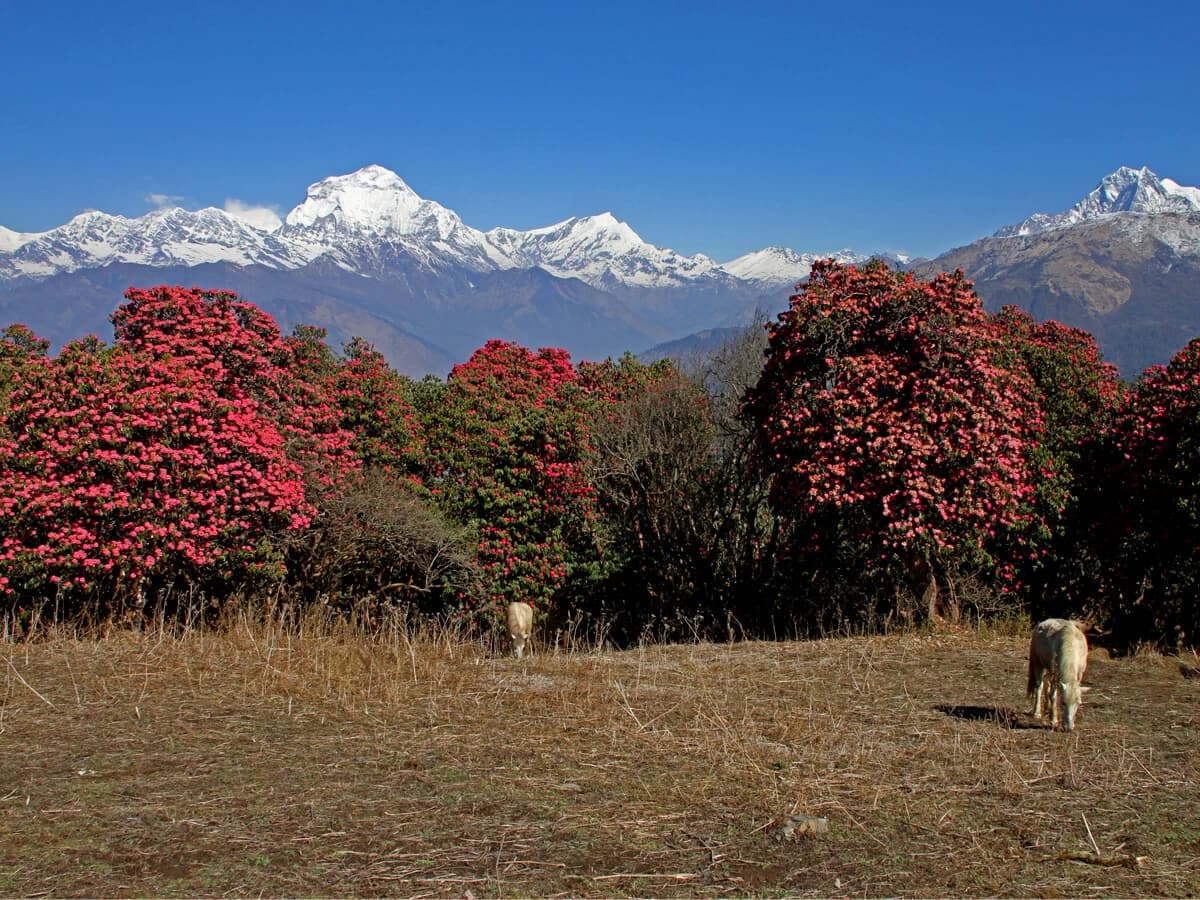
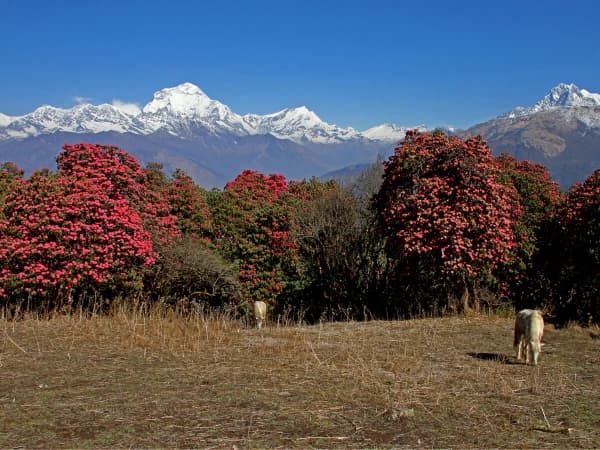
From Pokhara, which is the gateway to both the lower and upper Annapurna regions, Ghorepani Poon Hill is a short trek in the foothills of the Annapurna region. The trek traverses the dense forest of hills around the Annapurna, pasture lands, and old village settlements. The Poon Hill trail falls under the conservation project area, and the trails and surrounding valleys are primarily known for birdwatching and colourful forests of rhododendrons in spring.
At an altitude of 3200 metres above sea level, the Poon Hill viewpoint offers a cinematic view of the whole Annapurna Range, including Dhaulagiri from the left or the far northwest side. The trails of Ghorepani are relatively safe and beginner-friendly, with occasional knee-breaking uphill near Ulleri and Tadapani. Overall, the trek is best suited for beginners, a short escape, and gaining experience of the remote hills of Nepal.
The history and importance of Ghorepani Trail
The term or name Ghorepani is originally known as “Ghodepani”, made from two words: Ghoda (horse) and Pani (water). It probably means there used to be a water body, and Poon Hill was used as a horse grazing area due to sufficient grass and a water source by the locals. The truth about such hills is similar: locals used them for grazing or temporary sheds for their different benefits, and such hills always had great views, which attracted multiple trekkers and gradually converted the whole valley into a massive tourism hub.
But the trails were not simply for animal herding and sheds. Another important aspect of the trail was its contribution to the sustainability of the nearby villages. As you know, the Ghodepani trail connects to Annapurna and was the original, traditional route before all the infrastructure development. Villagers used these trails to transport goods using mules, which you can still see in the Annapurna trails. Although you can trek Annapurna from different points, the traditional Annapurna trek combines both Annapurna and Ghorepani Poon Hill.
Highlights of the Ghorepani Poon Hill trek
- Witness a breathtaking sunrise from Poon Hill (3,200 m), one of Nepal's most famous viewpoints, offering panoramic views of the Annapurna and Dhaulagiri mountain ranges.
- Enjoy spectacular Himalayan scenery featuring peaks such as Annapurna South, Hiunchuli, Machhapuchhre (Fishtail), Nilgiri, and Dhaulagiri.
- Experience the rich culture, traditions, and warm hospitality of the Gurung and Magar communities in traditional mountain villages like Ghandruk and Ghorepani.
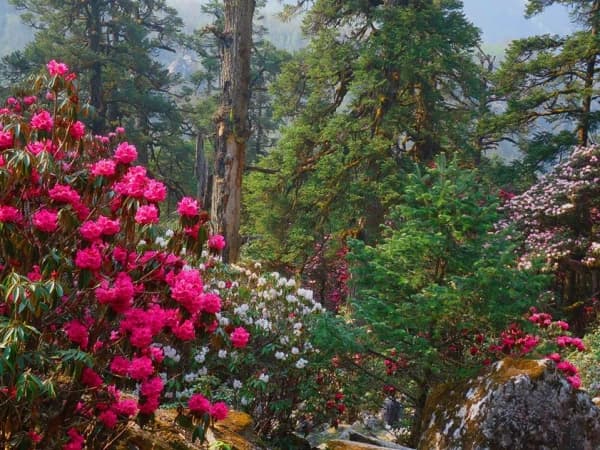
- Trek through beautiful rhododendron forests, which burst into vibrant red, pink, and white blossoms during the spring season (March to May).
- Discover one of the most accessible and beginner-friendly trekking routes in Nepal, suitable for families, solo travellers, and trekkers of all age groups.
- Enjoy comfortable teahouse accommodation and well-developed trekking facilities, making it one of the most convenient treks in the Annapurna region.
- Explore diverse landscapes ranging from terraced farmlands and charming villages to dense forests and alpine viewpoints.
- Spot a variety of Himalayan bird species and wildlife, making the trek a rewarding experience for nature lovers and bird watchers.
- Experience a perfect short trek near Pokhara that combines stunning mountain views, cultural immersion, and natural beauty within a few days.
- Trek on a budget-friendly Himalayan adventure that delivers exceptional scenery and cultural experiences without requiring extensive trekking experience.
- Capture incredible photography opportunities, including sunrise landscapes, snow-capped mountains, traditional villages, and colourful rhododendron forests.
Ghorepani Poon Hill trek vs other treks
|
|
Ghorepani Trek |
Annapurna Base Camp |
Mardi Himal Trek |
|
Crowds |
Low — limited to ~400 permits/season historically, still quiet trails |
High — the busiest trekking route in Nepal |
Moderate — popular but less crowded. |
|
Difficulty |
Medium-low altitude, less technical terrain |
Medium to long but more teahouse infrastructure |
Medium-hard — high altitude, less technical terrain |
|
Permits |
Mandatory ACAP permits |
ACAP permits |
ACAP permits |
|
Cost |
USD 345 |
USD 465 |
USD 599 |
The Ghodepani Poon Hill Trek is often compared with Annapurna Base Camp and the Mardi Himal Trek, since all three are within the Annapurna Trekking Region. The key differences are crowd density, lodges/teahouses, and trails.
If you're deciding between the three, see our full comparison further down this page, including detailed cost breakdowns and which trek suits different fitness levels and travel timelines.
Why book Ghorepani Poon Hill Trek with Wilderness Excursion?
- We arrange all necessary Annapurna Conservation Area permits and trekking documentation, allowing you to focus entirely on enjoying your trek.
- Our experienced local guides have in-depth knowledge of the Ghorepani Poon Hill trail, local culture, mountain landscapes, and trekking conditions throughout the Annapurna region.
- Every aspect of your journey, including accommodation, transportation, permits, and logistics, is carefully organised to ensure a smooth and hassle-free experience.
- Skip the stress of planning routes, accommodations, and permits while our professional team handles all arrangements from arrival to departure.
- Our well-crafted 5-day itinerary is designed to provide the perfect balance of scenic beauty, cultural exploration, and trekking comfort.
- Experience the rich Gurung and Magar culture of traditional villages such as Ghandruk and Ghorepani with insights from knowledgeable local guides.
- Trek with trained, licensed, and insured guides and porters dedicated to your safety, comfort, and overall trekking experience.
- Enjoy comfortable teahouse accommodation and carefully selected overnight stops that showcase the best of the Annapurna foothills.
- Porter services are available to help carry your luggage, allowing you to trek comfortably and fully appreciate the stunning mountain scenery.
- Witness the spectacular sunrise from Poon Hill, one of Nepal's most iconic viewpoints, with expert guidance and support throughout the journey.
- Travel through beautiful rhododendron forests, terraced farmlands, and charming Himalayan villages while learning about local lifestyles and traditions.
- Our team prioritises your safety and well-being, providing continuous support and guidance throughout the trek.
- Receive personalised service, flexible assistance, and prompt communication before and during your adventure.
- Travel with a trusted local trekking company committed to responsible tourism, environmental conservation, and supporting local mountain communities.
- Wilderness Excursion also offers exclusive value-added benefits and special complimentary services under selected conditions, providing even greater value for your Ghorepani Poon Hill Trek.
Ghorepani Poon Hill booking option with Wilderness Excursion
Actively operating since 2014, Wilderness Excursion is an experienced and certified trekking agency that has arranged multiple treks with a 99.99% success rate. Our agency offers progressive discounts and tiered benefits with each additional booking.
We offer different booking options for every trek group, individual, and family trip. Each booking has its own perks and benefits, and most of them have free-of-cost benefits for large group bookings with a massive discount of up to 99%.
- Individual Bookings: Wilderness Excursion has expertise in arranging solo trips, which most agencies refuse due to the hassle. With a package cost of USD 365, we offer a private trek guide and package services. Porters and other additional services can also be arranged upon inquiry.
- Private booking 2-3 Pax: The private booking for 2-3 people is a tailored package trip for couples, trek duos, and small families. The package offers progressive discounts and complimentary benefits during the trek at USD 345 per person.
- Family Booking 4-6 Pax: The family booking is completely tailored to accommodate 4 to 6 trekkers. Although it is a family booking, small groups who meet the number also get the tiered benefits of the bookings. At USD 335 per person, the booking offers a complete package deal with additional discounts and complimentary benefits.
- Small group booking (7-9 Pax): Starting from small groups, the booking meets the requirements of our FOC benefits, where you can get a massive discount of 50% off for leaders at the cost of USD 325 per person.
FOC (Free of Cost) benefit:
- 50% off the trekking package for an international tour leader for a group of 8 to 9 pax.
- Large group booking 10-15 Pax: The group booking for 10-15 is the most beneficial booking option. With progressive discounts, complimentary services, and tiered benefits, the large booking meets the requirements for the top-tiered FOC benefits.
FOC (Free of Cost) benefit:
- 100% off in the trekking package for an international tour leader for a group of 10+ people.
Poon Hill Trek Cost and Booking for 2026
The total trek cost varies based on preferred services, accommodation standards, transportation mode, and personal requirements. For clear cost and booking planning, note that our standard package of USD 345 per person covers all necessary trekking permits, accommodations during the trek, three daily meals with complimentary tea/coffee, private transportation to/from trekking points, and a government-licensed guide.
A realistic price for an inclusive Ghorepani trek package ranges from USD 300 to USD 500. This covers required permits, accommodation, daily meals, and guided sightseeing. The difference in trek cost largely depends on the level of services included.
With a fair-price approach, we are recommended as an affordable tour operator in Kathmandu, providing quality services without cutting corners on daily necessities. The price adjusts based on group size, and booking in a large group can secure a significant discount. With a decade of experience, we cater to both group trekkers and comfort seekers while maintaining fair pricing.
Booking Procedures
Booking with us is simple and fast. In just a few quick steps, you can secure your next trip without any hassle:
- Click “Book this trip”, and it will proceed to the booking application form.
- Fill out the form and choose additional services. If any required services are missing, leave them in the notes form.
- Proceed with payment and pay the required advance. Minimum 15% of the total cost.
- Your customised trip is ready.
Cost details and benefits:
|
Booking type |
Number of trekkers |
Cost |
Benefits |
|
Individual |
1 pax |
USD 365 |
Complimentary services |
|
Private |
2-3 pax |
USD 345 |
Complimentary services, progressive discounts |
|
Family |
4-6 pax |
USD 335 |
Complimentary services, progressive discounts |
|
Small group |
7-9 pax |
USD 325 |
Complimentary services, progressive discounts, FOC, additional benefits |
|
Large Group |
10-15 pax |
USD 299 |
Complimentary services, progressive discounts, FOC, additional benefits |
Booking terms and conditions of Wilderness Excursion!
When booking with Wilderness Excursion, you agree to our terms and conditions of booking, which contain what you agree to when booking, what information you will be sharing with us, and our cancellation policies in case the client cancels the trek before or during departure.
In respect of clients, we have multiple cancellation scenarios, and cancellation requests are reviewed and processed in accordance with our terms and conditions.
Packing list for the 5-Day Ghorepani Poon Hill Trek
There are multiple levels and stages of packing, from daily essentials of clothing to gear and how to pack all the necessary items, why pack them, and how to pack them.
Daily wear for the 5-day trek
|
Items |
Quantity |
Why? |
|
Sun hat / Bucket hat |
1 |
To protect from sunburn and heatstroke. |
|
Sunglasses |
1 |
Protects the eyes from heat, snow, and extreme winds. |
|
Buff/muffler/gloves |
1 |
Necessary in autumn to avoid chapped skin. |
|
Trekking T-shirts |
2 |
Trekking shirts specialise in regulating heat, are light, and are easy to sanitise. |
|
Windbreaker |
1-2 |
Cold winds can lead to stomachaches and diarrhoea. |
|
Down jacket |
1 |
Only necessary in winter and late autumn for cold nights. |
|
Trekking pants |
2-3 |
Light, easy to pack, and dries quickly. |
|
Trekking shoes |
1 |
Durable trekking shoes are required for daily walks or quality hiking shoes. |
|
Sandals |
1 |
Optional for a short morning and evening walk in the lodge. |
Gears required for the Ghorepani Poon Hill Trek
The 5-day Ghorepani Poon Hill trek offers a luxury trekking experience. The trails are relatively easier, and hiking days are shorter. A minimal gear set should suffice for the whole trek.
- Trekking Bag (20L-40L): A small trekking bag between 20 and 30 litres should be enough to pack daily essentials. In case you do not hire a porter, a large-capacity trekking bag is required if you plan to carry more than daily essentials.
- Sleeping Bag: There are different cold-capacity sleeping bags; choose one depending on the seasons and local weather conditions. You can rent or buy sleeping bags in Thamel or Pokhara. Although lodges do provide blankets and quilts for the night, sleeping bags are recommended for personal comfort.
- Trekking Poles: Downhill hikes put a lot of pressure on knees, and sometimes slippery stone trails make it harder; in such times, trekking poles are really useful. For trekkers of age, trekking poles can be life-saving on both downhills and uphills.
- Trekking shoes: Including the regular outfits, trekking shoes are one of the essential pieces of gear required for long walking durations. Low-quality and regular shoes can form blisters when used for an extended period of time. Trekking shoes provide comfort and safe long-term use.
- Headlamps: Currently, the camps and villages in the Ghorepani trail support electricity, but the trails are still underdeveloped and probably will remain so. For night walks and early morning hikes, headlamps can be useful, especially in winter, since you won’t have to hold them.
- Water bottle (2L minimum): Dehydration is the worst possible problem when trekking. Extreme heat and constant hiking will exhaust and dry your body, and water is most essential. Although you will have options to buy filtered water from lodges and teahouses, it’s much better to pack one.
- Rain Essentials: Rain essentials include raincoats and rain covers for the bag. The spring season experiences occasional light rains, which can last a whole day. Trekking bags come with attached rain covers at the bottom, so pack a raincoat only.
- Medical Kits: Personal first-aid kits are not provided by the agency; trekkers are responsible for carrying their own personal medicines and basic medical gear such as ibuprofen, medical gauze, medicated dressing, and bandages.
How to layer the outfits for the Ghorepani Poon Hill Trek?
|
Layer |
Items |
When? |
|
Top Layer (Above neck) |
Bucket hat, woolen hat, muffler, buff, sunglasses |
Bucket hat: Day hike Woolen hat: Morning and nights in high altitude Muffler: Nights and mornings in lodges. Buff: Morning hikes Sunglasses: Day hike |
|
Mid Layer (Above waist) |
Thermal top, hiking shirts, fleece, down jacket, gloves |
Thermal: For cold nights in the lodges Hiking shirts: For a day hike to regulate heat Fleece: For the windy hikes Down jackets: Essential in the base camp Gloves: For base camp hike |
|
Bottom Layer (Below waist) |
Thermal bottoms, trekking pants |
Thermal: For the cold nights Trekking pants: For the whole trek |
|
Footwear |
Sandals, socks, trekking shoes |
Sandals: For the camps, comfortable with socks Socks: Use socks when wearing sandals on cold nights Trekking shoes: For the day hike |
Electronics and entertainment to pack when trekking Ghorepani
- Power banks: A small charging device for remote charging in cases of an electricity outage. Although lodges of Ghorepani have charging services, electricity in such places is unstable. Important devices like mobiles need constant charging, and power banks can be useful during day hikes as well.
- Mobile / Camera: Of course, taking photos of the places, people, and foods is the basic method of saving memories digitally. Mobile for more versatile and easy use and a camera for professional photography of the Himalayas and nature.
- Playing cards: Using mobile phones and taking walks are other ways of spending time in lodges, but a more interactive experience is through playing cards, which you can play with your friends or guides.
Sanitary and personal care items
- Toothbrush, toothpaste & dental floss -
- Soap bar and shampoo
- Nail cutter and cotton earbuds
- Wet wipes and tissue paper
- Hand sanitize
- Sunscreen (SPF 50+)
- Lip balm with SPF
- Quick-dry towel
- Moisturizer
- Basic first aid kit (plasters, antiseptic, bandages)
Trip Gallery
Itinerary
Expand allYour journey starts with an early drive from Pokhara to Nayalpul/Birethanti to cover the road ride early. Our guide will pick you up from your given hotel or location, so if you have paid for breakfast, kindly ask them to pack it for the ride. But if you feel like not rushing it, don’t worry; we can start the trek after breakfast around 8-9.
The drive takes approximately 2 hours to reach the starting point, Birethanthi, which is also the checkpoint for the Ghorepani Trek. With the majestic view of the Annapurna and Machhapuchhre in the background, you ride through the bustling yet peaceful markets and towns on the outskirts of Pokhara. The roads are mainly black-paved, adding comfort to the long ride.
The Birethanthi can be recognised by a steel bridge that connects two major roads on the Modi River, where most trekkers stop for a quick check-in to the ACAP region. Your guide is also in charge of checking the team in, while you can do light stretches. Once the process is complete, the trail starts through the traditional homes, paved with stones, which connect to the first section of the roads. The road trail lasts for another hour till you reach the hill from where you take a detour and follow farm land trails. The trails are mostly downhill and straight in the old village of Hile until you reach Tikhedhunga, where lunch will probably be served near the waterfalls or the river. Tikhedhunga is a peaceful small village connected with Hile and known for a quiet and calm experience.
After lunch, you continue uphill, where the expanded road connects and intersects the trail till Ulleri. Since the trail from Tikhedhunga to Ulleri is constantly uphill, it's better to have plenty of rest during lunch.
About Ulleri!
At an altitude of 1960 meters above sea level, Ulleri is predominantly inhabited by the Magar community, one of Nepal's oldest indigenous groups with a long history in the western hills. Many residents continue to preserve traditional customs, language, festivals, and architecture. Some Gurung families also live in and around the village, reflecting the mixed cultural landscape of the Annapurna foothills.
Tourism began transforming Ulleri after Nepal opened to foreign trekkers in the 1950s, with significant growth during the 1970s and 1980s. As trekking in the Annapurna region expanded, local families converted their homes into teahouses and lodges to accommodate visitors. Today, tourism is one of the village's primary sources of income.
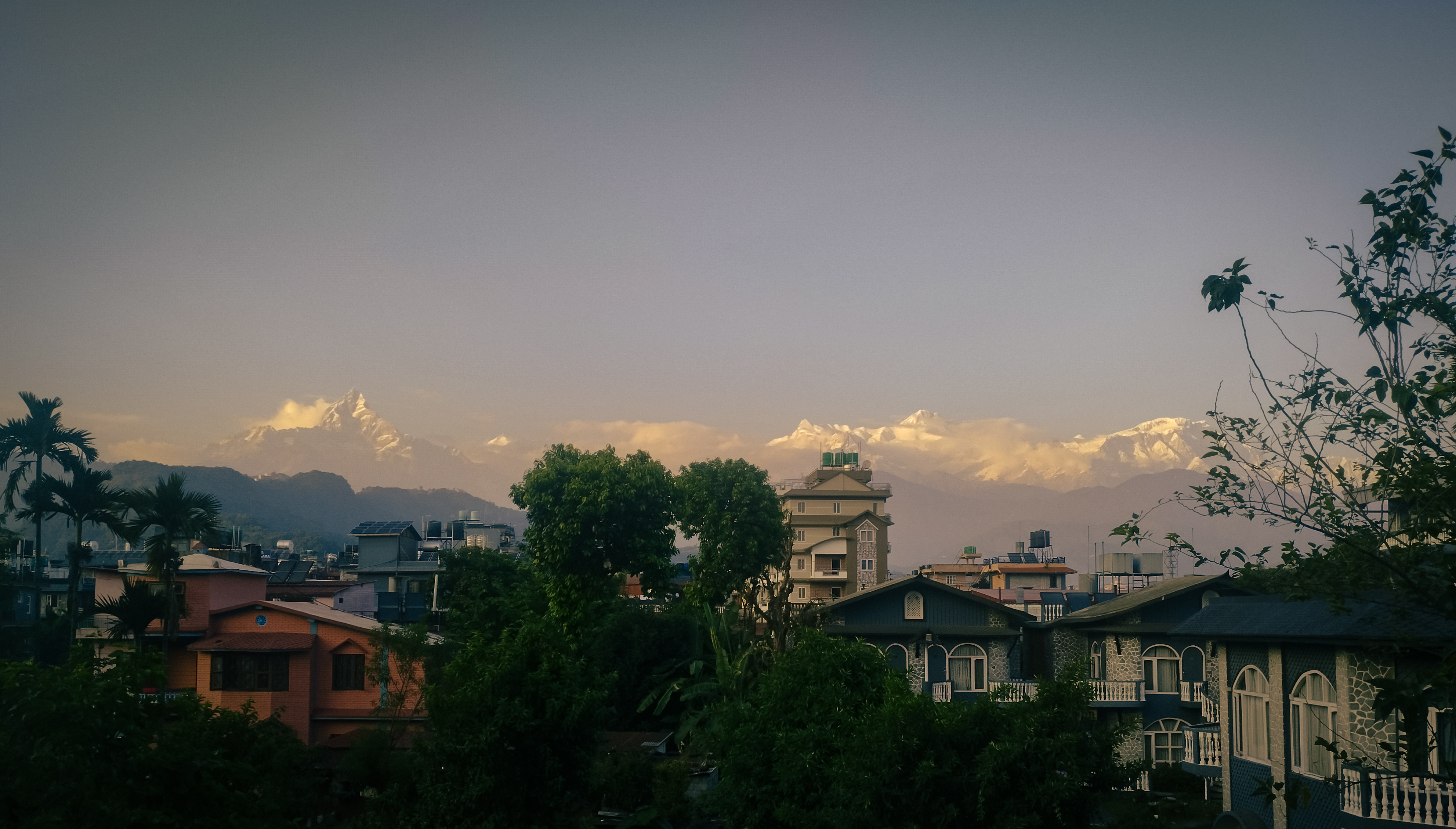
Photo: Annapurna Range and Machhapuchre from Lakeside Hotel – Yogesh Tamang
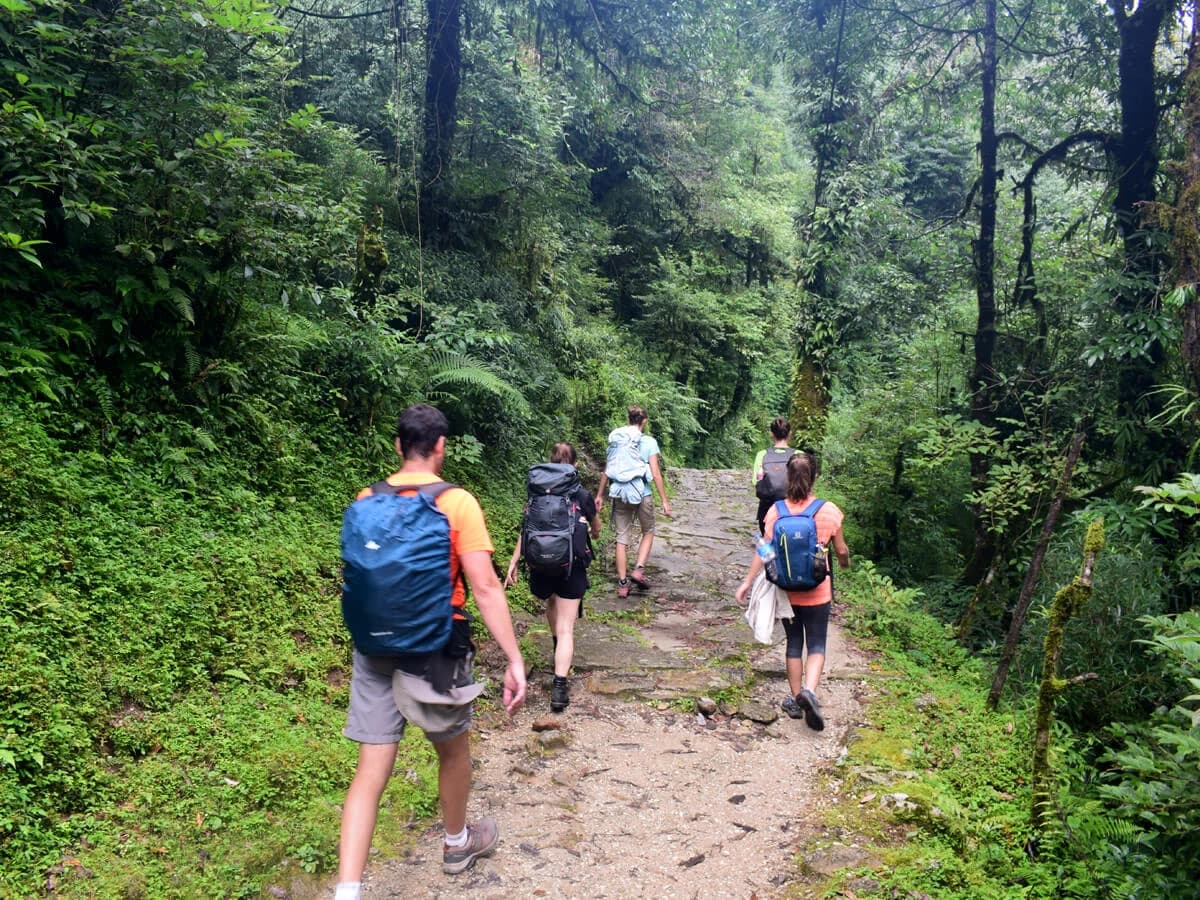
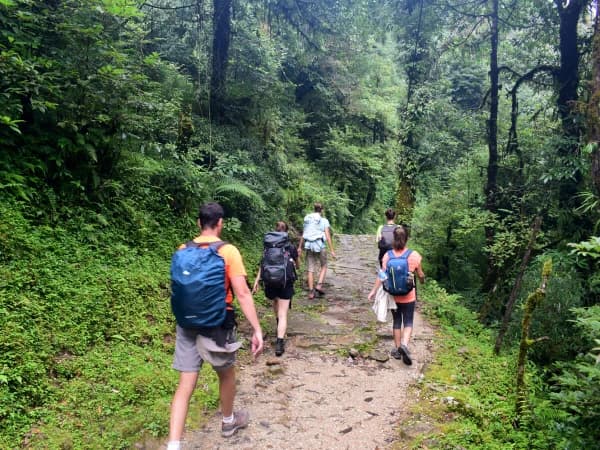
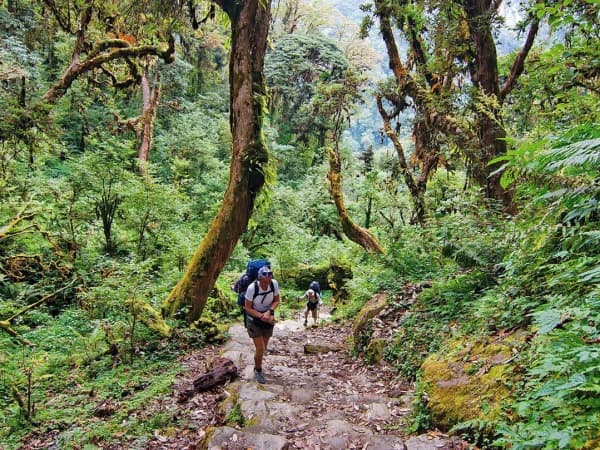
With the regular early breakfast around 7 to 8, the trek continues on the village trails and roads of Banthanthi. The second day of the trek from Ulleri to Ghorepani transitions and shows the beauty and contrast of Nepal’s vegetation. After the Banthanthi, the trail passes through dense forests and rivers, where you can find small shops and teahouses in the forest. The forest is mostly covered with rhododendron trees, which showcase colourful forests in spring. The trails starting after the Banthanthi are the real remote experience of the trek: no vehicles or any forms of luxury, just you and nature. You can find stone resting places, structured like large chairs or a sitting table, and bamboo taps.
Most parts of the trail are covered with forests and stone-paved, and once you’re near the Ghorepani Deurali, the forest unveils the camp, which sits below the hills. Lunches will be provided at Ghorepani itself, where you also spend the night. Since the days will be long, you can get plenty of rest or explore the village.
About Ghorepani Deurali!
Majorly known as “Ghorepani”, the given name is “Ghodepani”, where “Ghode” means "horse" and “Pani” refers to "water". Ghorepani was a resting place where traders, messengers, and travellers stopped to provide water to their horses before continuing their journey across the mountains. The village was located on an important section of the historic trade route connecting the mid-hills of Nepal with the high Himalayan settlements.
Following the opening of Nepal to international trekkers in the 1950s, and particularly with the establishment of the Annapurna Conservation Area in 1986, Ghorepani transformed into one of Nepal's busiest trekking villages, as the trails were connected and used for trekking to Annapurna Base Camp before the 90s.
Today, Ghorepani represents much more than an overnight stop. It is a vibrant mountain village where history, culture, and nature converge. Its role as a historic resting place on ancient trade routes has evolved into that of a welcoming trekking hub, offering visitors an unforgettable combination of Himalayan scenery, rich Magar heritage, blooming rhododendron forests, and easy access to the legendary Poon Hill viewpoint.
Photo: Welcome gate to Ghorepani (Ghodepani) Deurali
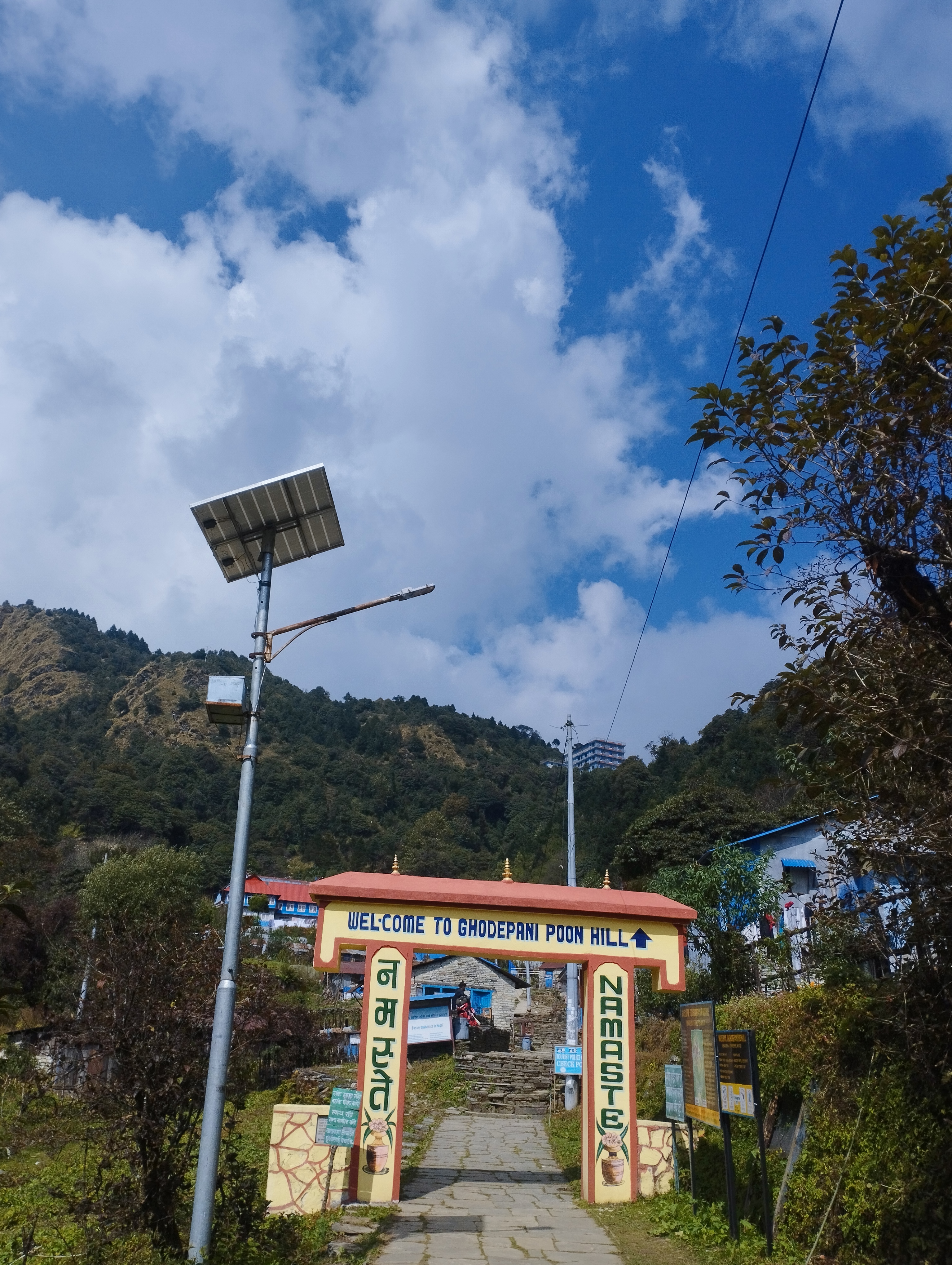
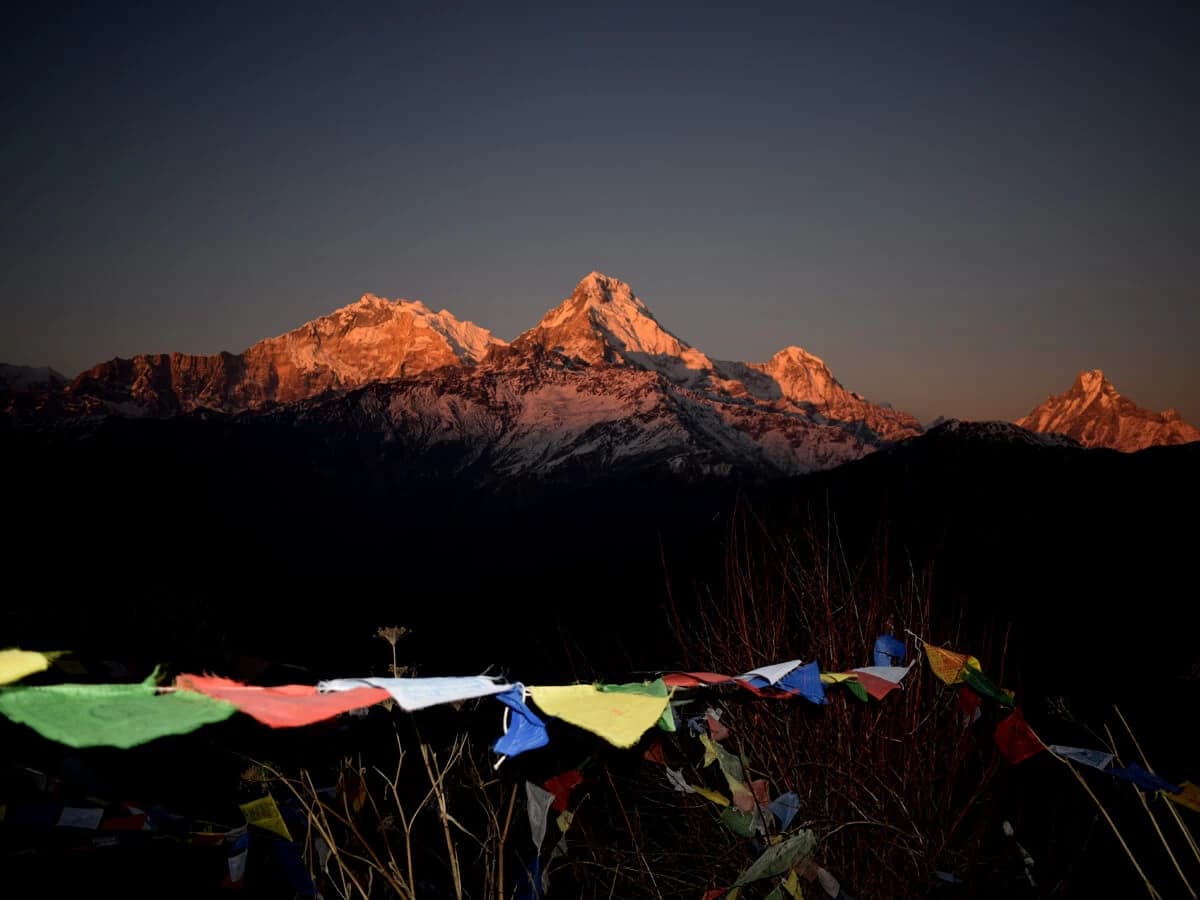
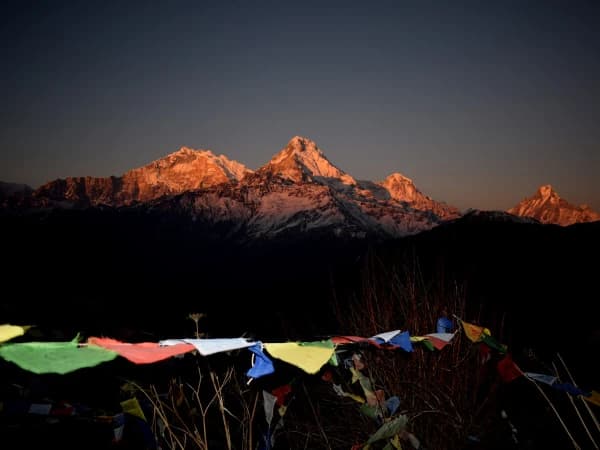
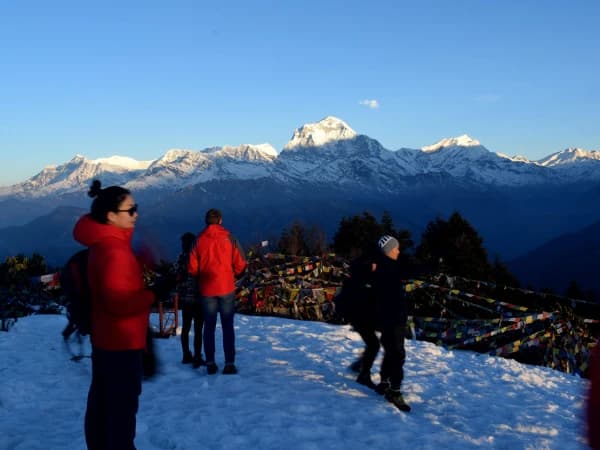
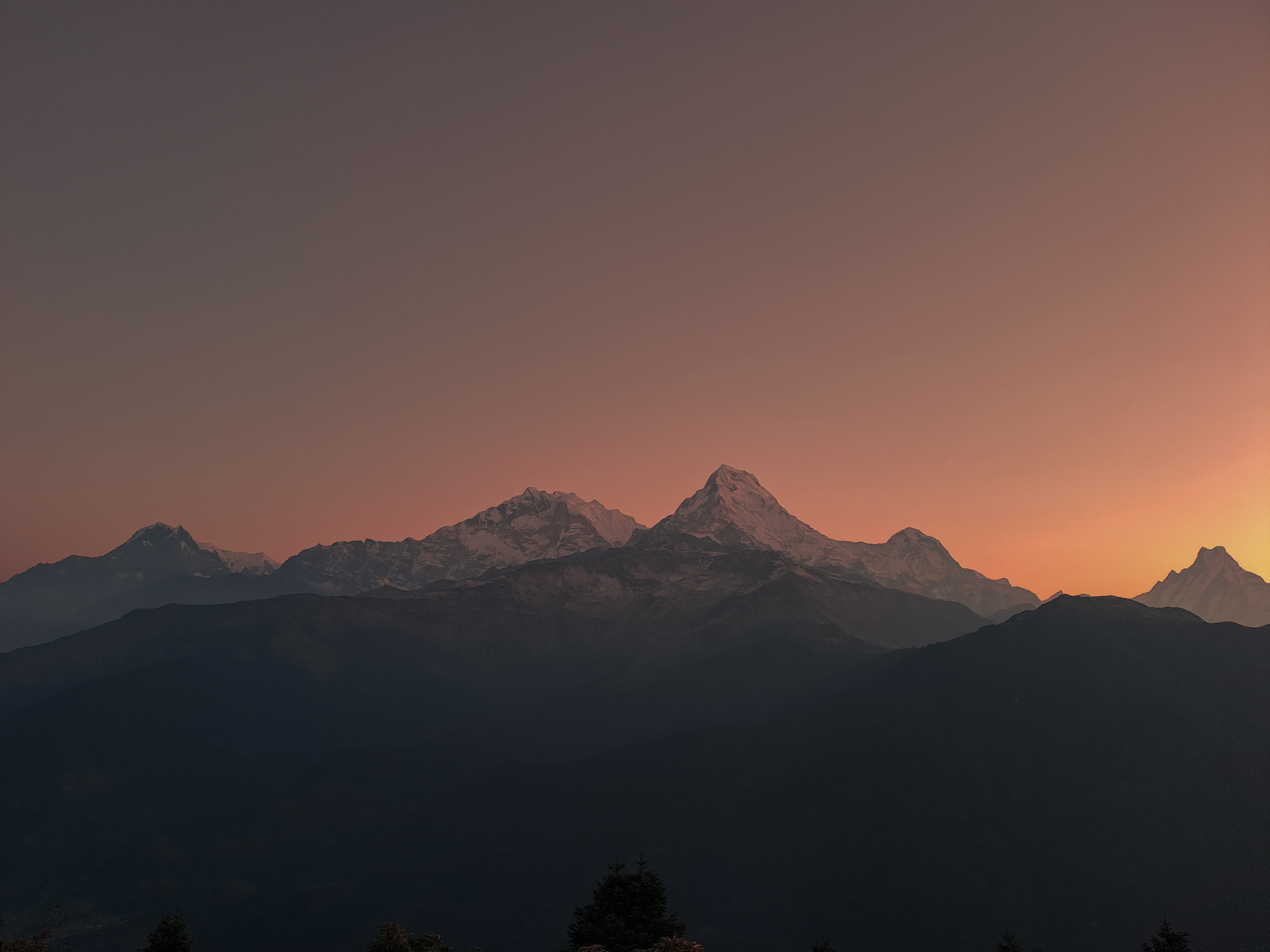
The most awaited day of the trek, Poon Hill, is a globally known viewpoint of the Annapurna Range and is also renowned for its sunrise view, which reflects on the mountain range.
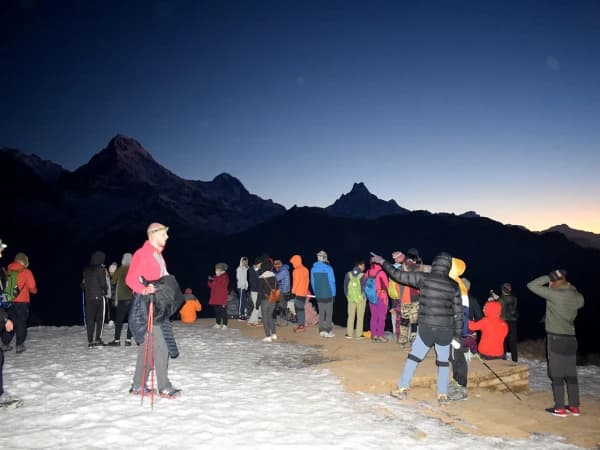
Trekkers hike early in the morning for the sunrise view, which beautifully reflects on the mountains, giving them an iconic golden shine. Our guide will wake you up, or you can set an alarm for 4 in the morning, get your windbreaker and headlights, and head towards Poon Hill, which is an hour or two of walking from Ghorepani. You will meet multiple trekkers with the same hopes and expectations along the trail. But do keep a gradual pace, since you will hike directly 400-600 metres above sea level.
Once you reach near Poon Hill, you will see an entry point, where trekkers and visitors need to get a ticket and are lined up. Once your guide gets the ticket, you can start heading towards the iconic viewpoint and the viewing tower of Poon Hill. Locals also set up a small tea and coffee shop on the hilltop, where you can enjoy the beauty of the Himalayas with something sweet and warm.
After the hike to Poon Hill, leaving Ghorepani Deurali behind, you trek on hillsides and pass through Thapla Danda, which is another less popular resting and viewing point for the Annapurna Range. Once you cross Thapda Danda, the trail follows straight downhill to the river valley and starts uphill again until you reach Tadapani, which is a small lodge camp inside dense forest and serves as the intersection for the Ghorepani and Annapurna Base Camp trails.
About Poon Hill!
Poon Hill was originally a hilltop grassland, used by the local Magar communities. The name 'Poon Hill' came from the historic Pun clan of the Magar people. Pun or Poon is a well-known surname in Magar found throughout Maygdi, Parbat, and Kaski districts.
With the rapid development of tourism since the 50s, the trekkers discovered Poon Hill from Ghorepani, which featured the most beautiful mountain range in a short duration from Pokhara. Its fame today comes from its extraordinary sunrise views over the Annapurna and Dhaulagiri ranges, not from a major historical or trading function.
Photo: Sunrise view of the Annapurna Range and Machhapuchre
The journey of Ghorepani now enters another phase through ancient villages and Gurung/Magar settlements, Ghandruk and Landruk. The trek could have ended from Ghandruk and retraced the trails to Birethanthi, but why make the ending of a memorable trek boring?
The day starts with a usual early breakfast in Tadapani and follows a hillside trail to Ghandruk. With a quick rest and tea stops in Ghandruk, the village trails of Ghandruk pass old traditional stone houses and tiled roofs with a mesmerising view of the Annapurna and Machhapuchre in the background, summarising the beauty of nature and culture. Once you leave Ghandruk behind, you will take a detour from the main trail and start downhill to the Modi River, where a suspension bridge connects the hill of Ghandruk and Landruk village. Overnight in Landruk.
About Ghandruk!
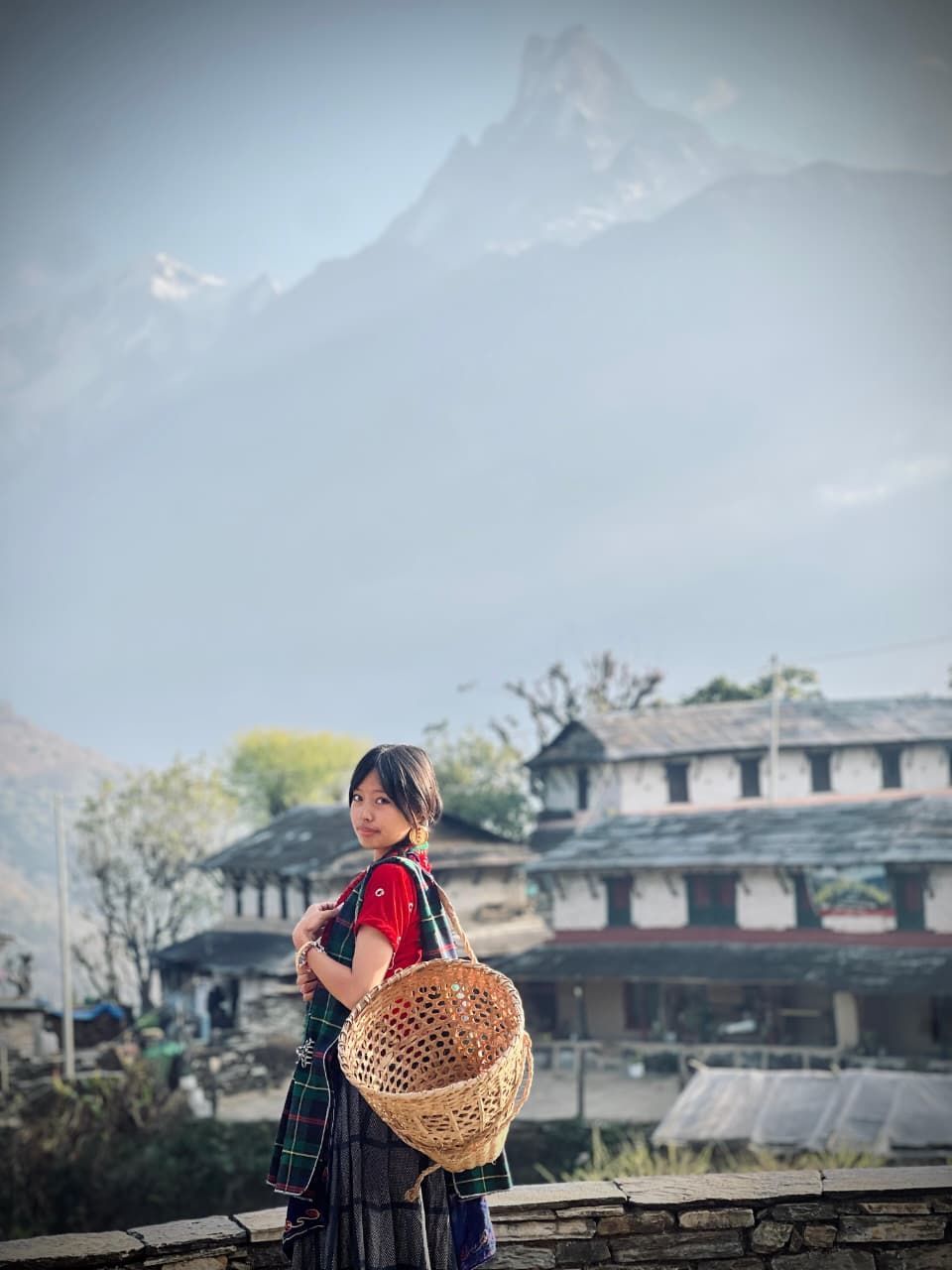
Today, Ghandruk is popular for its majestic view of the Annapurna Range and Machhapuchre with traditional houses in the foreground, which have captivated both local and international travellers. Every year round, people either drive directly to Ghandruk or set it as an ending place for a trek itinerary. You can visually find people renting traditional dresses and taking pictures in the traditional-style hotels.
But before all the tourism fame, Ghandruk was any other regular village settlement of the local communities, who made a living with animal herding, terraced farming, and local trades. But after Nepal officially opened its border to tourism and promoted its mountains, Ghandruk village was recognised as a peaceful and culturally rich place for spending the last days of the long journey.
Photo: Ghandruk village
The end of the journey from Landruk starts with moderate uphills on old trails and roads in the middle of the trail, which pass through Tolka.
In the daylight, you will have to spend the last day on dusty roads for a while, which passes through Tolka Village, which is a small settlement spread thinly across the hills. Between the terraced farms and small teahouses, the road trail continues for hours until you reach the uphill trail to Pothana. From Pothana, it's another hour of walking through meadows and stone-paved trails to the road that reaches Dhampus.
From Dhampus, you will be escorted back to your accommodation by our guide, and with farewells, you will be dropped off at the Pokhara hotel, officially marking the end of your trek with the Wilderness Excursion family.
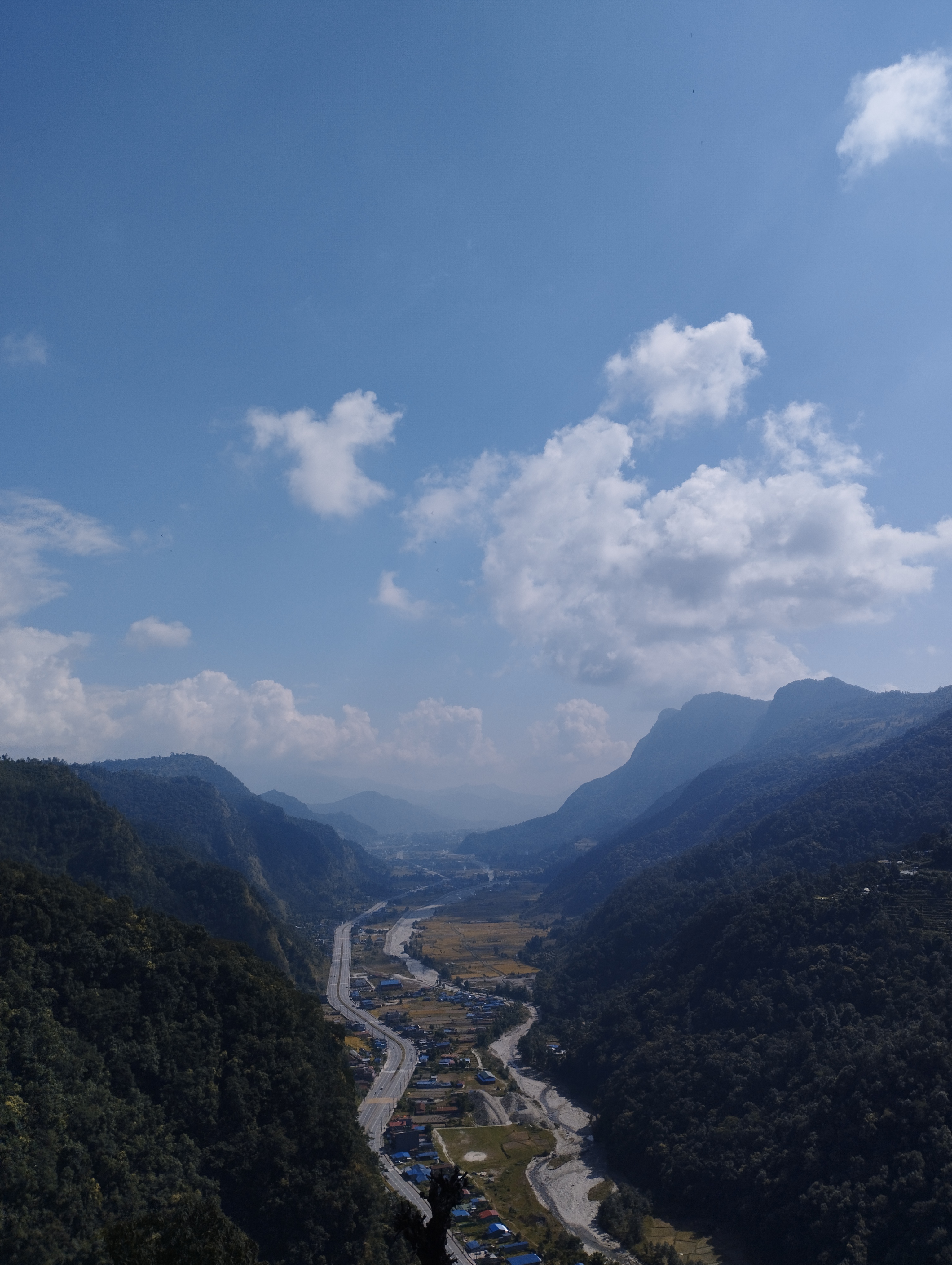
Photo: Phedi town from Dhampus Village.
Our Ghorepani Poon Hill Trek standard itinerary is 4 nights and 5 days of hiking. We can tailor the itinerary perfectly for 4 to 6 days, depending on your fitness level and available time. Contact the expert trip planner at Wilderness Excursion for a customized trip if you would like to create a new one for your best trekking experience in Annapurna, Nepal.
This itinerary was written and reviewed by Pradip Tamang, a senior trekking guide and managing director at Wilderness Excursion with more than 20 years of experience leading treks in the Annapurna region. Last verified: June 2026.
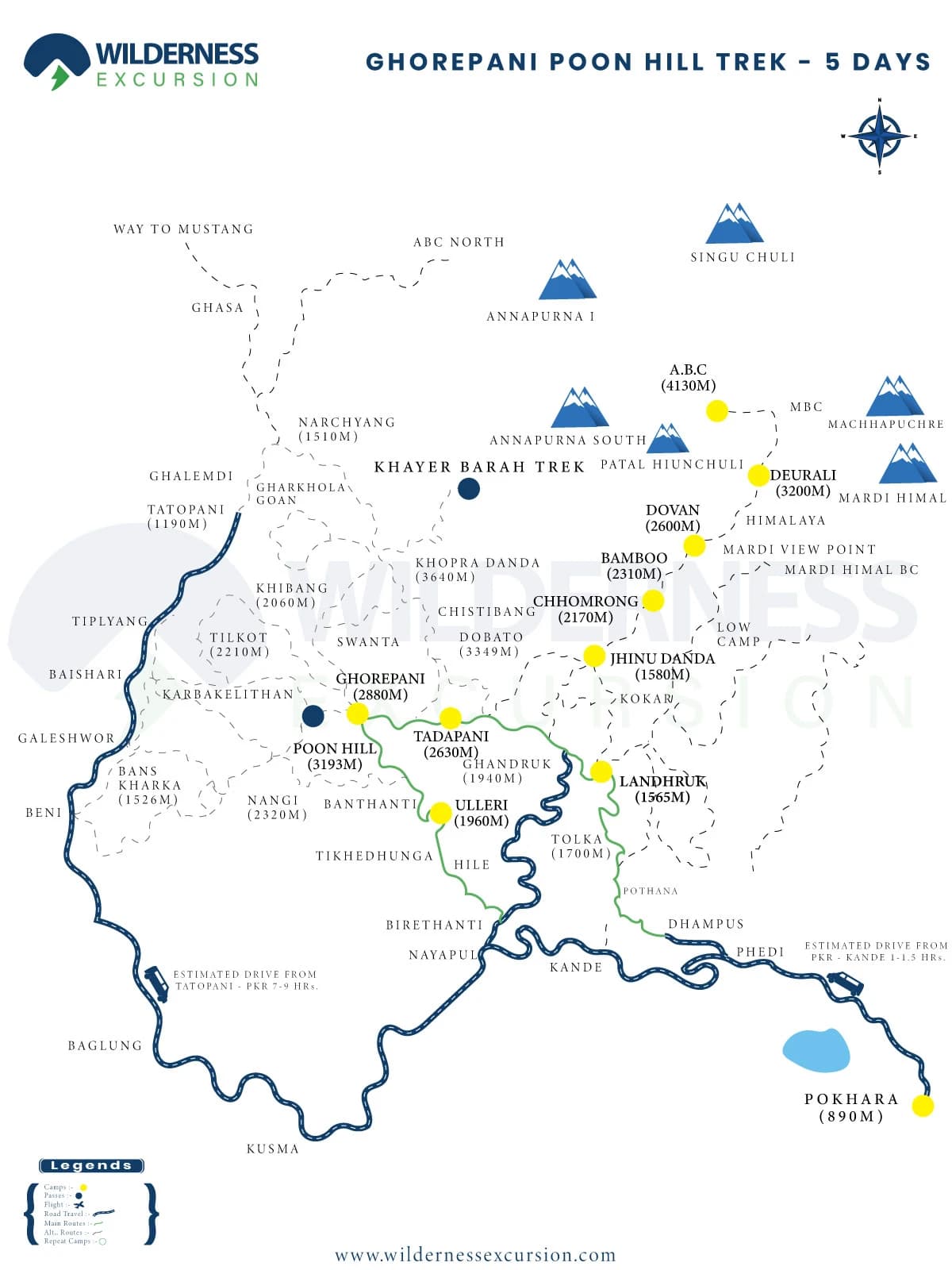
Route Map
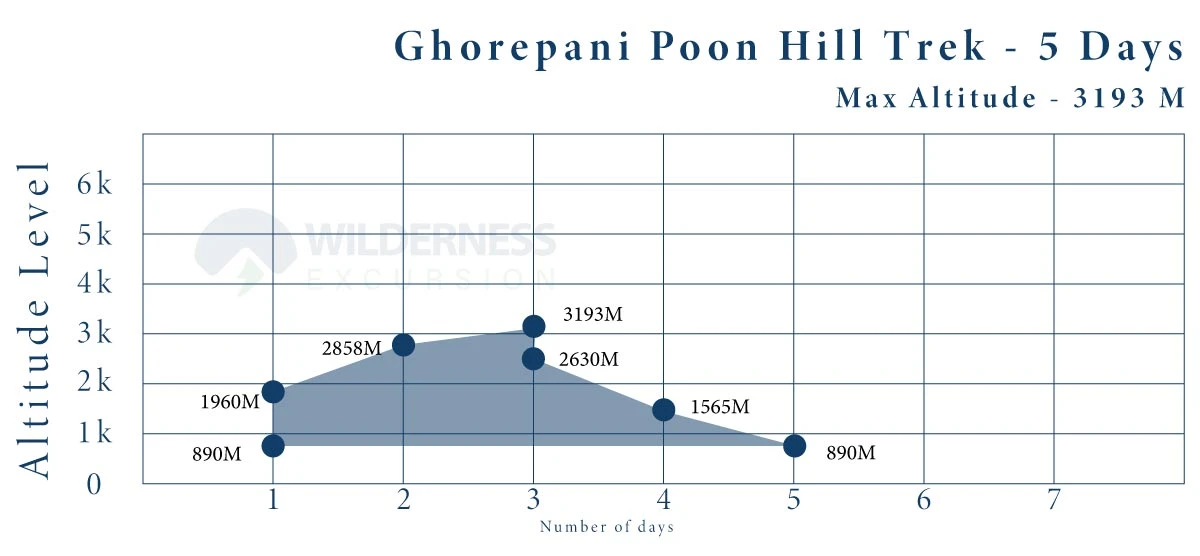
Altitude Chart
Still Confuse?
Download brochure or customize your trip.
Cost Details
Includes
- A registered local Poon Hill Trek guide.
- Accommodation: 4 nights trekking lodge on a twin shared basis.
- Meals: 4 breakfasts, 5 lunches, and 4 dinners during the trek.
- Shuttles from and to your hotel in Pokhara for the trekking.
- Neat and clean trekking lodge accommodation during the trek.
- Guide fee and all his/her expenses.
- Poon Hill trekking permit.
- Insurance of your guide as per state law.
- Taxes and all paperwork charges.
Excludes
- Accommodation and meals in Kathmandu and Pokhara.
- All surface transportation in Kathmandu and Pokhara.
- Guided sightseeing and monument entrance fees.
- All bar bills, beverages such as Coke, Fanta, and mineral water
- Personal insurance, laundry service, and trekking gear.
- Porter if you need (USD 20 per day)
- Rescue operation charge in case of emergency.
- Gratitude and tips for your guide and porter.
Add-ons & Options
Discover the beauty of Nepal with Wilderness Excursion. We have 12 years of successful operation and decades of expertise in leading treks in Nepal. To further enhance your Ghorepani Poon Hill Trek, we’re pleased to introduce extra services (add-ons) to make booking easy in one place for an exceptional adventure at a value-for-money trip cost.
- Private Jeep Service, USD 60: Upgrade your land transportation to a 4WD private Jeep for comfortable travel to Pokhara from the trek at an extra cost of USD 60.
-
Tourist bus Kathmandu - Pokhara USD 15: Allow us to manage your tourist bus seat bookings for seamless land travel between Kathmandu and Pokhara, saving you valuable time.
-
Tourist bus Pokhara - Kathmandu USD 15: Let us assist with booking your tourist bus seat for seamless land travel from Pokhara to Kathmandu, saving you valuable time.
-
Kathmandu - Pokhara Flight USD 115: Take a scenic flight from Kathmandu to Pokhara (25-minute flight which costs USD 115 per adult / per flight)
-
Pokhara - Kathmandu Flight USD 115: Take a short flight of 25 minutes at an extra cost of USD 115 more than a tiring 7-hour bus drive
-
Porter Service at USD 100: Travel lighter, explore further. Let our porters care for your gear (up to 23 kg, shared between two), which helps you easily conquer the Poon Hill Trek.
Dates & Availability
Select Departure Dates
Oct 2026
Nov 2026
Dec 2026
Check our dates published to see if they match your time. We are happy to customize your tour perfectly to match your interests and needs, creating a unique travel experience just for you
Essential Information
Things to know about the Ghorepani Poon Hill Trek
Important notes of Ghorepani Poon Hill Trek
Trek difficulty: Trekking difficulty in Nepal varies greatly, from short valley hikes to high-altitude expeditions. The level is mainly influenced by altitude gain, daily walking duration, and terrain.
The Ghorepani Poon Hill trek is the most popular beginner-friendly trek, with a maximum altitude of 3,193 metres. Its suitability for beginners is due to its manageable terrain and trail. The trek starts from Birethanti, follows the Burungdi Khola to Hile, then ascends to Ulleri via Tikhedhunga. After the initial climb to Ulleri, the trail mostly winds through green forests. The only strenuous uphills are before reaching Ulleri, during the pre-dawn hike to Poon Hill, and before crossing Tadapani, making it suitable for new trekkers and all ages.
Best time to trek: When embarking on a trek in the Himalayas, knowing the right time and season is crucial, as it affects what you see and experience during your journey. The peak trekking seasons are from March to May and September to November. However, the best choice depends on what you want to gain from your trip. To clarify, let’s break down why these months are popular for trekking in Nepal.
Spring Season (March-May) – Pre-monsoon / Blooming Season
• Mild to warm days make trekking pleasant.
• Forests in the upper Himalayas are filled with blooming rhododendrons.
• Bird watching is ideal—many species can be spotted in the Annapurna Conservation Area.
• Mostly clear weather during early spring offers panoramic views of Dhaulagiri and Annapurna.
• Lush green hills enhance the scenery and photography appeal.
• Occasional haze or clouds may occur in May, but visibility remains good in the early season.
Autumn Season (September to November) – Post-Monsoon / Peak Season
• Weather becomes stable and dry after the monsoon.
• Skies are crisp and clear, perfect for mountain views.
• Recognised as the best time for trekking and travelling in Nepal.
• Coincides with major Nepali festivals:
o Dashain (Nepal’s biggest festival)
o Tihar (festival of lights)
• A great time for cultural exploration, with traditional rituals and celebrations happening across villages and towns.
Seasonal weather in Poon Hill: The main seasons fall during spring and autumn, but a monsoon trek is also possible for Poon Hill. Although heavy rain blows the drifting clouds, the monsoon experiences constant rainfall, which is not an ideal time for trekking.
The spring season is considered the best since the Poon Hill trek is not renowned for the panoramic views but also for bird-watching and colourful forests of rhododendrons. But the reality of spring is that it falls right before monsoon, so you will experience occasional rainfalls and mists, but overall, the trails of Ghorepani are known for their flora and fauna.
The autumn season is preferred for most adventure activities, including all types of trekking. After heavy rains, the sky clears, and there's a better chance of seeing the whole Annapurna Range. The con is that, during autumn, most plants and animals are dormant, but you still get to experience the golden forest of autumn.
So, both seasons have their own pros and cons; seasons are chosen based on trail types, destination, and personal experience. Choose whichever suits you the best.
ATMs, banks & mobile banking: The harsh reality of trekking is that you cut yourself off from all sorts of modern facilities, including banks and ATMs. Once you drive past the small towns surrounding Pokhara, banks and ATMs are limited to none. So, it is better to exchange local currencies in central Pokhara before the trek departure.
Mobile banking is a bit different, with growing use of online transactions, and banks have also adapted to changes, but internet services and mobile networks can be unstable. So, cash is the best possible option.
Hot showers: Ghorepani trails are more developed, comparatively, with most lodges supporting attached bathrooms and hot showers. In other trails, hot showers depended on LPG gases, but most lodges on Ghorepani depend on solar panels, so a hot shower is possible depending on the lodge. If you have a request for a hot shower, it is best to enquire with the agency and guide beforehand for a better departure to ensure you get the facilities.
Charging and mobile networks: Surprisingly, even Poon Hill now supports a mobile network, but it is not consistent throughout the trail. Some river valley trails may experience unstable mobile networks, but overall, you should be able to get towers and internet services. But the supported network is only NTC, which is partially owned by the government, so buy the right SIM cards from the dealers.
Charging is also mostly free in most lodges with electricity infrastructure being developed, but free Wi-Fi is still not consistent in all lodges.
Permits: Currently, the Ghorepani trails are conserved by the NTNC under the Annapurna Conservation Area Project, so all the trekkers are legally required to obtain the ACAP permits from the Nepal Tourism Board in Kathmandu or Pokhara. There are two options for getting permits, and the price differs for different nationalities, which will be discussed in more detail further below.
Trekking travel insurance: Travel insurance is legally required for obtaining permits. Although conservation rules are different, the government of Nepal has made it mandatory for trekkers to have travel insurance before any departure. The trekking travel insurance is specifically made available for trekking with different benefits and policies based on the itinerary itself.
If you’re interested in local travel insurance and which regions require trekking insurance, visit our blog: Nepal trekking travel insurance.
Cost coverage: The package cost of USD 345 per person, provided by the Wilderness Excursion, covers the necessary and important basic expenses such as permits, documentation, transportation, a guide and his/her fees, and lodgings during the trek and 3-time meals (lunch, dinner & breakfast) as mentioned in the cost details.
Although we cover your basic expenses, any additional personal expenses are not covered. Such as personal bar bills, any kinds of accommodation and transportation in Kathmandu or Pokhara, personal insurances, and rescue operation charges are to be covered by the trekkers themselves. Accommodation and transportation in Kathmandu or Pokhara can also be arranged upon inquiry with extra charges as mentioned in the add-ons.
Arrival and Visa Process in Nepal
On-Arrival Visa in Nepal
Nepal currently houses two international airports, Tribhuvan International Airport and Pokhara International Airport. But all the international flights to Nepal mostly land in TIA, Kathmandu, from where a connecting domestic flight to Pokhara can also be arranged.
The visa process in Nepal is a bit different, since Nepal supports an "on-arrival visa", where you can apply for the visa after arriving in Nepal. There are two ways to apply for the visa: 1) Using the kiosk machine in the airport, or 2) Apply for the online visa. Once you send a visa application, the basic process goes as follows:
- Fill in the 'Arrival Card'.
- Fill in the online ‘Tourist Visa’ form. You can fill it out online before you arrive at the Department of Immigration or use the kiosk machines upon arrival at the airport.
- Make payment at the bank according to your visa requirement (15/30/90 Days)
- Get the receipt.
- Proceed to the immigration desk with your online form, payment receipts, and your passport.
- Hand in your documents to the immigration officer for visa processing.
(Immigration, 2026)
On Arrival Visa Fee Structure
15 Days – 30 USD
30 Days – 50 USD
90 Days – 125 USD
(Immigration, 2026)
Hotels in Kathmandu and Pokhara
Kathmandu and Pokhara are the central hubs for trekkers, and central Kathmandu is more focused on travel tourism, with Thamel as the centre. The Thamel area has multiple hotel and resort options, from dorm facilities and basic lodgings to royal suites. For those who seek immediate departure and marketplaces for shopping, Thamel is the perfect place with its daytime for shopping and nighttime for entertainment. Most trekking agencies also operate from Thamel, so it would be great to meet the agency staff and have small meetings with the guides and porters who will be accompanying the trek.
Pokhara is a mixed tourism sector for both tourists and trekkers to the Annapurna Region. Since Pokhara is a popular tourist destination, it is mainly focused on tourism, with Lakeside being the busiest street filled with hotels, restaurants, and pubs. If you have already packed and do not feel the need to contact the agency, you can directly fly to Pokhara from TIA and spend a night there, since all the major hotels in Pokhara have great mountain views and clear skies with less traffic noise near the lakeside.
Choose to explore Kathmandu
From the surface and trekking perspective, Thamel and Kathmandu might look like a quick stop to multiple trekking regions, but in reality, Kathmandu is popular for different reasons. The valley of temples, Kathmandu, with centuries of history, whose clear architecture can be seen in the streets of Thamel and durbar (palace) areas.
Historically, Kathmandu was divided into three small kingdoms, of which remnants are still perfectly preserved in all three major cities. If Pokhara is known as the gateway to the Annapurnas, Kathmandu is known for its history, art, culture, and harmony of religions. The common things to do in Kathmandu are a day tour of all the major cities and temples like Swoyambhunath, Pashupati, Boudhanath, and the palace museums. But Kathmandu is not limited to tours; the hills of Kathmandu are known for hiking, and every hill of Kathmandu has its own history that connects to ancient scriptures.
Trek difficulty and who is it for?
Physical demands and daily trekking
As we have mentioned, the Ghorepani Poon Hill trek is beginner-friendly, the trails are mostly safe, the lodges have more facilities, and the highest altitude reached is 3200 metres above sea level. The trails support all-age trekkers, but there are a few preparations you can make that won’t hurt you but will help in comfort.
The trail types on different routes and camps are mentioned in previous parts, where major uphills and downhills are centred around Ghodepani. So, what physical preparations can you make for the trek?
- Building stamina and endurance. The overall trek duration is short, but the average daily walking time is around 6 hours, so good endurance is mandatory.
- Building hiking experience, if possible, with limited weights.
- Having a well-maintained diet, especially liking local menu items.
Different parts of the trail conditions and types in Ghodepani
|
Trekking day |
Itinerary |
Trail types |
|
Day 01 |
Drive to Birethanti and trek to Ulleri. |
Off-road trail, river valley trail, dense forest, uphill |
|
Day 02 |
Trek to Ghorepani Deurali |
Dense forest trail |
|
Day 03 |
Hike to Poon Hill and Trek to Tadapani |
Dense forest trail, Pastureland trail |
|
Day 04 |
Trek to Landruk |
River trail, forest trail downhill |
|
Day 05 |
Trek to Dhampus and drive to Pokhara |
Forest trail, off-road trail |
Trek Challenges and solutions
The most challenging part of trekking is endurance, for how long you can trek and how often you can hike. Now, endurance is not just about how strong you are, but also how you trek and maintain a rest/diet relationship.
You might have noticed that some people start fast and get tired quickly as well, but it doesn't mean those who start slow don’t get tired. The trick is to maintain pace, depending on how much your body is using your stamina and how quickly you’re replenishing it. A perfect pace can replenish your strength while at the same time using it.
But all of this is for naught if your diet and rest plan are in shambles. With daily hikes, your body needs energy and constant rest as well. The solution is also simple: just eat. Sounds easy, but it is the most difficult part; most trekkers are not able to adjust to local diets, and it doesn’t suit their taste or preferences, which is common. What you can do is choose something from the menu that is fulfilling, and such items or something similar to them are found in your homeland. Pack nutrient bars and other snacks for daytime, and it should maintain the diet parts. Some of the common challenges and their solutions are highlighted below:
- Different walking pace for uphill, downhill, and hillside straight trails.
- Use trekking poles for downhills to support your knee and foot.
- Have proper gear and not just some knockoffs.
- Fill the diet plan with protein bars and snacks.
- If the local water is unsuitable for you, buy filtered water or carry filter tabs and gadgets.
Altitude Sickness and What to Do?
Altitude sickness is a condition where your body isn’t getting the normal oxygen level to function with the organs properly. The air pressure of high altitudes needs time to adapt, despite taking medicines like Diamox. When the body doesn’t get the appropriate level of oxygen it used to need, you will feel symptoms such as nausea, vomiting, tiredness, lightheadedness, etc. If not cared for properly, it leads to brain and liver failure.
The most practical solution used in every trekking itinerary is adaptation. Every itinerary is tailored for gradual trekking, proper pacing, and acclimatisation, which allows the body to naturally adapt to the changing environment.
Altitude and acclimatization for Ghorepani Trek
|
Trek Day |
Itinerary |
Camp Altitude |
Altitude Difference |
|
Day 01 |
Drive to Birethanti and trek to Ulleri. |
1960m |
+1070m |
|
Day 02 |
Trek to Ghorepani Deurali |
2880m |
+920m |
|
Day 03 |
Hike to Poon Hill and Trek to Tadapani |
2630m |
-250m |
|
Day 04 |
Trek to Landruk |
1565m |
-1065m |
|
Day 05 |
Trek to Dhampus and drive to Pokhara |
890m |
-675m |
Safety and emergency response from Wilderness Excursion
Daily Monitoring: Our guides are more than physically walking maps; for the entire itinerary, trek guides are the legal guardians and situational advisors. Their on-field expertise, advice, and suggestions are practical and useful. They are in charge of monitoring you and your health, making rational decisions like adjusting camp distance if needed, where lunch should be served, and when. He/she is in charge of your well-being and takes rational decisions after proper consultation and briefing.
Our staff from the agencies also make an effort in communicating with the guides as much as possible to ensure the trip is running smoothly in case of an unexpected occurrence.
Acclimatisation built in: The itinerary provided at the sites or a custom itinerary made for your personal preferences are both carefully made with an acclimatisation plan after consulting hiking experiences. Any sudden changes required by the client or made by agencies are properly communicated and only executed.
Evacuation: The evacuation process is only executed when the situation is dire, the client requests it, or the trek guide has made the call. Although the Ghorepani trek rarely needs evacuation, in cases of emergency where evacuation is needed, your life will be prioritised before the completion of the trek. The process will go as follows:
- If the situation is not immediately life-threatening, a gradual evacuation and turn-back will be made. An ambulance will be arranged since Ghorepani has road access. Note: An ambulance is arranged for only minor situations where you’re not able to hike any further but also need treatment, but it isn’t immediate. Although it may depend on how far you’re from the nearest treatment centre and road access.
- If any of the team is in dire need of evacuation immediately, an air evacuation is arranged from the nearest terminal to the nearest hospital. The agency will be in constant contact with the field guide, you, and the evacuation team.
Guide Training: Every guide dispatched from Wilderness Excursion has undergone proper training and classes from NATHM and is legally permitted to guide trekkers. All guides are trained and insured in Wilderness Excursions. You can also enquire about the guide's licence before departure, if you need to.
What to bring: When travelling, especially in regions where immediate health services are not available, it is best practice to carry a first aid kit with basic medicines and utensils. Pack ibuprofen, sanitiser, cotton, medical gauze, medicated dressing, and bandages for a short trek like Ghorepani.
Turning-Back Policy: When a trek departs, you can call it off, but once a trek is already arranged and has departed, there are several turning-back policies that will affect the refund policy. If the agency has requested a turn-back, proper compensation will be given in accordance with our policy.
When a client calls to turn back due to personal reasons, refunds are not available. But in cases where turning back is needed due to natural causes and trekking further is not possible, compensations and charges will be applied depending on the real situation.
Weather and Seasonal conditions
The Ghorepani trek is doable in both the on-season and off-season, but seasonal experiences and trek opportunities differ vastly. The seasonal time periods last from late March to early June and from September to November and possibly in early December as well. The off-season is mainly in the monsoon and winter due to its harsh weather and unsafe trails.
During the seasonal months of March to June is the spring season, which is considered the best time for short treks like Poon Hill. The Ghorepani Poon Hill trek is a popular destination for greenery, bird-watching, floral backgrounds, and panoramic views. In spring, you get the most of the Ghorepani, but the setback is that late spring experiences occasional rainfalls and heavy drifting clouds in the Himalayas, blocking the view from Poon Hill. Sometimes the rain may continue for days due to climate change, but overall, spring is the best season for trekking to Poon Hill.
The autumn season from September to November is preferred by the majority of trekkers and agencies, with its safe, dry trails and stable weather, which remains mostly clear after the heavy monsoon. Although the renowned Rhododendron forest of Poon Hill may wither away, the trail is lit with golden leaves and a crystal-clear view of the Annapurna Range.
Now, the Ghorepani trek can be done in the monsoon as well, but it is not recommended. The Ghorepani Poon Hill trek features dense forest and rainforest in some parts, which can accommodate heavy leeches, moist and slippery trails, and heavy clouds. Winter is also doable for the Poon Hill trek since the highest altitude is around 3200 metres above sea level. With proper clothing and gear, you can hike to Poon Hill. A great piece of advice if you’re trekking in winter is to first check with the lodges to see if they are open and pack all the winter essentials.
Accommodation standards on the trail of the Ghorepani Poon Hill trek
The Ghorepani Poon Hill trek is a relatively well-developed and established trekking destination. From Pokhara, it is the most accessible and luxurious trekking region, offering a range of facilities such as teahouses, lodges, and hotels at the destination, Ghorepani Deurali.
Starting from Ulleri, which is the first stop in accordance with the itinerary, it is a fairly large village area of local communities, which houses fair lodges with attached bathrooms and comfortable stays. From Ulleri is Ghorepani, which is the last stop towards the Poon Hill. Ghorepani supports all sorts of lodges and hilltop hotels with spectacular views of the Annapurna Range and satisfying services.
Although the Ghorepani trail is fairly developed, most trekkers hesitate at Tadapani, which is the intersection or turning point towards the Annapurna Base Camp trekking route. The camp is nestled in dense forest, which makes most of the area moist and facilitates teahouses and small, capable lodges. The last stay in Landruk, near the Modi River, is known for being a quiet and peaceful camp. The village is near the river and between hills, which most local travellers avoid, and is best for spending the last night of the trek quietly and comfortably and resting.
Food and Drinking water in Ghorepani Poon Hill
Drinking water in the trails
The beauty of Ghorepani is its small, practical availability, which most trekkers do not realise. The trails of Ghorepani were used for travelling rather than commercial trekking, so most places have stone resting places, and beside or near them are local water taps made from bamboo from the nearest clean water source. This helps trekkers frequently refill water from clean natural sources free of any medications and also save extra costs for water.
But there are certain cons of local water sources; they are brought straight from their source with no filtration processes, and international travellers who are not familiar with the local environment can’t process the water from local sources, which leads to severe diarrhoea. So, if you wish to use the water from local taps, always carry filtration tabs or gadgets and a minimum of two water bottles, one for filtering and another to carry filtered water. This practice saves you time and water every time.
Another option is to buy filtered and sealed water bottles from the lodges, teahouses, and trail shops. But the prices will rise as you trek higher and farther from the nearest marketplaces.
Common food items and Menus
Surprisingly, every popular trail and trekking destination has a certain untold rule and practice of providing a variety of food items. Why? Every local guide, cook, and lodge believes food is a vital part of successful trekking. As important as water is, you need every bit of energy to even lift a leg and take another step. Since most trekkers are not familiar with local cuisines and are not able to digest them, lodges provide a variety of food items despite the difficulty. From breakfast to dinners and snacks, lodges and teahouses also provide different drinks in both cold and hot options.
Common menu options include
|
Menus |
Items |
|
Breakfast sets |
Tibetan Bread / Chapati with Honey / Jam, Fried potatoes, sandwiches, White bread with Jam / Honey, vegetable soups, Muesli |
|
Lunch Sets |
Nepali Khana Set: Veg Spring rolls, Momo, Fried Noodles, Soups, thukpa |
|
Dinner Sets |
Same as Lunch |
|
Drinks |
Black tea, Black coffee, Tibetan tea, Hot Chocolate, Hot milk, Hot lemon, Lemon tea |
Dietary Notes
Vegetarian options
Vegetarian trekkers are well catered for on the Ghorepani Poon Hill. Nearly every teahouse along the route serves dal bhat, vegetable fried rice, vegetable chowmein, thukpa, and momos without meat. As you gain altitude, menu options narrow—teahouses stock only what can be carried in by porter or yak, so variety reduces, but a vegetarian meal is almost always available at every stop.
Vegan options
Vegan trekking is possible but requires flexibility. Dairy is common in high-altitude cooking — butter tea, powdered milk in porridge, and egg-based dishes appear frequently. Communicate your requirements clearly to your guide before departure so they can brief teahouse owners along the route in advance. Carrying your own protein supplements or snacks from Kathmandu is strongly recommended as backup.
Gluten-free
Gluten-free options are limited above the lower trail villages. Dal bhat (rice and lentils) is naturally gluten-free and available everywhere, but cross-contamination in teahouse kitchens cannot be guaranteed. If you have a serious gluten intolerance or coeliac condition, bring your own sealed snacks for the higher sections of the trek.
Allergies
There are no allergen-labelled menus. Nut, egg, and dairy allergens are common in trail cooking. If you have a severe allergy, ensure your guide is briefed on your condition before departure—this is not optional—and carry prescribed medications in case of unexpected allergies. Contact our agencies and note the allergy problems and ingredients so our guide and experts can communicate with teahouses and lodges ahead of time to ensure proper meals.
Altitude and appetite
It is normal to experience reduced appetite above 3,500 m as your body acclimatises. Forcing large meals is counterproductive — eat smaller portions more frequently, prioritise carbohydrates (rice, bread, and potatoes) over heavy proteins, and stay hydrated. Our guides monitor this as part of daily health checks.
Permits, Fees & Entry Requirements
The Ghorepani Poon Hill trail falls directly under the Annapurna Conservation Area Project; trekkers are legally required to obtain the ACAP permits from the Nepal Tourism Board. With proper documentation, valid passports, and visas, trekkers can apply for the conservation permits independently or through agencies. Those who trek are booked through an agency; their permits and any necessary documentation and fees are covered.
Fees structure for the Annapurna conservation Area Project
|
SN. |
National Parks/Wildlife Reserves/Conservation Areas |
Nepali |
SAARC |
Foreigners |
Child discount |
|
1 |
Annapurna Conservation Area |
NRs. 100 per person per entry |
NRs. 1,000 per person per entry |
NRs. 3,000 per person per entry |
Below 10 yrs free |
Source: (Board, 2026)
The cost given above only applies to the Annapurna Conservation Trekking Area; any changes to the plan or, in cases, the itinerary that passes through other protected areas require permits to be obtained. For updated information on conservation and national park fees, follow the link: Nepal Trekking permit and fees.
Process to obtain conservation permits
The conservation permits are provided by the Nepal Tourism Board, which is in charge of keeping records and issuing permits for conservation areas. Trekkers can independently apply for the conservation permits. NTB supports both online-based applications and physical permits. For the online permits, follow the link, fill out the form, and make the payment. You can either visit the EP counter for cash payments or pay online through IPS Connect.
Entry fee and payment options for the conservation permits
- The entry fee is NRs. 3,000 for foreigners and NRs. 1,000 for SAARC nationals (tax included).
- Two payment options are available: Online Payment and Counter Payment.
- If you choose online payment, you will receive your permit directly by email after successful payment, and visiting the EP Counter is not required.
- If you choose Counter Payment, you must visit the EP Counter and pay the permit fee in cash. Please bring your passport or any valid identification to collect your permit.
- For Online Payment, an additional 2.9% payment charge will apply
- Double fees will be charged for permits issued at Check-Posts.
Source: (NTNC, 2026)
Why are permits mandatory for trekkers?
- Permits and TIMS cards manage and keep track of trekkers.
- In cases of untimely checkouts, officials can send rescue teams.
- For the sustainability of nature and wildlife.
- The conservationists are in charge of maintaining and protecting wildlife.
Transportation and road access in the Ghorepani Poon Hill trek
In accordance with the itinerary, the trek begins in Birethanthi, the first checkpoint for Ghorepani. But it doesn’t mean the road also ends there. With recent developments, there have been multiple changes and updates in road conditions and access points. Within the past year or two, there have been visible road developments beyond Ulleri, but trails mostly bypass these roads from Hile, so the beginning of the trek is still the same.
But the recent development is the further expansion of the road till Banthanthi and now possibly to Ghorepani Deurali as well. With recent developments in check, about 40 per cent of the trek is now on road while the rest still bypasses through old trails.
Ghorepani Poon Hill Trek variants and extendable routes
Annapurna Base Camp Via Poon Hill
The renowned Poon Hill Trek is actually a part of the whole traditional Annapurna Base Camp. Before the major expansion of roads from Nayapul to Jhinu Danda, the Annapurna Base Camp was trekked either from Kande or Birethanti, and this trail was a travel route for local communities of the Annapurna. The Annapurna Base Camp via Poon Hill focuses on more rugged adventure, deep Himalayan experiences, and remote trekking trails.
Factually, the Annapurna Base Camp from Poon Hill avoids major roads and has its old trails still maintained, which lets trekkers experience the old traditional route of the Annapurna Base Camp, from villages to open pasturelands and glacier valleys of the Annapurna.
Outline Itinerary of the Annapurna Base Camp via Poon Hill
|
Trek Day |
Itinerary |
Camp Altitude |
|
Day 01 |
Drive to Nayapul and Trek to Ulleri (1960) |
1960 M |
|
Day 02 |
Trek to Ghodepani Deurali (2880) |
2880 M |
|
Day 03 |
Hike to Poon Hill (3200) and Trek to Tadapani (2630) |
2630 M |
|
Day 04 |
Trek to Chhomrong (2170) from Tadapani |
2170 M |
|
Day 05 |
Trek to Dovan (2600) from Chhomrong |
2600 M |
|
Day 06 |
Trek to Deurali (3200) from Dovan |
3200 M |
|
Day 07 |
Trek to Annapurna Base Camp (4130) |
4130 M |
|
Day 08 |
Trek to Bamboo (2310) via MBC (3700) |
2310 M |
|
Day 09 |
Trek to Jhinu Danda (1580) from Bamboo |
1580 M |
|
Day 10 |
Trek to Siwai and drive to Pokhara (890) |
890 M |
Ghorepani Poon Hill Trek - 5 Days FAQs
This is short and sweet trekking tour best suit for the short time Nepal visitors, a truly lifetime experience small trip. This trek offers breath stopping mountain vista, full of birds, beautiful hamlets of alpine pastures, charming villages of Magar and Gurung people, lush rhododendron forest which fully blooms in Spring season is set just below the Annapurna Himalayan Peaks of Annapurna South, Machhapuchhre (Known as the Fishtail Mountain as its shape is look like fishtail from west direction) towering sky high. Main feature of Poon Hill Trek are; Poon Hill Hike probably one of the finest view points on the earth, When sun comes up and touches the white mountains, Himalayan giants, Mount Dhaulagiri (8167m) and Annapurna I (8091m) along with other gorgeous peak, there gradually appear, just like magic happening in front you and you couldn't believe this at first. Besides, the journey rewards with natural beauties in your each and every footsteps.
Like other trekking in Annapurna except Annapurna Circuit this trek also begins from Pokhara and end there. Pokhara is 200km west of Kathmandu, the capital of Nepal. Daily tourist buses run to Pokhara from Kathmandu. Local buses leave every one hour from Kathmandu. Wilderness Excursion can arrange a private car or van if you ask us. Most domestic airlines fly to Pokhara from Kathmandu every day (U$117 / flight / head). Sit on the right side to see striking view of wide range of Himalaya while flying to Pokhara. Most of people take tourist bus to Pokhara; 200km drive and takes 7 to 8 hours depending on traffic. There are normal to deluxe tourist coaches available. Green Lines Buses costs USD 25 per person with breakfast, they run every morning from/to Kathmandu.
Autumn (September - November) and spring (March – April) are recommended as the best time of the seasons to trek to Ghorepani Poon Hill. The weather is sunny and warm during the day time with breath stopping views. If you would like to avoid crowds and enjoy less crowded time with nature then you could trek in winter (Dec - Feb) And it is still warm during the day time and cold in the morning and nights. The temperature is 0 to -5 degree Celsius at Ghorepani Poon Hill during the winter However, the weather condition in Himalaya is associated with Indian Ocean. Trekking in the Summer or Monsoon seasons (June to Aug) will be affected by rain but the Summer trek could be a boon for a keen botanists.
Regarding the difficulty, this is an easy trek suitable for walking lovers who have the ability to walk for around 4 to 6 hours a day with a light day sack. Exercising and jogging regularly for a few weeks prior to the trip is good idea to increase strength and firmness. Past hiking experience would be an asset but no technical skill is required for this trek. Participants with pre-existing medical conditions such as heart, lung, epilepsy and blood diseases should inform Wilderness Excursion before booking the trip. We also recommend that you consult your doctor(s) before the trip start.
Ghorepani Poon Hill Trek Cost: Our price published online - USD 345.00 per person as a budget trek price on a double occupancy basis. A single supplement charge will be an extra USD 50.00. The price will be according to budget, standard, and deluxe tour plans, and group sizes. Taking flights to and from Pokhara saves you time and is more comfortable than taking a tiring, long bus ride, though riding a bus reduces the trip price. We can arrange a Kathmandu-Pokhara flight that costs USD 100 per person.
The actual difference is the trek experience itself. Ghorepani is more inclined towards cultural sightseeing with a great view of the Himalayan Range, whereas Mardi Himal, despite being a week-long trek, is a more remote and rugged experience.
Unlike other base camp and high-altitude pass treks, Poon Hill is completely beginner-friendly, and you can also build experience for other difficult treks from Poon Hill.
Well, there aren’t actually strict regulations against trekking to Ghorepani without an agency, since the NTNC itself offers options for obtaining the permit independently. But what actually contradicts this is that although NTNC allows independent applications, NTB has already stated in 2023 that every trekker is legally required to hire guides and obtain a TIMS card from government-authorised agencies.
Legally, yes, you’re required to hire a licensed trek guide from a government-authorized agency.
Licensed trekking guides go through a series of training in managerial skills, basic first aid, and navigation. An experienced trek guide knows the terrain and language, cultures, and practices, which can be helpful while trekking.
Every one of our trek guides and porters is properly trained, has obtained their trekking guide license, and is properly insured before every departure.
Honestly, we agencies nor any staff involved nor anyone has any say in how much one should tip. Tipping is an extra reward and gesture, so it totally depends on your own decision.
Absolutely, Wilderness Excursion offers solo trekking and private group trekking with personal trekking guides, which are already included in the package.
The Ghorepani Poon Hill trek falls directly under the Annapurna Conservation Area Project; trekkers are required to obtain the ACAP permit issued by NTNC and the TIMS card from NTB.
The conservation permit fees differ by nationality. For Nepalese, Nrs100, for SAARC nationals Nrs 1000 per person, Nrs 3000 for foreigners, and children under 10 years are free.
The conservation permits can be obtained in an hour; the offices are not regularly packed, while online permits can be obtained in a few minutes with the right documents and timely payments.
Now, arranging the permits is quite tricky; the NTNC allows independent trekkers to apply for the conservation permits, but the NTB has made it mandatory to obtain the TIMS card specifically from a government-authorized agency. So, if your trek falls under the TIMs category, yes, you need an agency, and Poon Hill does fall under the TIMs management system.
The hike from Ghorepani to Poon Hill (3,210m) is a short but rewarding 45 minutes to 1-hour uphill trek, best done early in the morning for sunrise.
Booking with us is simple, easy, and time-saving. Follow the given procedures, and your packaged trek will be ready for departure.
- Click “Book This Trip” on the right-hand side panel. Or follow the given booking link.
- Select the departure date, number of trekkers, additional services, and details of the lead trekker.
- Accept the terms and conditions, and proceed to payment.
- Select the mode of payment and pay the 15% advance payment for booking confirmation.
- Your trip with Wilderness Excursion is ready.
No, Everest is not seen while on Poon Hill. Mount Everest is in the east, and Poon Hill is in the Annapurna region, which is in mid-western Nepal. Poon Hill provides breathtaking vistas of these peaks, including Mount Dhaulagiri (8167 meters), which is the world's seventh highest mountain.
15% of the total payment is accepted as the advance payment and deposit for the booking.
Poon Hill itself is the highest point you will reach on this trek. Poon Hill lies at an altitude of 3210 meters above sea level. This is the destination of the early morning excursion side trip on the Ghorepani Poon Hill Trek.
In case you’re required to reschedule the dates, please kindly email us, state the need for rescheduling, and we will postpone your departure. But rescheduling can only be done before the date of departure, if necessary documentation has already been made and the trek is well-prepared a day before the departure, certain fees will be applied.
The Poon Hill is one of best view point in Nepal, You will get unbelievable sights of white mountain ranges from Hiunchuli, past Annapurna South, to Annapurna I (8,097m/26,566ft) Gangapurna, Khangsar Kang, Annapurna III, Machhapuchhare, Dhaulagiri (8167 m), Tukuche Peak, Dhampus Peak, Nilgiri, etc.
Booking and cancellation policy is consistent for every team. In case you need to cancel the whole trip, the refunds will be made in accordance with our terms and conditions and from the day of booking. While refunding, certain bank charges will also be applied to the transaction.
No problem; the Ghorepani Poon Hill Trek is easily doable around the year. The trekking trip in the monsoon season is usually less crowded and calmer. Chances of great mountain views, like in spring and autumn. But you can enjoy the view of the landscape, local culture, and diverse vegetation, and get a chance to soak in the majesty of the Annapurna Himalayas if the weather permits. So in the monsoon season, most time gets wet, but it is all full of green and provides an opportunity to enjoy summer wild flowers in July and August.
Weather and emergencies are uncertain, and in such cases where departing the trek is nearly impossible, we will proceed with postponing it or cancelling if the client requests. If the trek is cancelled by the agency, we will do our very best to refund the unused amounts.
Like in other parts of the world, tipping is quite common in Nepal as well as in the service industry. However, there is no specific amount, but it really depends on the giver or your perception. We advise tipping 10% of the total value of the trip while doing the Ghorepani Poon Hill Trek.
Yes, you can join our fixed groups. Joining a group also comes with discounted prices for each trekker.
If you are seeking the best family short trek, the Ghorepani Poon Hill Trek could be the famous soft hiking adventure in the foothills of Annapurna. It provides excellent views and is better logistically known as the “apple pie” trek. The trek is easily accessible from Pokhara, but it still provides a great experience of trekking in a kid-friendly environment.
The package cost of USD 345 per person covers the cost for your lodgings, food, and travel costs during the trek in accordance with the itinerary. The cost will further include permit fees, taxes, guide fees, and their insurance as well.
There are no bank and ATM machines on the Ghorepani Poon Hill Trek route. You should get cash in Pokhara before leaving for the trek. People may accept foreign currency but give you a low rate as they will have to walk all the way to Pokhara to get exchanged, so carry NPR.
Wilderness Excursion will not be liable for the personal costs and bar bills. Client themselves are required to cover their beverage costs, although our agency does provide complimentary teas, but any extra drinks, such as cold drinks and alcohol, will not be included. Along with the extra cost for hot showers, charging, or Wi-fi.
The Ghorepani Poon Hill Trek is a well-established short trekking route in lower Annapurna. There are lodges with proper bedding, so carrying a sleeping bag on this trek is not necessary anymore. Lodges provide quilts and duvets. However, some people prefer their own sleeping bag, so they bring it.
The extra money depends on how much you’re willing to spend. On a typical day to Ghorepani Poon Hill, NRs 1500 per person should cover any extra expenses.
The flight from Kathmandu to Pokhara is not included, nor is ground transportation from Kathmandu to Pokhara. But shuttles from your hotel in Pokhara to the trek starting point are already included. If you need additional service, please kindly select the required number of services in the add-ons.
No, personal travel insurance is not covered by the agency. We believe our client has the right to choose their travel insurance and expects them to cover themselves. But in case you do not have one, we can recommend local travel insurance agencies in Nepal.
The Ghorepani Poon Hill Trek supports all kinds of facilities, from teahouses, lodges, and potential hotels and resorts in Ghorepani Deurali and Ghandruk.
Yes, your package includes 4 breakfasts, 5 lunches, and 4 dinners during the trek during the whole trek.
The lodges and teahouses support common food items and breakfast sets consisting of breads, omelets, jam, tea, coffee, honey, chapati, muesli, and for lunch/dinner, Nepali dal bhat, Veg. spring rolls, Momo, Fried noodles, soups, and Thukpa, etc.
Most lodges support vegetarian options since transporting meat is limited, and lodges do farm local hens, which are only available after ordering. Special dietary options are also possible in breakfast sets, since lodges specialize in trekking catering.
Yes, safe drinking water, like filtered and sealed water bottles, is available in lodges and teahouses throughout the trail. You can also carry your own filtration gadgets or tablets for the bamboo tap water.
Most lodges in Ghorepani now support hot showers with extra charges. Although a small number of teahouses and lodges may not support, so if you do need frequent showers throughout the trek, inform the agency and guide so we can arrange it ahead of time for you.
Yes, despite being trekking trails, which are known for remote nature experiences, the trails of Ghorepani are well-developed with luxury lodges in Ghorepani Deurali. There are plenty of charging points and paid internet services in the lodge.
Yes, your hotel should have storage facilities to store your luggage. But in case you’re not comfortable with the hotels, we can also store your luggage if it’s not much.
The weight limit is 20kg maximum for each porters, any more than that is not acceptable, even with extra payments. If you have luggage weighing more than 20kg we recommend leaving it in the hotel you’re staying at, or if you do need it during the trek, hire an extra porter.
In cases of altitude sickness, there is a fixed protocol for checking the trekkers' vitality, level of symptoms, and procedures. If the symptoms are mild or common for a few hours, gradual pacing will be set while monitoring health. If the symptoms escalate with each altitude gain, our guide will start the descent to lower altitudes, but if the symptoms continue and are extreme, an immediate rescue operation will commence.
The most logical and practical precaution is to set a pacing, which is right for your fitness and experience. Packing hydration sachets and Diamox for extreme solution.
Yes, Ghorepani trail supports mobile networks, and in case you require immediate rescue, we can arrange it for you as fast as possible.
Yes, even the Poon Hill at an altitude of 3200 meters supports mobile network, although it may not be consistent throughout the whole trail, the major part does support mobile networks and internet.
Sorry, but we do not provide any medical kits or personal first aid kits. Trekkers are themselves liable for packing their personal kits. Do pack basic medicines and personal medicines, if you have them.
The Ghorepani trek is a completely safe and easy trekking route. Most trails have checkpoints and security, while most villages are also familiar with trekking and the tourism industry.
In case a team member gets altitude sickness, he/she will follow the same altitude sickness procedures with another agency staff incase your group has assistant guides but if the assistant guide in absent or not hired, a porter will be assigned to take care of or the trek guide himself will look after him/her, the proceedings will heavily depend on the situation, and trekking days left.
A basic daily fitness training and endurance training should be enough for the Poon Hill Trek. Wake early and do light jogging, if possible, also build short hiking experiences with light weights, and maintain a good diet.
There is no high level of fitness required for the short hike to Poon Hill. If you can walk continuously and have good endurance and fitness, you’re qualified for the trek.
A month or two of preparation should be more than enough for the Ghorepani Poon Hill trek, unless you have a physical disadvantage.
A good trekking boot or sports shoes and hiking-friendly clothes are more than enough for the seasonal Poon Hill trek.
Yes, even though it’s a short trek, having travel insurance while you’re in Nepal is advised for unexpected circumstances.
Since there are currently no epidemic or pandemic situations like COVID-19, if you’re not sick from other transmissible diseases, you should be good.
The major dominating communities are Magar and Gurung in Ghorepani and Ghandruk, whereas you can also find other communities in minor numbers with growing tourism and migration practices.
Nepal is a multi-ethnic country with hundreds of caste who has their own local and well-known practices, so picking each practice is quite impossible. If you’re in a village or community, it's best to ask your guide about the practices and how you should respond to them. The common one is NAMASTE, which refers to hello, so best to return the greeting.
Yes, if the villagers have given their consent, you may interact with the locals and learn about their lifestyle. You can also ask your guide for a translation if you need.
There is a good chance of experiencing festivals during the seasonal time, but the major festivals like Dashain and Tihar fall in the Autumn, when you can experience Nepal’s longest festival time period for a whole month.
Each monastery has its own rule of photography, and most do not allow taking photos inside the hall, but it should be fine to take pictures of villages.
Yes, you absolutely do need a valid visa and enough visa date to trek in Nepal.
Nepal currently has two International Airports, Tribhuvan and Pokhara. For experiencing the culture and religion, TIA is the one since it is in the capital city, Kathmandu. While Pokhara International Airport in Pokhara is known for its natural beauty with the Annapurna Range in the background, lakes and waterfalls near the city.
You can bring your own currency; Kathmandu and Pokhara both have multiple money exchanges, but the dollar is the most accepted currency in Nepal.
Yes, if you have enough visa days, you can extend your trip to other parts and trekking trails, but you do need to inform the agency and guide beforehand about extending your trip. There are legal procedures for trekking to another region and a guide insurance procedure to extend the coverage.
Altitude sickness generally develops above 3,000 meters. Since Poon Hill is at a height of 3,210 meters above sea level, and you will only be there for a morning hike for a short time before descending to a lower altitude at Ghorepani (2,850 m), where you will sleep - the highest place you spend the night, the risk is minimal. Very few people may experience mild discomfort due to the altitude, as per our experience at Wilderness Excursion.
They’re not different treks — just different names for the same or slightly varied itineraries, with Ghorepani Poon Hill Trek being the more complete and commonly used name
What Our Clients are Saying?
based on 8 reviews
Wonderful Trekking in Poon Hill
I recently completed the 4 days Poon Hill Trek in February 2026, and it was a fantastic experience. Although February is considered the off-season, I was blessed with sunny weather every day—I didn't even need a jacket during the daytime!...

Mamika Nakamura- Japan
February 19, 2026Ghorepani Poon Hill Trek Winter 2026
We are two friends from Kuwait who traveled to Nepal with the goal of trekking to Annapurna Base Camp in 5 to 6 days. However, since it was winter, our local tour agency, Wilderness Excursion, advised against it due to...
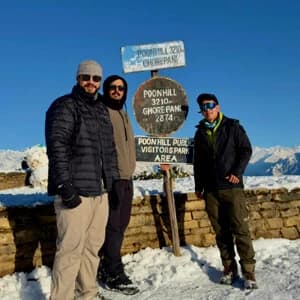
Naser W J Mahdi- Kuwait
February 03, 20264 Days Ghorepani Poon Hill Trek - Supportive Guide!
Exceptional Trekking Experience with a Supportive Guide!
I recently completed a 4-day Ghorepani Poon Hill Trek with an outstanding team—super-friendly staff from Wilderness Excursion, fair pricing without hidden cost, and a meticulously planned itinerary. My guide, Yuhan, made the experience...
Lily S.- United Arab Emirates
May 24, 2025Adventures Tailored for You
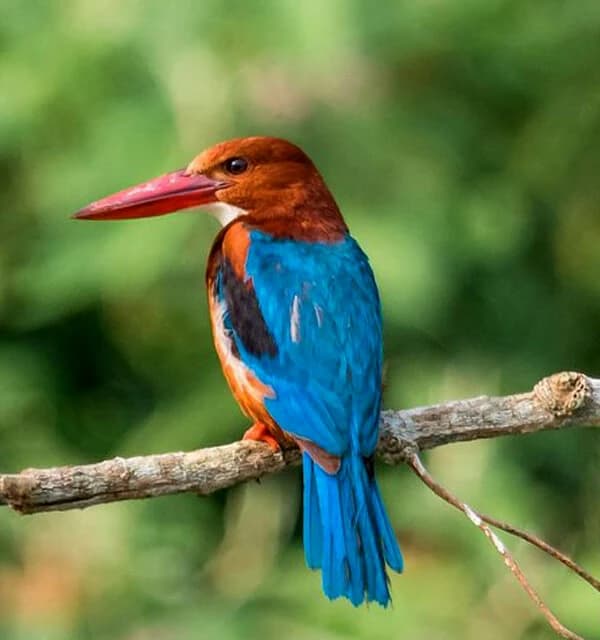
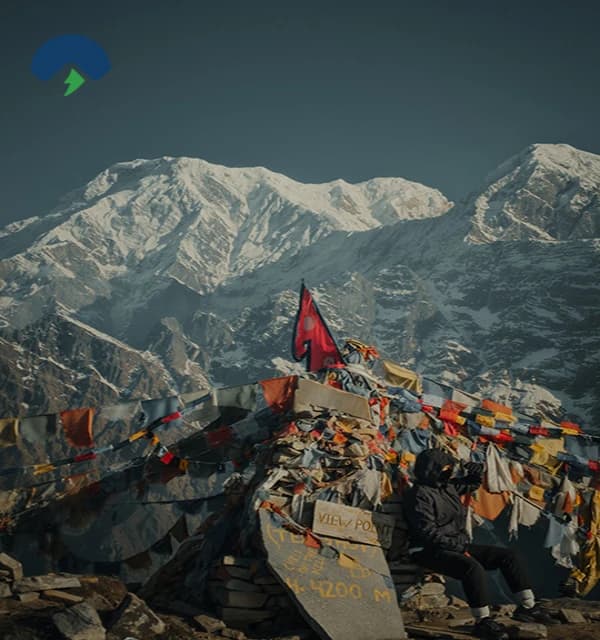
Need Help? Call Us+977 9851042153