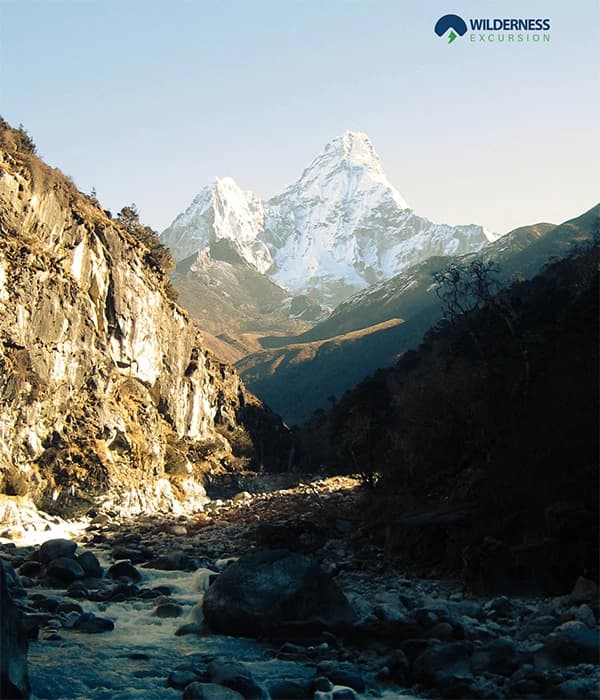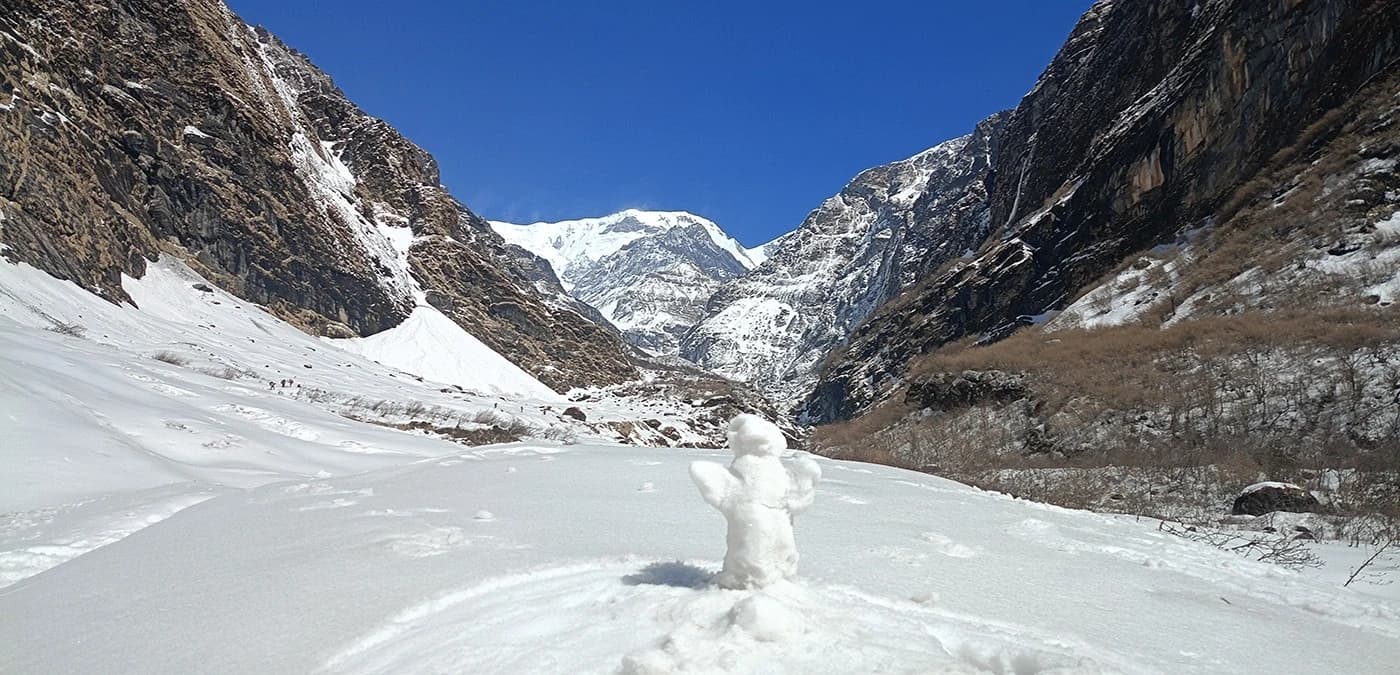

The story of the Annapurna Base Camp
The Annapurna Base Camp has been a popular trekking destination, a dream, a word that remains at the tip of the tongue when planning trekking. For various reasons, through countless events, the term "Annapurna Base Camp" itself somehow defines or visualizes the concept of trekking as well. A short trek with a complete 360-degree view of the Himalayas, diverse scenery, and close-up views of the mountains. With such marvelous features, the trek became a popular destination in the early 1990s after trekkers made it globally known as the best short and scenic trekking route of the Annapurna Region.
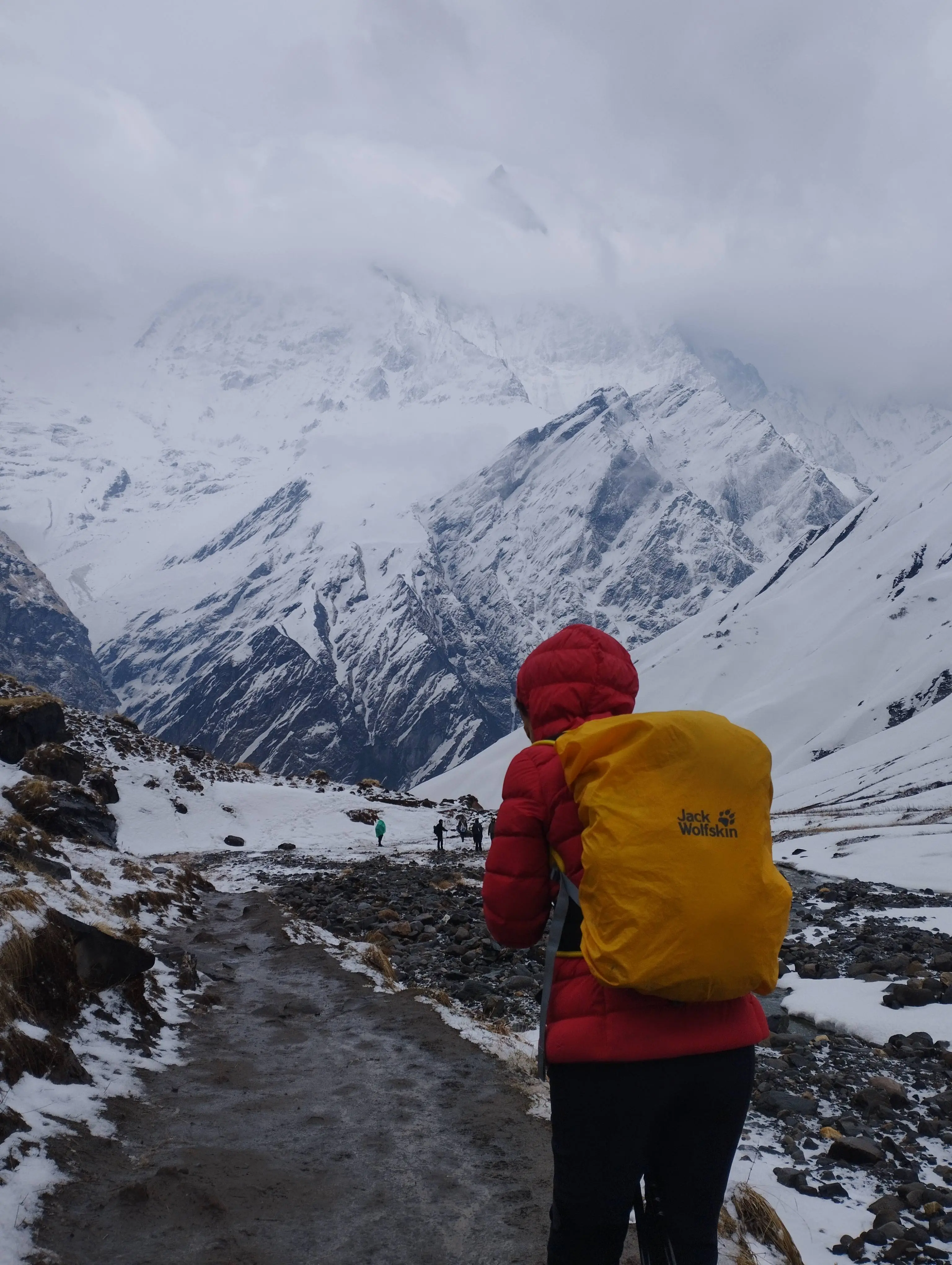
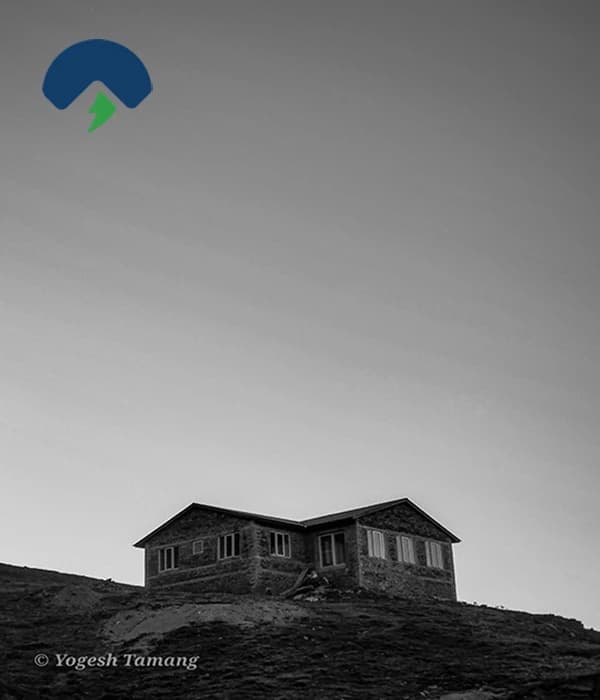
Photo: Trail from ABC to MBC - Yogesh Tamang
Presently, the Annapurna Base Camp is still at its peak popularity, with heavy crowds on trails and lodges. But what if I tell you there is another trek with similar qualities and more wilderness experiences, raw trails, and authentic cultural experiences? Doesn’t sound legit, right, but it is a fact. Just behind the majestic Annapurna South is another mountain above 8000 m commonly known as Annapurna I. The world's 10th-highest peak and the first 8,000-meter summit were successfully climbed in 1950; below it is a locally known glacial meltwater pond formed from the Annapurna North Glacier. The trekkers mark it as the Annapurna North Base Camp.
But our question for today is, which trek is the best between the Annapurna North Base Camp and the Annapurna Base Camp? There is no straight answer like "this is the best one," since, unlike products, traveling connects with people's emotions, so there are a lot of variables in play. Some may prefer Annapurna Base Camp for its popularity, but others might prefer the Annapurna North Base Camp for its solitude. So, before saying this is the one, let’s have a deep word exploration of both treks individually and come up with an answer.
Annapurna Base Camp Trek
Long before it became one of Nepal’s most iconic trekking routes, Annapurna Base Camp was a hidden sanctuary deep within the Himalayas known only to the local communities who lived in its shadow. For generations, people from nearby villages used these forests and valleys for grazing livestock, collecting herbs, and seasonal movement. The mountains were not just landscapes; they were part of daily life, culture, and spiritual belief.
As Nepal opened further to tourism, the Annapurna Base Camp Trek gained popularity for its unique combination of accessibility and dramatic scenery. Unlike longer expeditions, this trek offered a relatively shorter journey into the heart of the mountains, surrounded by towering peaks, glaciers, and alpine landscapes. Today, the trail is part of the protected Annapurna Conservation Area Project (ACAP), where conservation and community-based tourism go hand in hand. The route is now well-established, with comfortable lodges and clearly marked paths, attracting trekkers from all over the world.
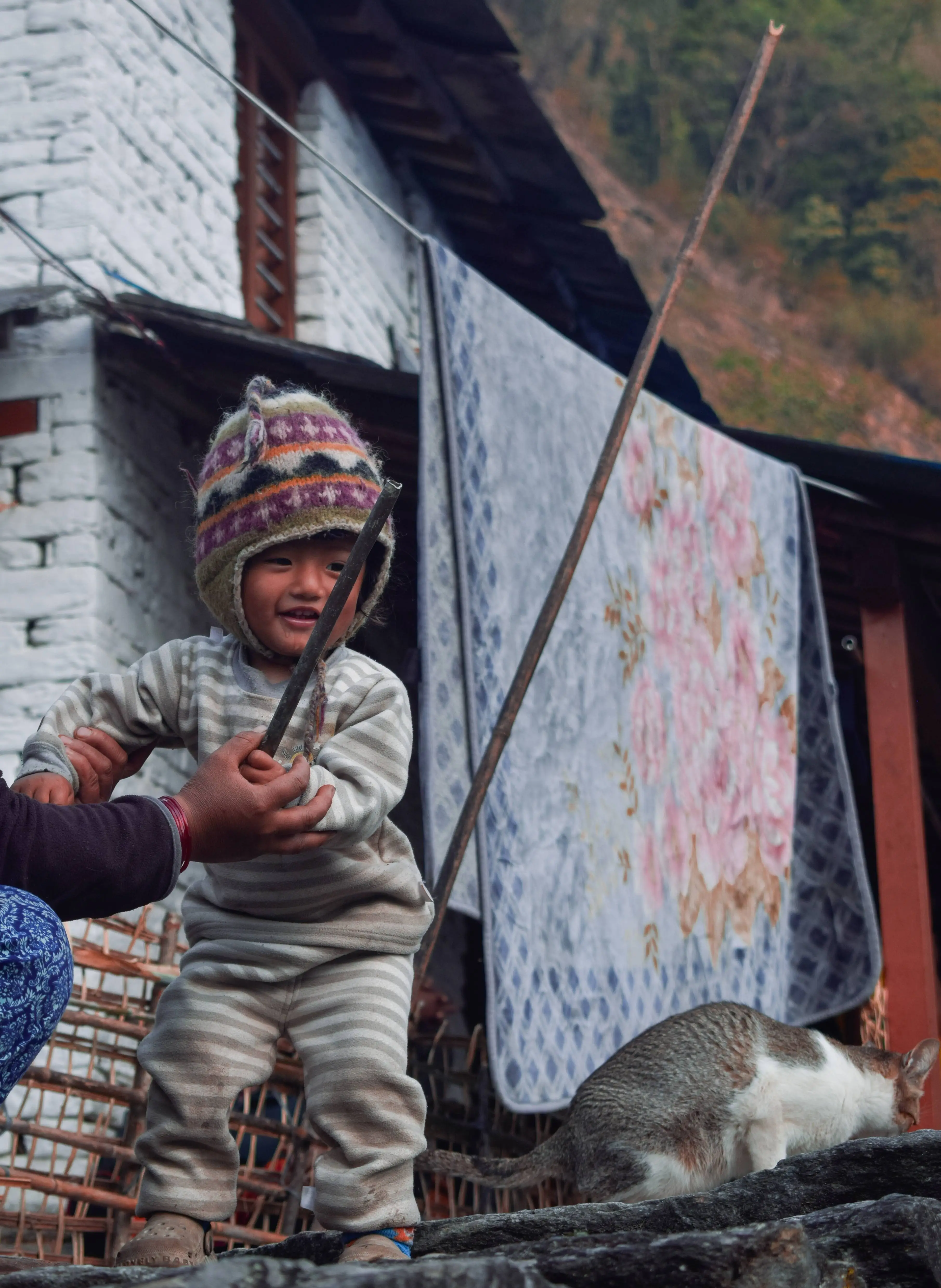
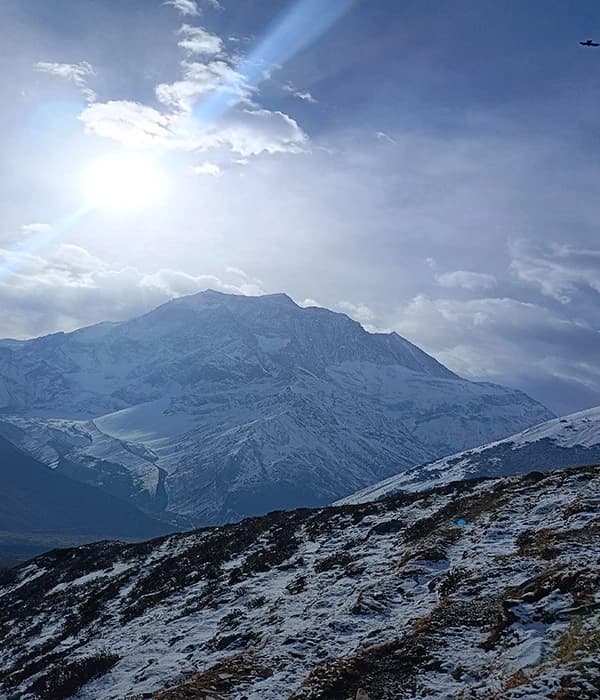
Photo: Chhommrong Village - Yogesh Tamang
Yet, despite its popularity, the essence of the journey remains the same: a gradual walk from lush forests and traditional villages into a high-altitude amphitheater of snow and ice.
Currently, the Annapurna Base Camp is a revered trekking destination for its magnificent scenery and short duration. Every season, thousands of trekkers visit Annapurna Base Camp, from beginners to professionals, only for a glimpse of Annapurna South and Mt. Machhapuchre as closely as possible. The trails pass through old villages that now accommodate travelers, a forest full of bamboo, and river trails from glacial George between massive rock spires of the Annapurna Sanctuary cirque. The Annapurna Base Camp route is also popular for its expedition trail to Annapurna I, since Annapurna South is the doorway to the Annapurna Valley.
Photo: River Valley Trail to MBC—Yogesh Tamang
Highlights of the Annapurna Base Camp trek
- Walk into a breathtaking “mountain bowl” surrounded by giants like Annapurna I and Annapurna South—a 360° panorama unlike anywhere else.
- From lush forests and bamboo trails to alpine snowfields, the scenery constantly changes as you gain altitude.
- Close-up views of Machapuchare (Fishtail) along the trail, especially near MBC—one of Nepal’s most beautiful peaks.
- Follow the Modi Khola through deep valleys, waterfalls, and dramatic rock walls carved by glaciers.
- Experience traditional villages, local hospitality, and a mountain lifestyle with strong cultural roots.
- Well-developed route with lodges, making it one of the most accessible high-altitude treks in Nepal.
- Outline Itinerary of Annapurna Base Camp (H3)
7-day itinerary to Annapurna Base Camp
Day 01: Drive to Phedi from Pokhara and trek to Tolka (1700 m).
Day 02: Trek to Sinuwa (2360M) from Tolka (1700M).
Day 03: Trek to Deurali (3200M) from Sinuwa (2360M).
Day 04: Trek to ABC (4130M) from Deurali (3200M).
Day 05: Trek to Bamboo (2310M) from ABC (4310M).
Day 06: Trek to Ghandruk (1940M) from Bamboo (2310M).
Day 07: Trek to Siwai and drive to Pokhara (890M).

5-day itinerary to Annapurna Base Camp
Day 01: Drive to Jhinu Danda from Pokhara (890M) and trek to Sinuwa (2360M).
Day 02: Trek to Himalaya (2900M) from Sinuwa (2360M).
Day 03: Trek to MBC (3700M) from Himalaya (2900M).
Day 04: Hike to ABC (4130 m) and trek to Bamboo (2310 m).
Day 05: Trek to Jhinu and drive to Pokhara (890M).
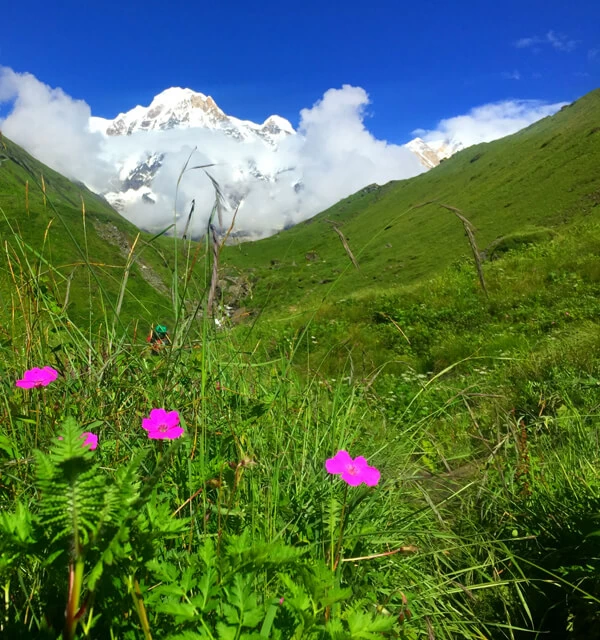
Annapurna North Base Camp Trek
For those seeking something even more remote, Annapurna North Base Camp offers a glimpse into what Annapurna Base Camp once felt like decades ago—untouched, quiet, and deeply connected to nature. Protected under the same laws of the Annapurna Conservation Area, the north base camp was not exactly a valley later discovered by trekkers or expeditions. Just like Annapurna Base Camp, the north base camp was also used for local livestock grazing and seasonal movement for sheep.
Everything changed in 1950, when a French expedition led by Maurice Herzog and Louis Lachenal made history by successfully summiting Annapurna I from the south base camp. It was the first time any 8,000-meter peak had ever been climbed, placing the Annapurna region on the global map.
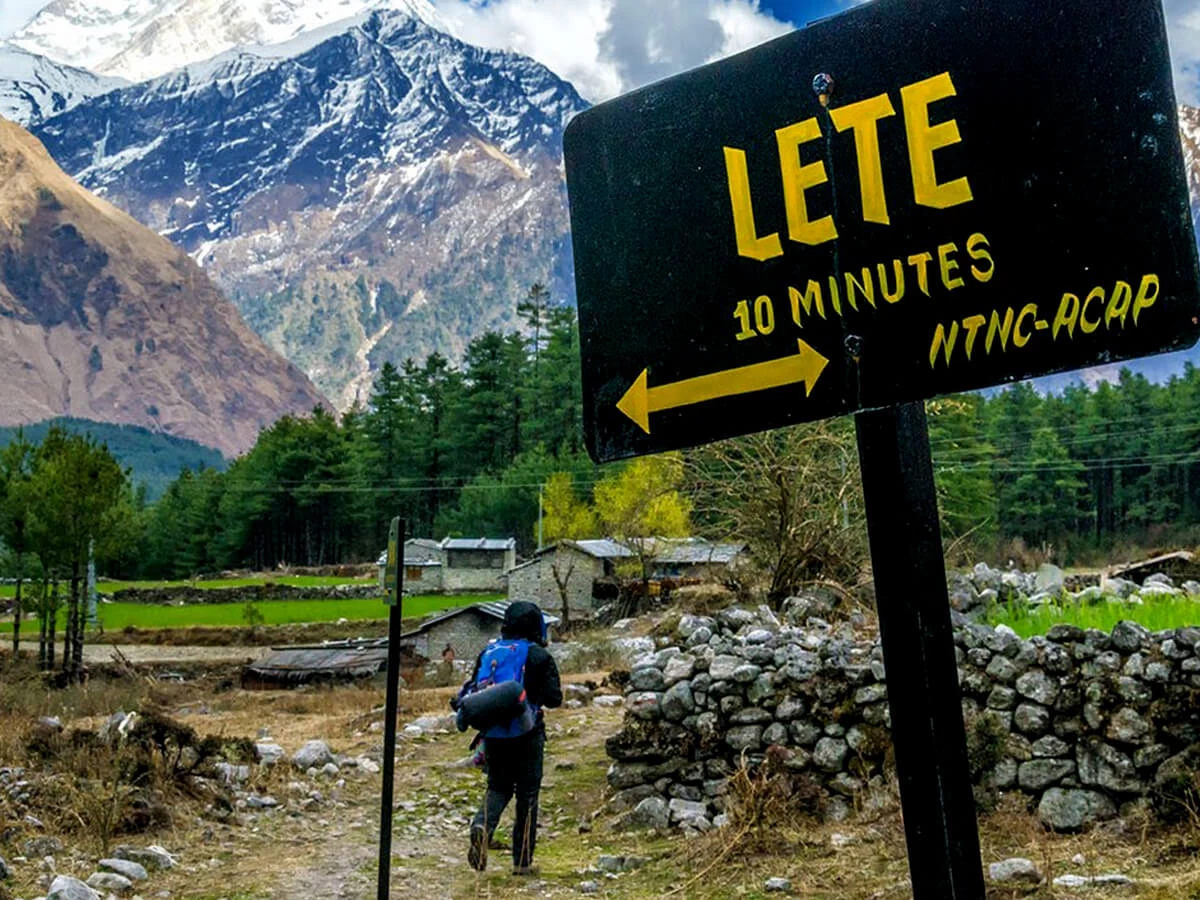
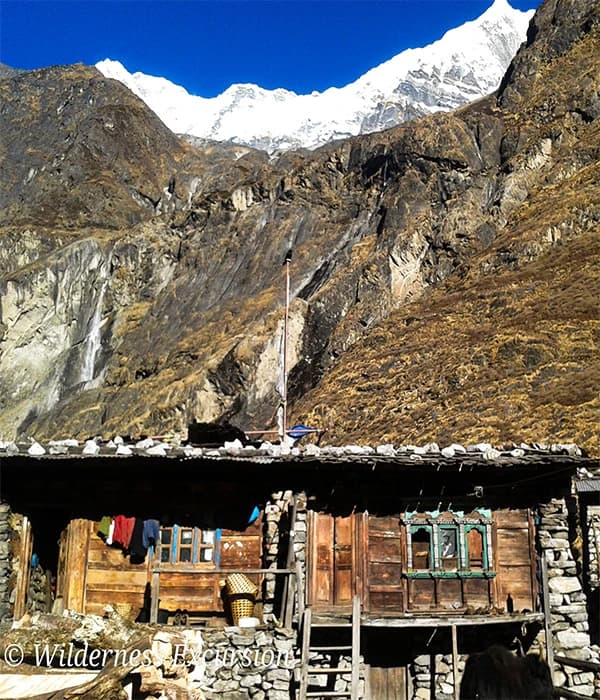
Photo: Lete Village in Mustang District - Wilderness Excursion
In the years that followed, explorers began venturing deeper into the region. By the 1970s and 80s, basic teahouses began to appear in the lower region of Annapurna North Base Camp, offering shelter to trekkers seeking a raw Himalayan experience. With time, the North Base Camp is also fairly well-known to the majority; although no proper lodges are available, small teahouses still accommodate trekkers on their journey, and you can also see short video clips of trekkers camping in the Annapurna North Base Camp near the glacial lake.
So, the Annapurna North Base Camp is an entirely different trek from the Annapurna Base Camp, a different route, destination, scenery, and experience, but personally, for me, the North Base Camp is the past of the Annapurna Base Camp. A quiet and secluded place that sits at the lap of the Annapurna Range, far from civilization, and a perfect destination to temporarily escape it.
Highlights of the Annapurna North Base Camp Trek
- A true off-the-beaten-path trek with very few trekkers—peaceful, raw, and immersive.
- Stand beneath the massive and rugged north side of Annapurna I—a dramatic and less-seen perspective.
- Explore wild terrain with glaciers, moraine fields, and seasonal glacial ponds.
- Trek through narrow valleys, dense forests, and untouched waterfalls rarely seen on commercial routes.
- Higher chances of spotting animals like the Himalayan Tahr and birds like the Danphe.
- Interact with Gurung and Magar communities in remote villages—less tourism, more genuine lifestyle experience.
7-day itinerary to Annapurna North Base Camp Trek
Day 01: Drive to Tatopani and to Narchyang.
Day 02: Trek to Chhotepa from Narchyang.
Day 03: Trek to Sandikharka from Chhotepa.
Day 04: Trek to Annapurna North Base Camp from Sandhikharka.
Day 05: Excursion around Annapurna North Base Camp and trek to Thulobugin.
Day 06:Trek to Gasa from Thulobugin.
Day 07: Drive to Pokhara from Gasa/Lete.

Now, which should you choose between Annapurna Base Camp and Annapurna North Base Camp?
If you’re an adventure lover, I personally recommend you try both trekking routes, since both have their unique characteristics, which can only be known after visiting. But if you really do have to choose, do it based on whether you want a secluded place with fewer crowds or a place where you can connect with like-minded people.
Annapurna Base Camp can be a suitable choice for those who want to stay socially connected, even if they are thousands of miles away from nearby villages or towns, where they can share stories with strangers of similar interests, but do not want to bother with the difficulties of a wilderness trek where facilities are limited.
Whereas the Annapurna North Base Camp is the perfect destination for those seeking adventure with solitude and raw wilderness, experiencing the old authentic culture, and not really liking to be around crowds.
Also, if you’re looking for such a wilderness trek without any crowds, quiet trails, and raw experience, I recommend doing the Kalo Daha Trek in Ruby Valley, Ganesh Himal Region.
Permits for Annapurna Base Camp and North Base Camp
Since both trekking routes fall under the law of the Annapurna Conservation Area of the project. Trekkers are legally required to obtain an ACAP permit from the Nepal Tourism Board. You can apply for the permits in the trekking board office with proper procedures and requirements. For permit cost breakdown:
- The entry fee is NRs. 3,000 for foreigners and NRs. 1,000 for SAARC nationals (taxes included).
- Online payment and counter-payment options are also available.
- Online Payment: You will receive your permit directly by email after successful payment.
- Counter Payment: You must self-visit the counter and pay the permit fee in cash.
For more permit fee information, do visit our website: Permits and entry fees
Book a packaged trip to Annapurna Base Camp
If you want a hassle-free trip without worrying about permit procedures, route research, and secure treks, feel free to check out our popular package.