This guide explains the latest rules regarding solo trekking in the Manaslu Circuit Trek, including Restricted Area Permit (RAP) policies, Department of Immigration (DOI) regulations, guide requirements, and important legal considerations for independent trekkers in Nepal.


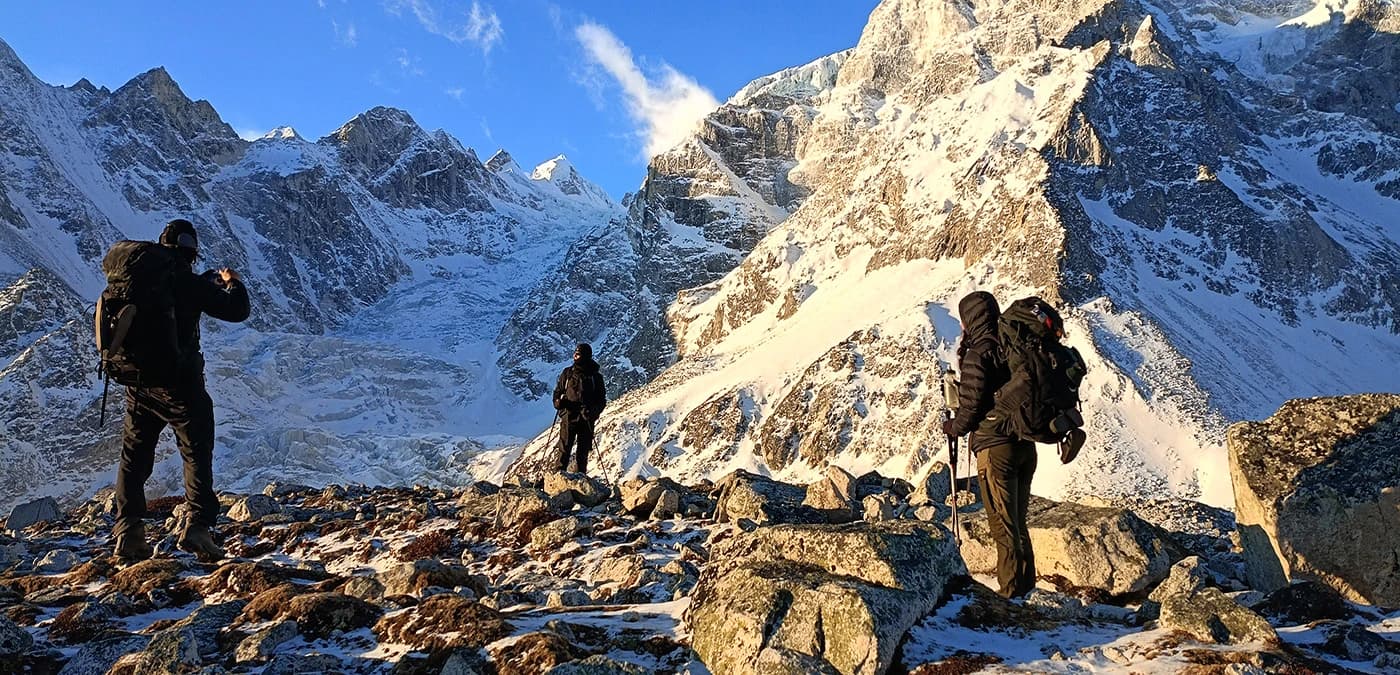
Solo Trekking in Manaslu Circuit Route: Can You Get a Restricted Area Permit (RAP)?
The trekking culture in Nepal and the government's role
Trekking is now one of the most adventurous activities among the youth, and it has been so for decades. People with any conscious intent or unintentional plans travel around Nepal from the flat and dense forest lands of the Terai to the unyielding mountain valleys of the Himalayas with high hopes and expectations. What started as a daily-life struggle to accommodate oneself turned into a major source of income, now a hope for every being to accomplish once: to trek.
Before the 1950s, most of Nepal had no road access, and road structures were only centered around the capital, Kathmandu. These factors, centered on late development, isolated the mountain communities due to poor growth of the country and geographical inaccessibility to build roads, forcing mountain communities in regions like Manaslu, Annapurna, Everest, or simply the whole of the Himalayas to depend on foot for trading, farming, pilgrimage, migration, or any activities that required traveling.
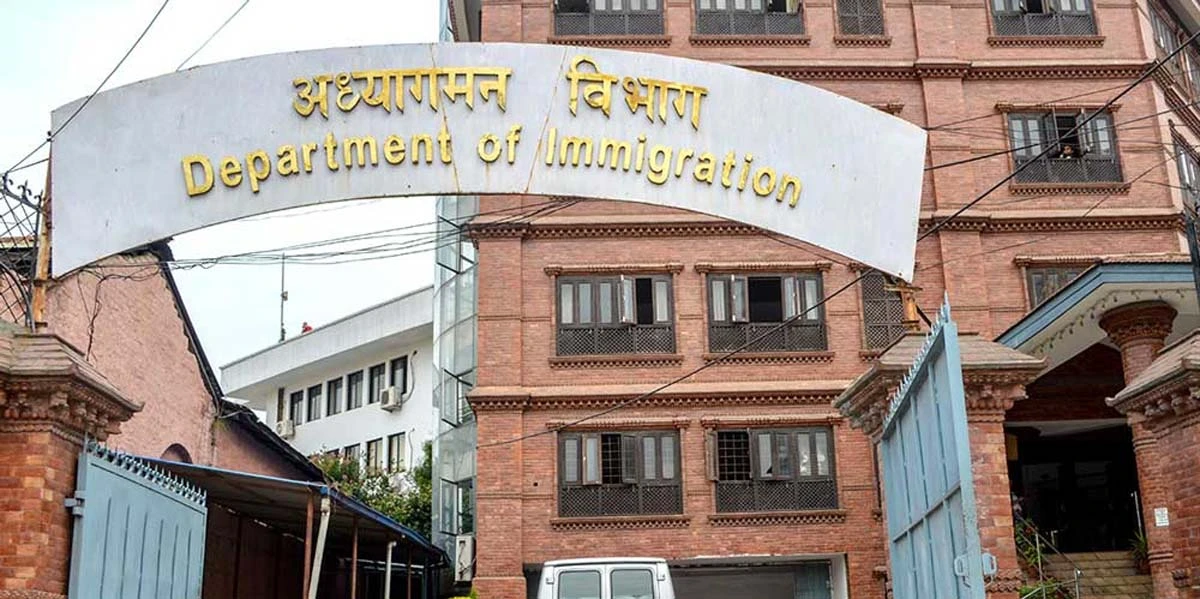
Photo: Department of Immigration - (Nepalnews, n.d.)
Later in 1949, modern tourism began when Nepal opened to foreigners for trekking. The British explorer Bill Tilman was granted permission to explore regions like Helambu, Kali Gandaki, and the Everest region. In 1950, Annapurna I, the first-ever mountain above 8000 m, was successfully summited by Maurice Herzog and Louis Lachenal using the north face route. This was globally massive because no human had ever climbed mountains above 8000 m, which introduced Nepal’s Himalayas to the world. (YouTube - Victoire sur l'Annapurna 1953.)
On May 29, 1953, one of the most significant events in the history of trekking in Nepal occurred, which turned tourism completely on its head. An expedition team led by Edmund Hillary and Tenzing Norgay summited Mt. Everest for the first time. (YouTube: Conquest of Everest).
By the 1960s–1970s, what started as an expedition route became trekking routes when Western travelers became fascinated by the Himalayas, remote mountain cultures, and life. When Nepal officially started trekking, Sagarmatha National Park was established in 1973, which was one of Nepal's earliest major Himalayan protected areas tied to trekking and mountaineering.
In 1986, the Annapurna Conservation Area Project was launched, which was historically important because it was Nepal’s first large conservation area model, which also allowed local people to continue living there. After the 1980s, the RAP (Restricted Area Permit) was also launched to control flow in sensitive areas like Manaslu, Nar Phu, Upper Mustang, and Dolpo due to border concerns, sensitive Tibetan frontier areas, and sensitive cultural and geopolitical importance.
Through all these different key events, Nepal became a common hub for traditional traveling and trekking. The government played the important role of an intermediary to protect, conserve, and track tourism. Important government bodies like the Nepal Tourism Board and the Department of Immigration became responsible for issuing conservation permits and restricted permits to respective visitors.
The Manaslu Circuit Trek
In the northern Himalayan Range of the Gorkha District in Nepal, the Manaslu route of approximately 177 km follows the ancient salt trading route, which was only permitted to be trekked after 1991. Due to geographical sensitivities, only limited permits to Manaslu were issued each year to a few selected applicants. This made trekking to remote and culturally rich places nearly impossible, which also became a drawback for the tourism industry.
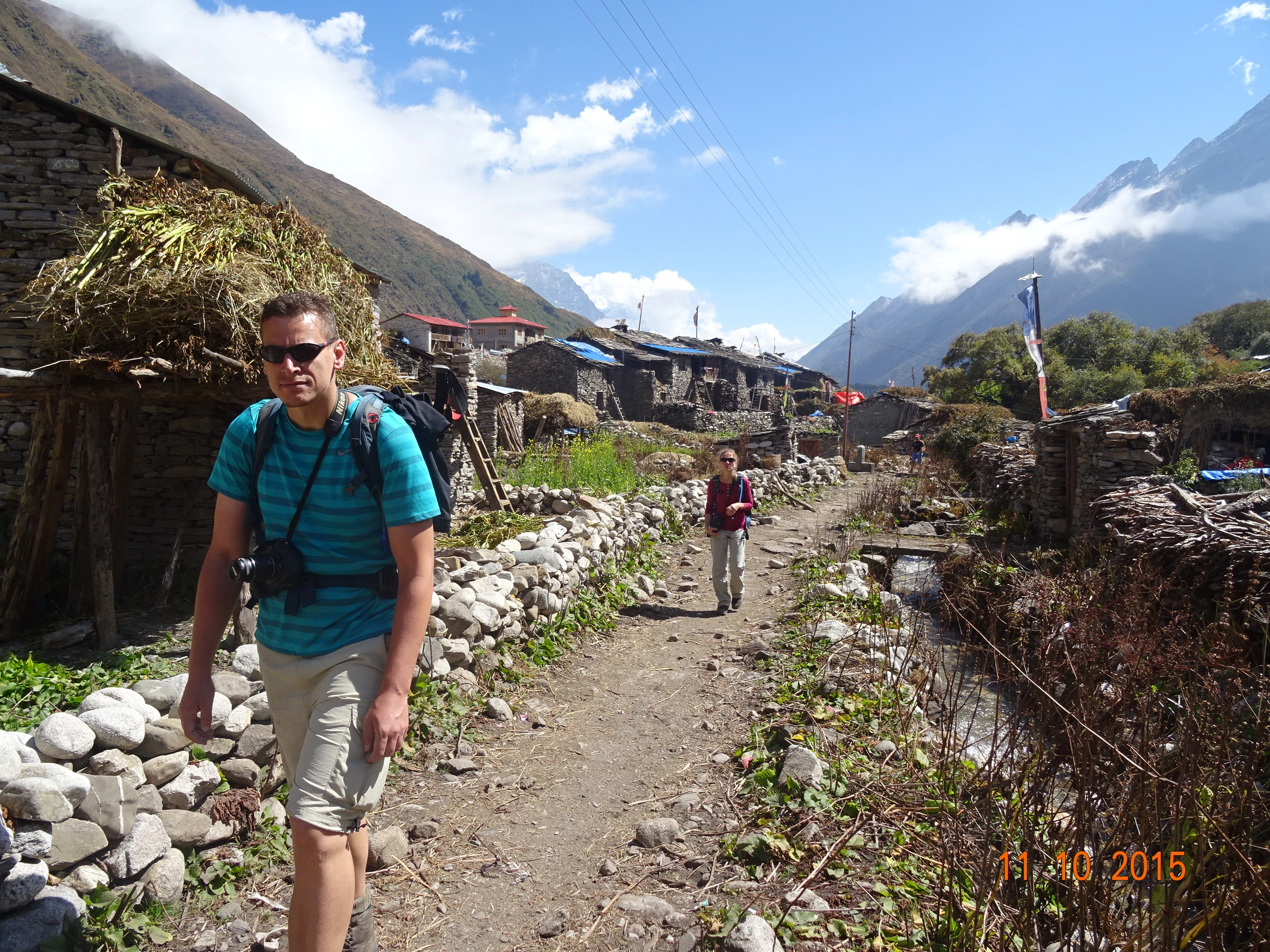
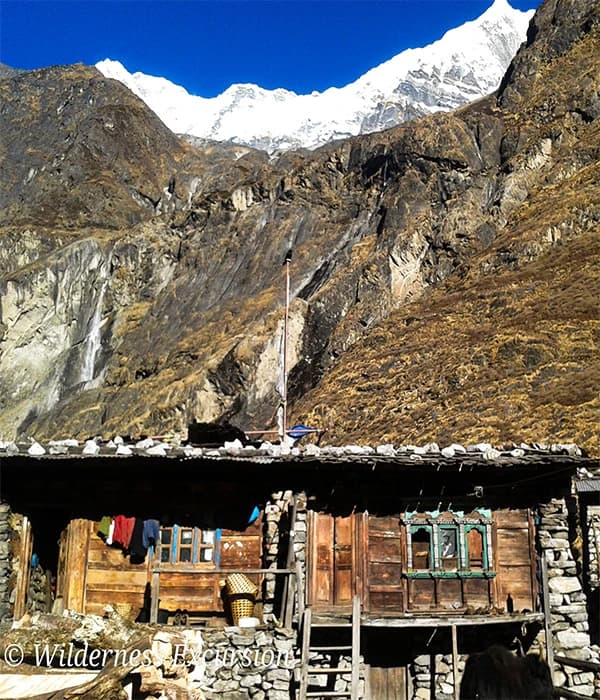
Photo: Manaslu Circuit Trek – Wilderness Excursion
Later, the rules changed to accommodate more tourism flow, and travelers were allowed to visit the upper Manaslu region on strict conditions of permits to be issued through a registered agency with proper documentation, and permits were only available for two trekkers at the same time. So, the requirement was that no individual was allowed to obtain restricted permits unless they had more than 1 person or unless they could join other groups. Although the laws were reformed, with viable reasons, they still became restricted to solo travelers.
After careful consideration, on 23rd March, 2026, the Department of Immigration issued a press release specifically stating that individuals can now obtain restricted permits from the Department of Immigration under certain requirements.
- Trekkers are required to obtain their permits through a registered trekking agency.
- A licensed guide is necessary from the start to the end of the trek itinerary.
- Travel insurance is to be submitted to the affiliated trekking agency.
- Travel through legal procedures and proper documentation.
- More than 1 guide is required for groups of more than 7 pax
Department of Immigration press release
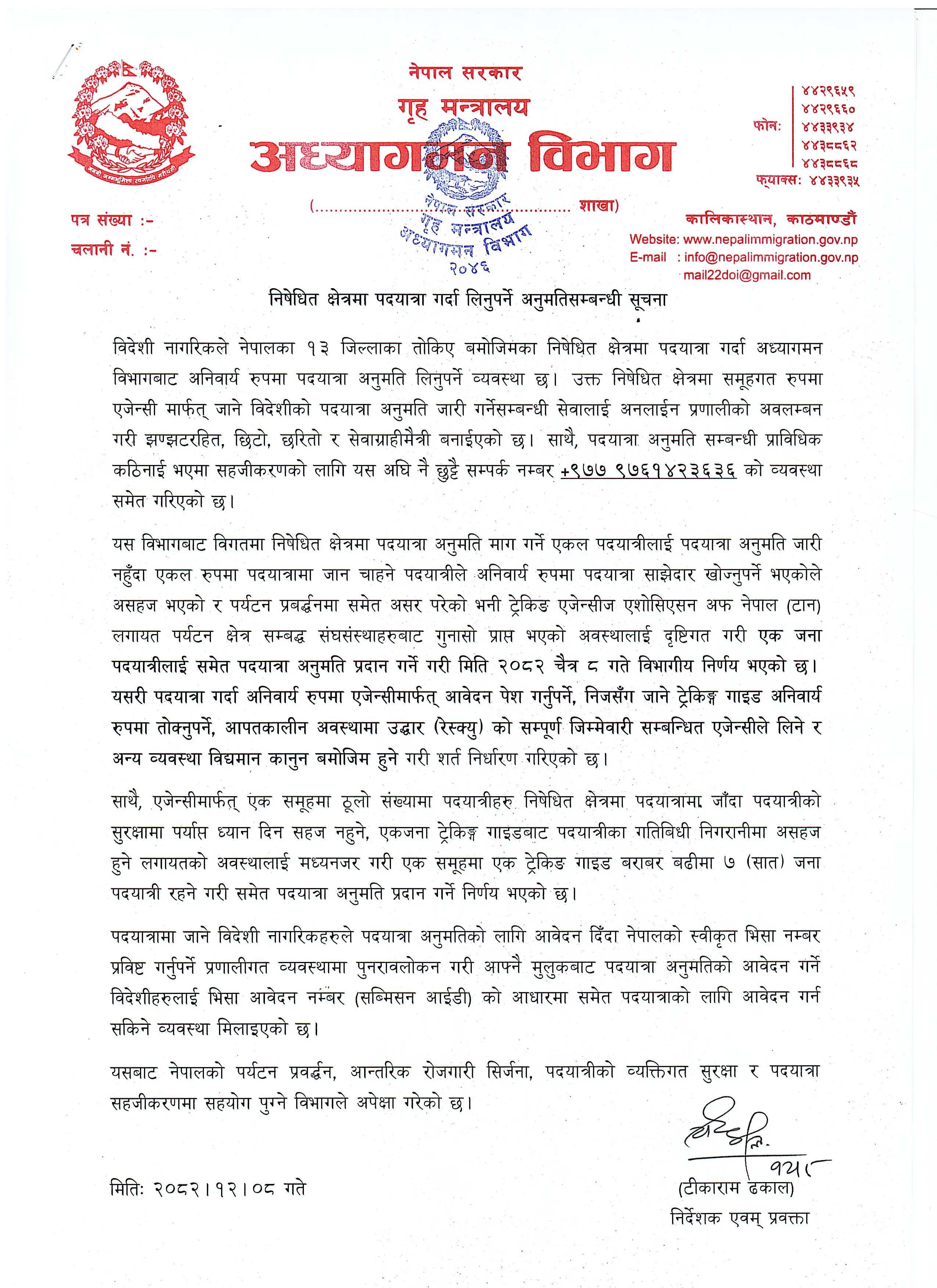
Photo: (Immigration, 2026)
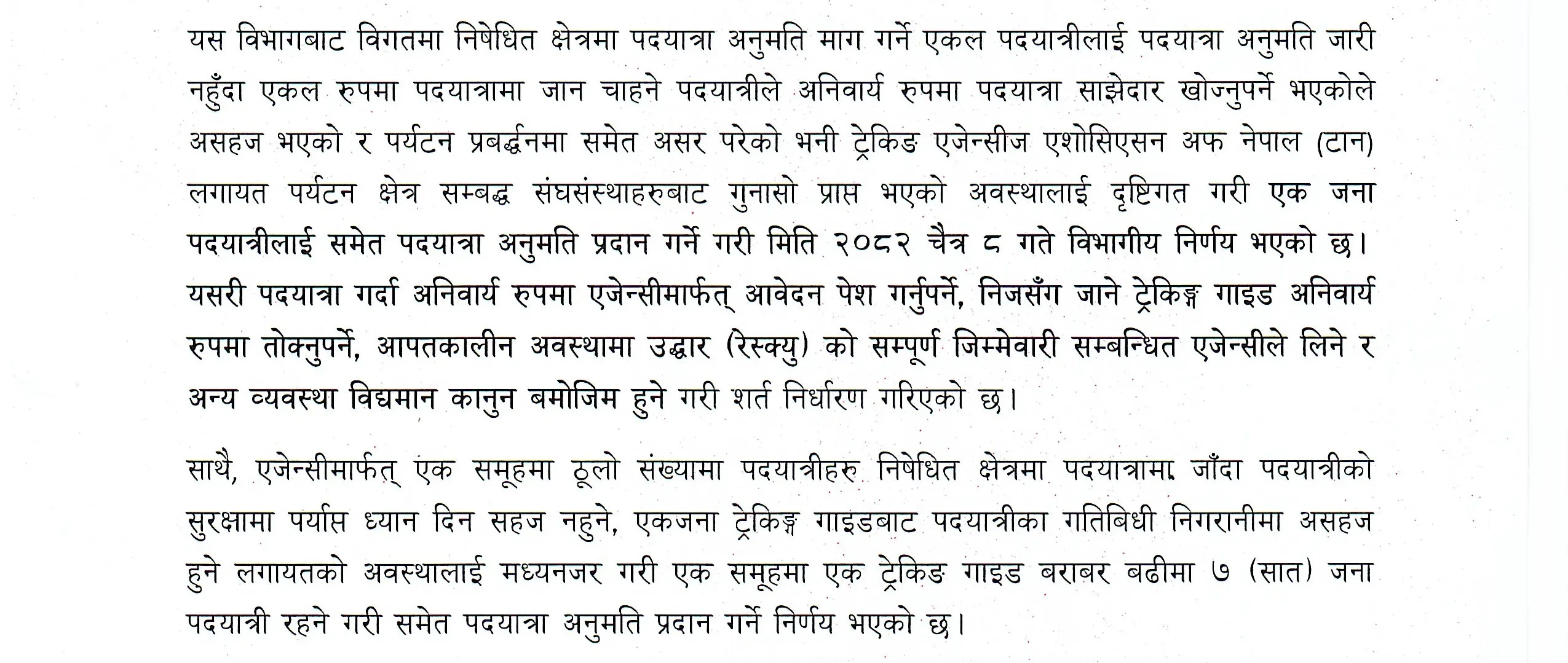
Photo: (Immigration, 2026)
Permit structure and fees for Manaslu Circuit Trekking
Although the Manaslu Circuit route falls within the Manaslu Region, which is protected under the laws of the Manaslu Conservation Area Project, obtaining lawfully required permits is quite tricky. Many first-time trekkers who haven't researched the required permits miss a key detail of the Manaslu trekking itinerary. The trek starts from the Manaslu region, but after crossing the Larkya La, the trek descends towards the area protected under ACAP. So, it legally requires trekkers to obtain both MCAP and ACAP permits.
Conservation area permit fees:
|
S.N |
Conservation |
Nepali |
SAARC |
Foreigners |
Child Discount |
|
1 |
Api Nampa Conservation Area |
Nrs. 100 per person per entry |
Nrs 500 per person per entry |
Nrs 2000 per person per entry |
Below 10yrs free |
|
2 |
Annapurna Conservation Area |
Nrs. 100 per person per entry |
Nrs 1000 per person per entry |
Nrs 3000 per person per entry |
Below 10yrs free |
|
3 |
Blackbuck Conservation Area |
Nrs. 100 per person per entry |
Nrs 500 per person per entry |
Nrs 2000 per person per entry |
Below 10yrs free |
|
4 |
Gaurisankhar Conservation Area |
Nrs. 100 per person per entry |
Nrs 1000 per person per entry |
Nrs 3000 per person per entry |
Below 10yrs free |
|
5 |
Kanchenjunga Conservation Area |
Nrs. 100 per person per entry |
Nrs 500 per person per entry |
Nrs 2000 per person per entry |
Below 10yrs free |
|
6 |
Manaslu Conservation Area |
Nrs. 100 per person per entry |
Nrs 1000 per person per entry |
Nrs 3000 per person per entry |
Below 10yrs free |
For more details, please kindly follow the given link: Trekking permits and fees—Wilderness Excursion.
Restricted permit fees for the Manaslu route
|
Gorkha Manaslu Area
|
September – November USD 100 per person/week USD 15 per person/day (beyond 1 week) December – August USD 75 per person/week USD 10 per person/day (beyond 1 week) |
Src: (Board, n.d.)
Manaslu trekking permit fees:
September-November: USD 100.00 for 7 days per person, and after 7 days, USD 15.00 per person.
December-August: USD 75.00 for 7 days per person, and after 7 days, USD 10.00 per person.
In addition, you will need ACAP and MCAP permits that cost NPR 3000.00 each per person.
Src: (Excursion, n.d.)
Manaslu Circuit Trek Itinerary
There are no fixed trekking itinerary routes for the Manaslu Circuit, and it is the same for every other trek. You can customize itineraries according to your needs, but the restricted zones are limited to a timely stay, which needs to be communicated to the Department of Immigration, and pay the required extra charges since fees differ with the number of days of stay in the restricted areas, which are already quoted in the permit fee structure above.
So, although itineraries are customizable, some parts need to be pre-informed, but worry not; if you want to extend your stay in one of the restricted zones, it can always be arranged with the required extra charges.
Now, there may not be a fixed one standard itinerary, but there are standard practical itineraries made after years of research and refinement, which include proper acclimatization and rest days for a better and more comfortable trekking experience. But for adventure lovers and hyper-trekkers, there are short itineraries as well that are suited for you.
13-day Manaslu Circuit Trek Itinerary
The 13-day Manaslu Circuit itinerary is the best practical itinerary followed by major agencies and experienced guides, since it accommodates proper trekking hours, rest days, and side quests.
- Day 01: Drive to Machhakhola (869 m) from Kathmandu (1300 m).
- Day 02: Trek to Jagat (1340 m) from Machhakhola (869 m).
- Day 03: Trek to Deng (1860 m) from Jagat (1340 m).
- Day 04: Trek to Namrung (2630m) from Deng (1860m).
- Day 05: Trek to Shyala (3500m) from Namrung (2630m).
- Day 06: Hike to Pyugen Gompa and trek to Samagaun (3500m).
- Day 07: Rest and acclimatization day at Samagaun (3500m).
- Day 08: Trek to Samdo (3860m) from Samagaun.
- Day 09: Trek to Larke Rest Home/Dharmasala (4460 m) from Samdo.
- Day 10: Trek to Bimthang (3750 m) via Larkya Pass (5160 m).
- Day 11: Trek to Gowa (2300 m) from Bimthang.
- Day 12: Drive to Besi from Gowa.
- Day 13: Drive to Pokhara or Kathmandu from Besi.
10-day Manaslu Circuit Trek Itinerary
- Day 1: Drive to Maccha Khola, 930 m (3,051 ft), on a local bus or private jeep.
- Day 2: Trekking to Jagat, 1,410 m (4,626 ft)
- Day 3: Trekking to Deng (1,800 m / 5,905 ft)
- Day 4: Trekking to Namrung (2,660 m / 8,727 ft)
- Day 5: Trekking to Samagaon (3520 m), the closest village to Manaslu Base Camp
- Day 6: Side trip to Birendra Lake and trekking to Samdo (3860 m / 12660 ft)
- Day 7: Trekking to Dharamsala, 4,470 m (14,665 ft)
- Day 8: Cross Larkya Pass (5,160m / 16,929ft) and trek to Bhimthang (3,720 m / 12,205 ft)
- Day 9: Trekking downhill to Dharapani (1,910 m / 6,266ft)
- Day 10: Drive to Besisahar-Kathmandu (224 km) or to Pokhara according to your plan.
If you would like to have more detailed information on different itinerary plans for the Manaslu Circuit Trek, please visit our blog: Manaslu Circuit Trek Itinerary Guide.

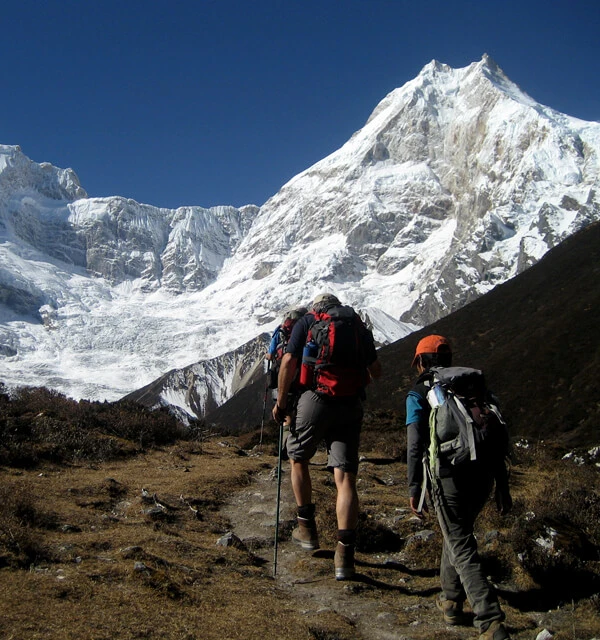
Photo: Manaslu Circuit Trek, 2015 – Pradip Tamang
Book a trip to Manaslu
Planning an independent trip to the Manaslu region is a lot of hassle, especially with obtaining the restricted permits from the Department of Immigration. In such situations, Wilderness Excursion offers a pre-planned trip to the Manaslu Circuit Trek at a fair price with a 99% success rate since 2014. Our package offers various inclusive services with a customizable itinerary, specializing in meeting travelers' needs and choices of services. Have a question? Contact us anytime.

7 reviews
10 Days
Price From
US$799
US$850
Short Trip for Expert Hikers
Need Help? Call Us+977 9851042153orChat with us on WhatsApp
Latest Travel Blogs
Need Help? Call Us+977 9851042153