Looking for popular day hike places and destinations near Kathmandu? This blog provides some of the most popular and underrated places around the Kathmandu Valley, easily accessible and budget-friendly.


Top 5 places to hike near Kathmandu
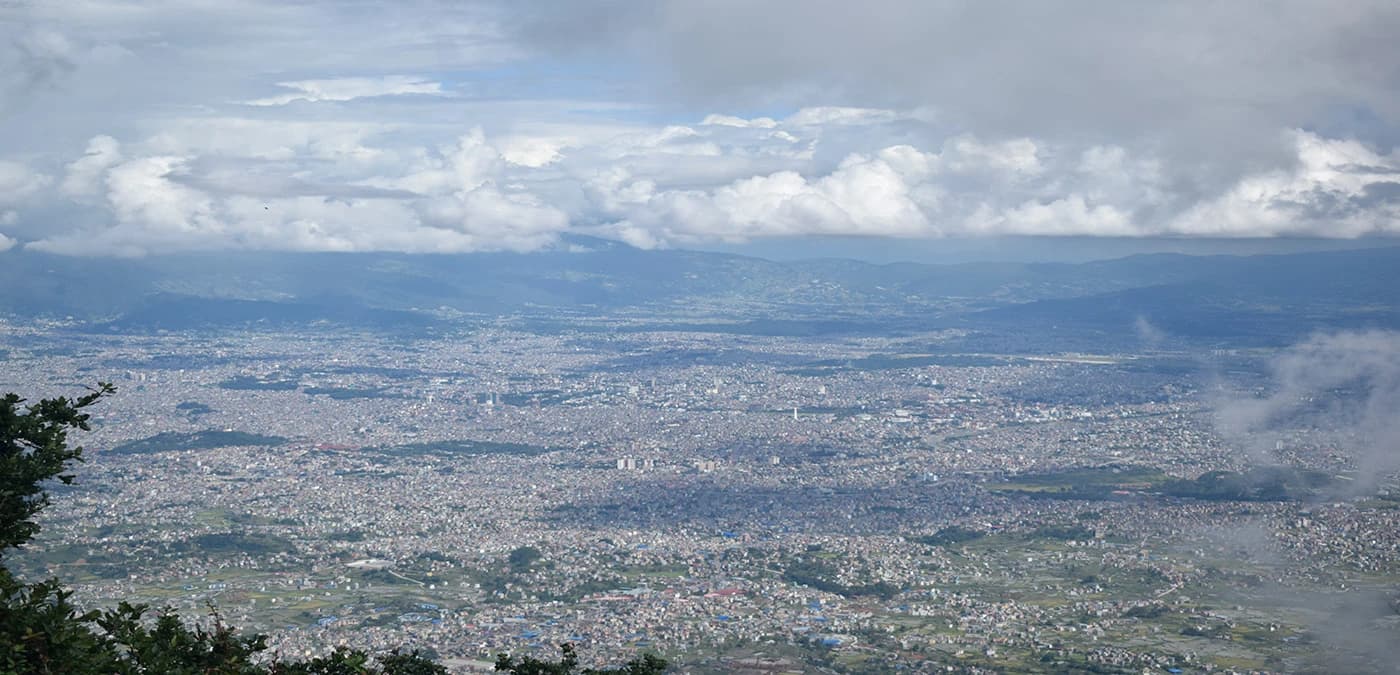
The capital of Nepal, Kathmandu, is surrounded by countless hills serving as a natural fort. The place, once known as a large lake in both scientific and religious records, is now inhabited by multiple ethnic groups from across the country. The city now houses multiple industries, trade spaces, markets, and housing sectors full of working people where everyday life is curtained by scheduled work.
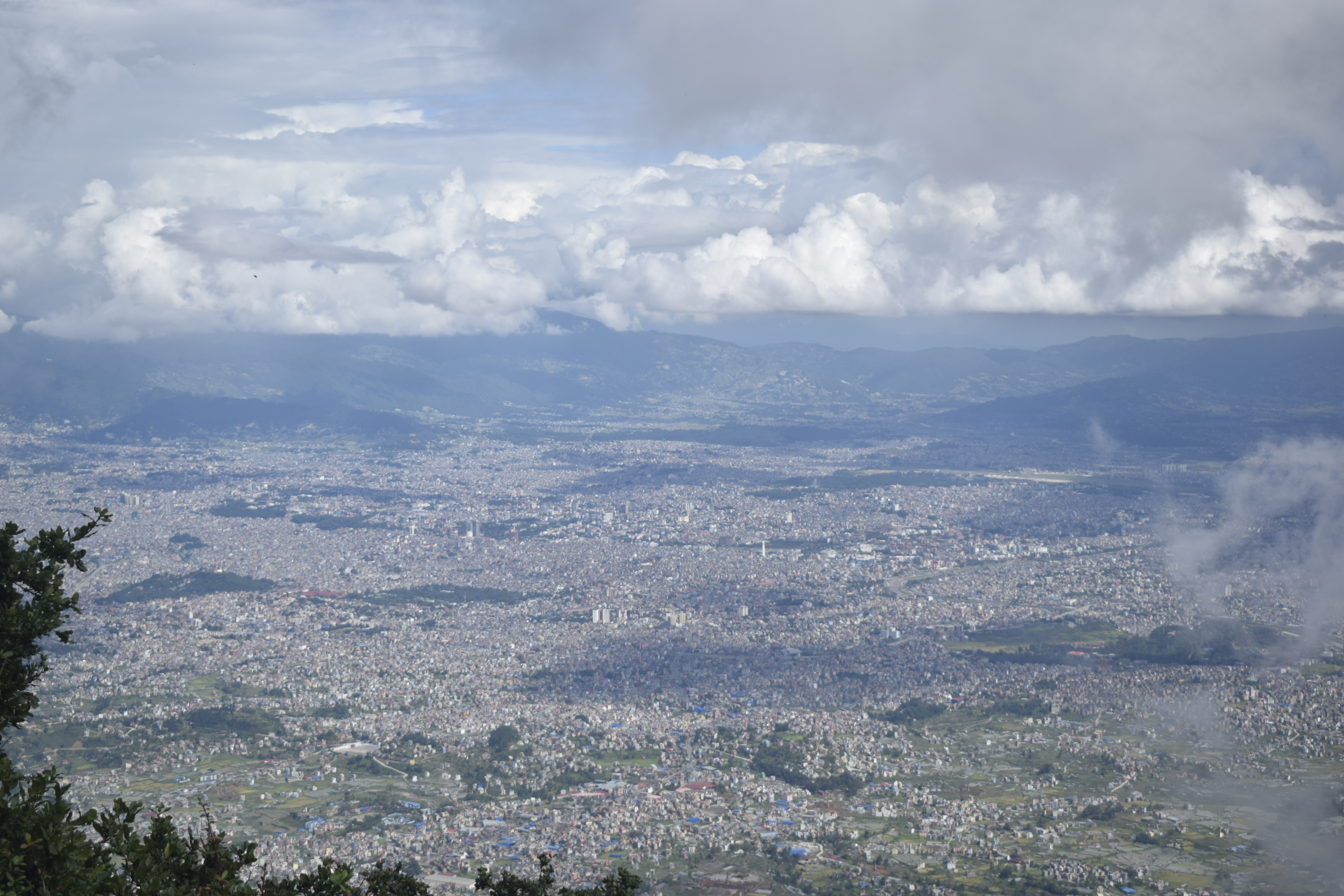
Photo: Kathmandu Valley – Yogesh Tamang
Every weekend, you can see friends, families, and individuals around the valleys and stress-escape places enjoying their quality of life. Among such activities, hiking is popular among the youths and adventure-spirited old souls. But it is quite hard to find a destination that suits your preferences, such as fewer crowds, easy accessibility, well-maintained trails, or maybe something more adventurous. Here we have listed some of the most popular hiking destinations, along with their trails, estimated expenses, routes, road access, and pros and cons.
Chandragiri Hike / Bhaleshwor Mahadev Temple
Personally, the Chandragiri Hike may beat every trekking route and destination that is near Kathmandu. How? Chandragiri Hills is a ridge southwest of the Kathmandu Valley with an elevation of around 2,551 meters (8,369 ft). From its summit, much of the valley and the Himalayan range can be seen clearly. The Chandragiri hike is religiously significant for Hindus and also an important place that connects with the birth of the country, Nepal, itself. The place is the center of Nepal’s religions, ancient history, and natural beauty itself.
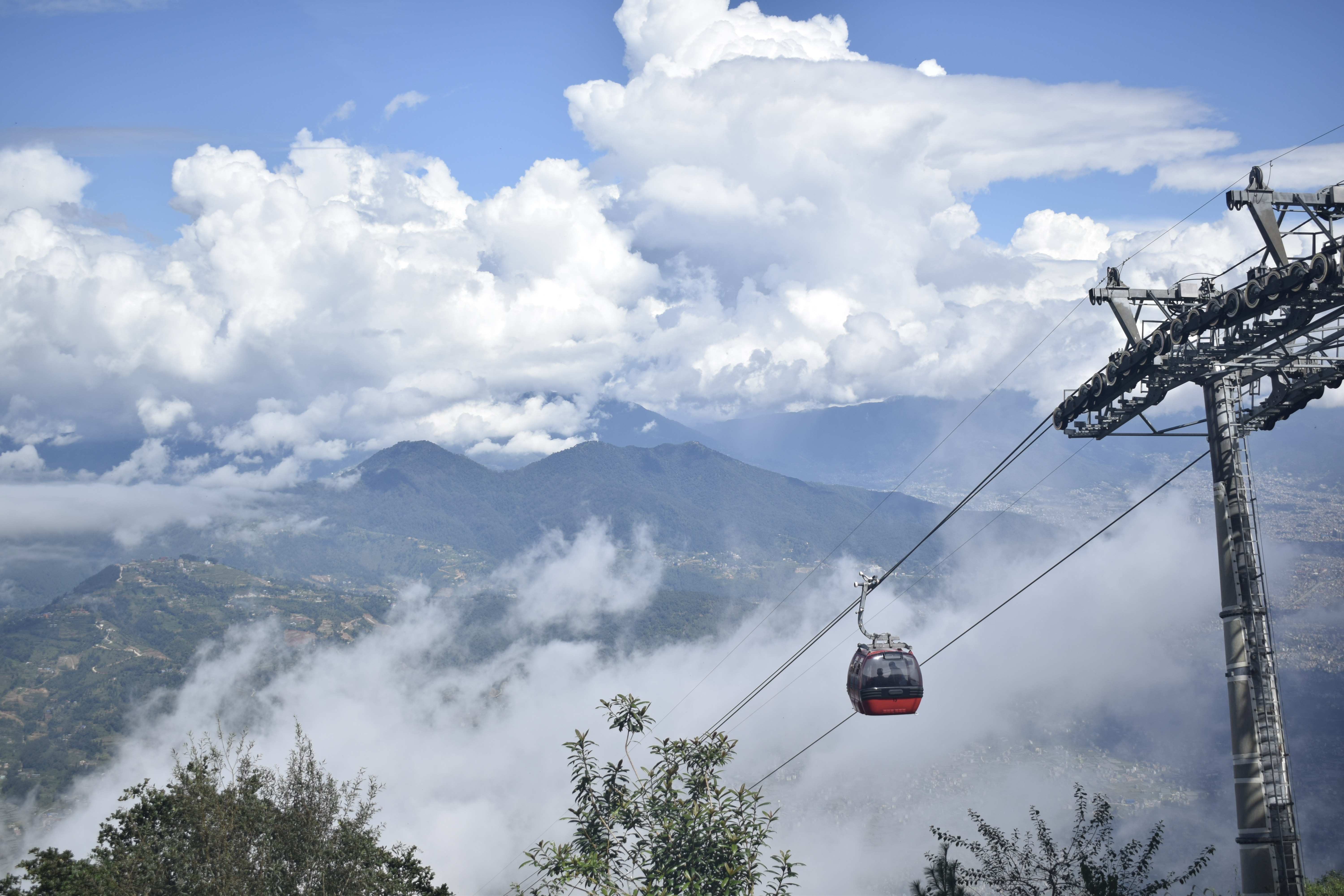
Photo: Cable car to Chandragiri Hill – Yogesh Tamang
Historical importance
Before conquering the Kathmandu Valley, Prithivi Narayan Shah climbed the hills of Chandragiri, from where he saw the ancient Kathmandu, divided into three kingdoms: Kantipur, Bhaktapur, and Lalitpur. From there, he realized the valley's immense wealth, strategic importance, trade power, and cultural significance. So, in 1767, he attacked Kirtipur but was heavily defeated. After a year, on September 25th, 1768, during the Indra Jatra, he launched a sneak attack and conquered Kantipur (Kathmandu). By 1769, the whole valley was unified and was considered the foundation of modern Nepal.
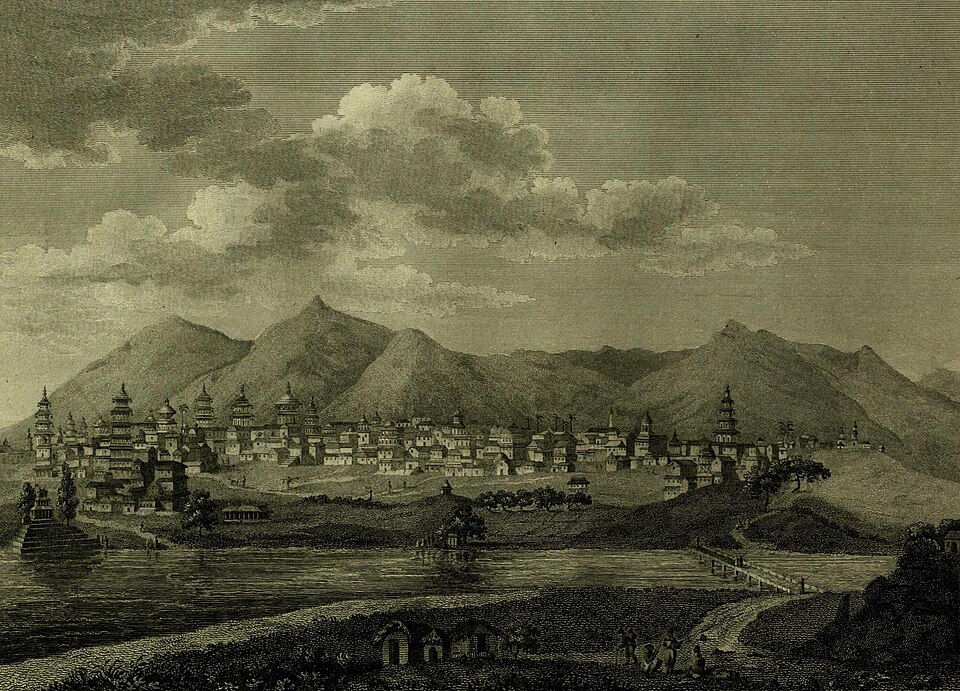
Photo: Pagoda-studded skyline of Kathmandu in 1811 - (Wikipedia, n.d.)
Bhaleshwor Mahadev Temple
At the summit of Chandragiri lies the Bhaleshwor Mahadev Temple, dedicated to Lord Shiva. According to Hindu mythology, Sati was a daughter of the powerful and prideful sage, Daksha, who disapproved of her marriage to the ascetic god Shiva. When Daksha organized the Yajna, he deliberately failed to invite Shiva, whereas Sati attended uninvited and, unable to bear the insult towards her husband, she immolated herself in the sacrificial fire.
Overcome by grief, Shiva carried the lifeless body of Sati across the cosmos while performing Tandava. To end his mourning and restore cosmic order, Vishnu dismembered Sati’s body and scattered her remains across the Indian subcontinent. Each site where her remains fell became a Sakti Peetha, symbolizing the strong presence of feminine energy.
It is believed Sati’s bhala (head) fell at Chandragiri; hence, bhala + Ishwor became Bhaleshwor. Due to a strong religious presence, Chandragiri is popular among devotees and adventure lovers since you can view the whole Himalayan Range from the summit.
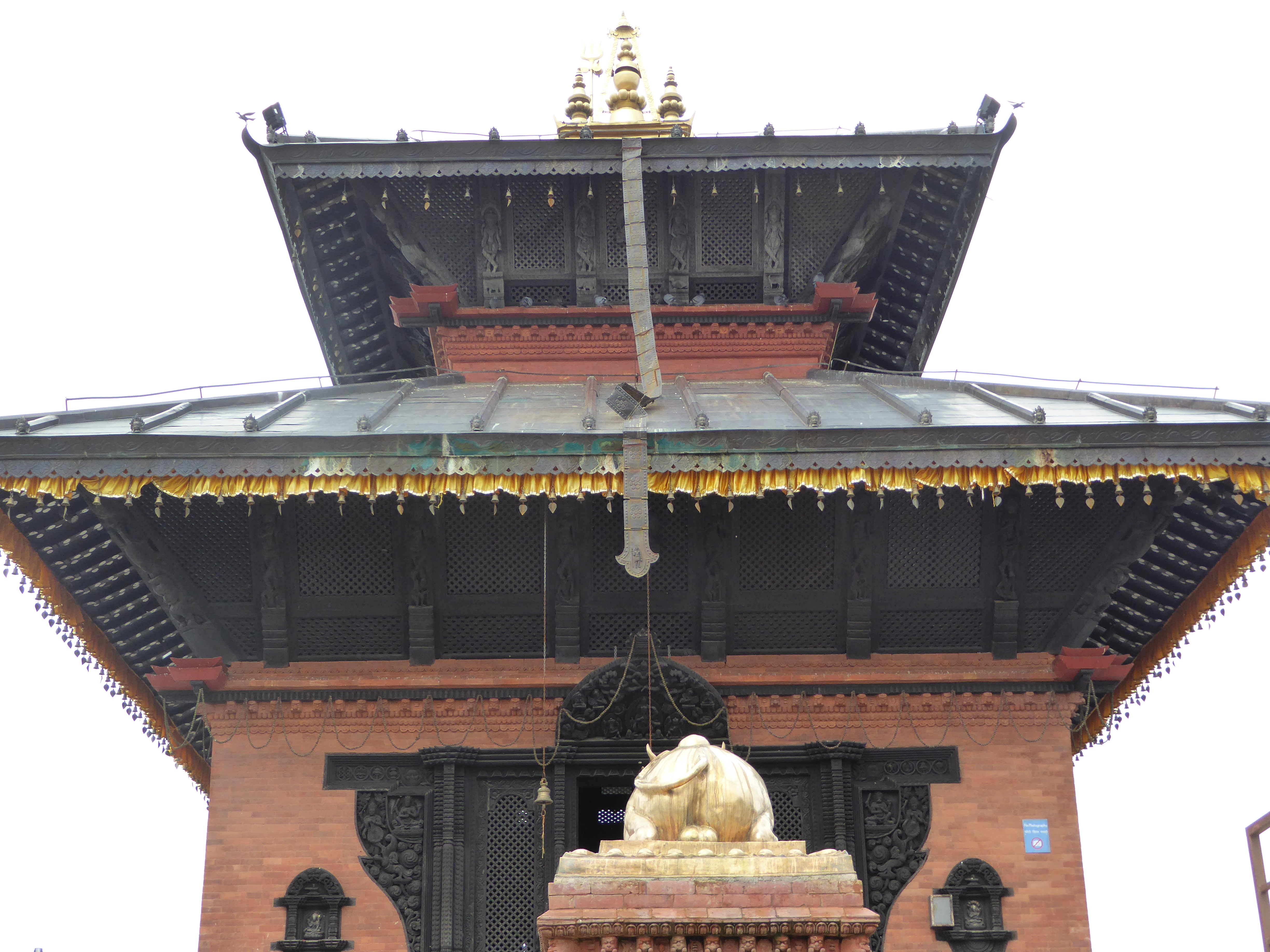
Photo: Bhaleshwor Mahadev Temple – Pradip Tamang
![]() Hiking route
Hiking route
The Chandragiri hike route is only known to a few hikers despite its popularity. Since the place has facilities, a road, and cable car services to the hilltop, most people avoid the hiking route, making it almost non-existent to common people. So, if you’re planning to visit Chandragiri via the hiking route, then don’t miss the whole itinerary since it also covers the hidden trail when hiking back to Chandragiri.
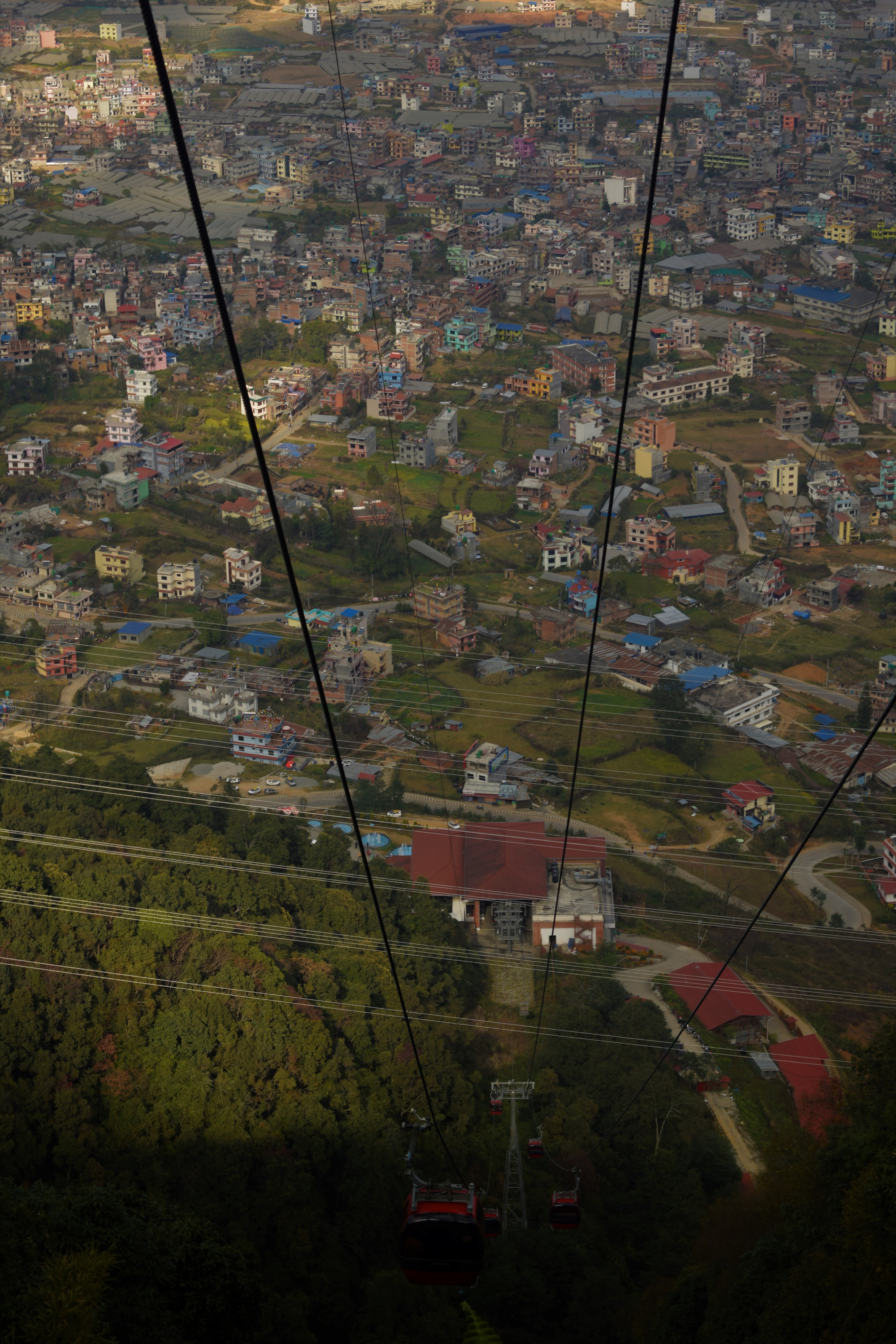
The hike begins from the Chandragiri cable car entry gate beside the taxi stands. Normally, it may not seem like a trail but a way to the back side of the station, but if you keep on following the trail straight and a bit uphill, you will come across a staircase on your left side where the road meets its end. From there, the real quiet and old trail of Chandragiri starts through the dense forest and cable car towers. Along the route, you will find resting places and flat bamboo groves, but mostly the trail is straight uphill till you reach the private road section of Chandragiri Hills. From there, you will have to walk on the road till a curve, from where you will take another hiking trail connecting to Bhanjyang, take the stair trail, and reach the Chandragiri top station.
After a quick tour session of Chandragiri, you retrace the same stair trail, but instead of hopping off on the road, you continue downhill on the stairs until you intersect a partial road section and parking area; from there, continue on-road till Bhanjyang. There you will reach the Chitlang-Chandragiri road, take a right, and continue downhill for 10 minutes or a few curves until you see another stair trail on your right side. Be aware that sometimes you may miss it. Once you find the trail, continue downhill through the rhododendron forests. The trails are partly intersected by roads, but mostly you can easily find the trail from behind the hotel and the Khaja places. Continue downhill until you reach the town, and then continue on the road to the bottom station.
Highlights
- Crowd-free and rough, authentic trails.
- Possibility of wildlife encounters.
- Great Himalayan Range and Bhaleshwor Mahadev Temple.
- Whole view of the Kathmandu Valley and surrounding hills.
Pros
- Quiet and free of crowds.
- Close to nature yet not far from the nearest town.
- Great view of the Himalayas.
- Cultural and historical significance.
Cons
- Not protected under the national parks' laws.
- Rough and steep trails in some parts.
- Might be hard for beginners.
- Hard to spot some parts of the trail.
Jamacho Gumba Hike
Near the busiest market, Machhapokhari, the most accessible hiking point is Jamacho. Although I did mention crowd-free hiking trails, the Jamacho hike is the only place near the city that offers an open view of the whole Kathmandu Valley, with snack services at the top. Protected within Shivapuri National Park, the Jamcho hike lies within the Nagarjun forests, which encircle the entire Kathmandu Valley. Under such a vast hill area, there are multiple hiking points, and one of them is Jamacho, which is fairly well-known to the public, and to be honest, on weekends like Saturday and Sunday, you can easily expect more than 100 hikers from morning to evening.
But here is the play: most of those hikers only visit on weekends or a holiday day, so you can expect a crowd-free time on other days. You may wonder why go to such lengths for a hike that can be around the whole valley. Well, the Nagarjun Shivapuri area actually connects with Buddhism and royal families.
Historical Significance
The Shivapuri or the Nagarjun hills, also known locally as Raniban (Queen’s forest), are historically connected with the Rana and Shah periods. This name emerged during their ruling period when portions of the western forest were protected as royal retreats and hunting grounds connected to queens and palace circles. Unlike the ancient religious names Shivapuri and Nagarjun, Raniban reflected direct royal ownership and controlled access.
Also, within the area lies a protected place named Nagarjun Palace, which is restricted to entry. The name originates from an ancient Buddhist philosopher. The palace area inside the forest was not originally a medieval Malla palace or an ancient fortress. The modern palace complex is associated with the forest developed mainly during the late Rana and Shah periods, when the western forested hills above Kathmandu became important as protected royal retreat zones.
Religious aspects
Even before the name Raniban or the monarchy, the Nagarjun Hills are strongly connected with the Buddhist philosopher Nagarjuna. Nagarjuna, who lived approximately between the 2nd and 3rd centuries CE, became one of the most influential figures in Mahayana Buddhism. Historically, there is no fully verified evidence that the historical Nagarjuna physically lived in Kathmandu.
However, the Himalayan Buddhist tradition strongly connected him to meditation caves and sacred hills across the Himalayan region. Over centuries, local Nepalese Buddhist traditions associated the forested western hill above Kathmandu with Nagarjuna’s spiritual presence. The Jamacho Gumba was built over the years, as the hilltops were mainly associated with meditation and retreats.
The Shivapuri comes from an entirely different religious stream—Hindu Shaivism. The word means ‘City of Shiva.’ In Hindu tradition, mountains and forests were naturally associated with Shiva because he is mythologically linked to wilderness, mountains, ascetic meditation, and isolation.
Hiking route to Jamacho Gumba
The Jamacho gumba hike can be easily accessed from the busiest market, Machhapokhari. Take a direct bus to the Machhapokhari intersection and begin uphill towards Bypass Chowk. From there, you can either take a short bus that passes Fulbari Gate or start walking, but the starting point is actually short. So, take a right turn on the Trisuli Highway and walk straight through the dense forest highway till you reach an army checkpoint, Fulbari Gate, from where your hike officially starts on Nagarjun Hill. Passing through the gate, there are multiple signboards and well-maintained hiking trails with checkpoints for visitors' safety. Follow the trails and marks, and you will reach the Gumba top in an hour or two.
The national park also has a strict rule against hiking after 4:00 PM, since in the evening and at night wild animals roam the trails for scattered food and can be quite dangerous.
Highlights
- Protected and well-conserved forest trails.
- View of the whole Kathmandu Valley.
- Natural wildlife encounters.
Pros
- Protected and secured hiking trails.
- Easy accessibility to the city and transportation.
- Navigation boards and checkpoints.
- Road accessibility to the viewpoint.
Cons
- Crowded during peak days.
- Heavy restrictions on hiking time and ending time.
Tarakeshwor Dham Hike
Located in the northern outskirts of the Kathmandu Valley, Tarakeshwor Dham is a prominent Hindu shrine dedicated to Lord Shiva. Nestled inside the lush forests of the Shivapuri Nagarjun National Park near the Kathmandu-Nuwakot border, it serves as both a holy pilgrimage site and a popular day-hiking destination.
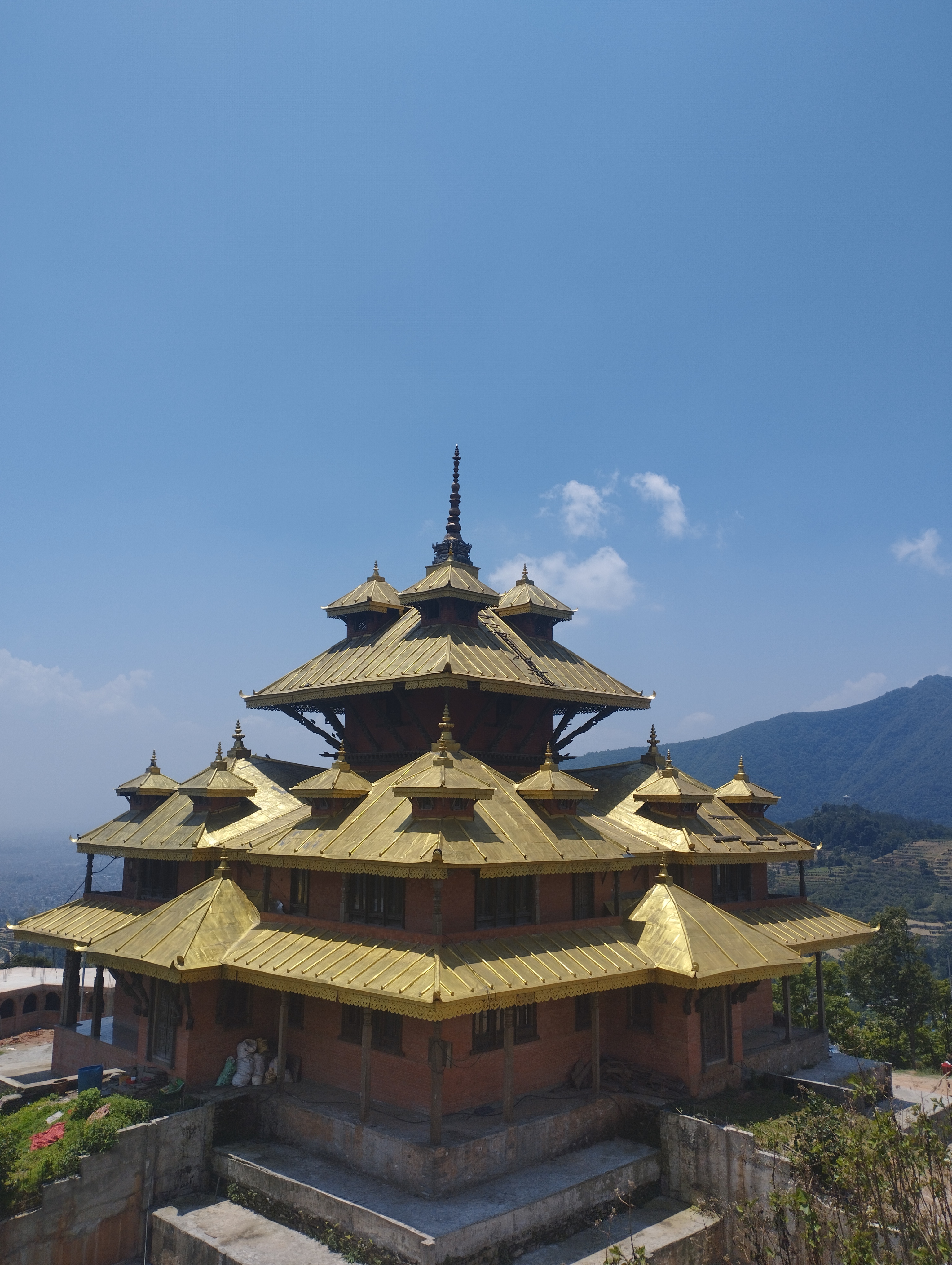
The Tarakeshwor hike integrates both Buddhist and Hindu traditions due to the proximity of the Bhuwaneshowri temple, Panchmaney, and the Tarakeshwor Mahadev shrine. The hiking route used to be a historic salt trading route that merchants, porters, and Himalayan settlers used as a transit point while moving goods from the Tibet borderlands and Kathmandu. The Tarakeshwor hike is a historic walk in the ancient trade route and the holy Shivapuri Hills, which also connects to “Swasthani Brata Katha,” which we will mention below.
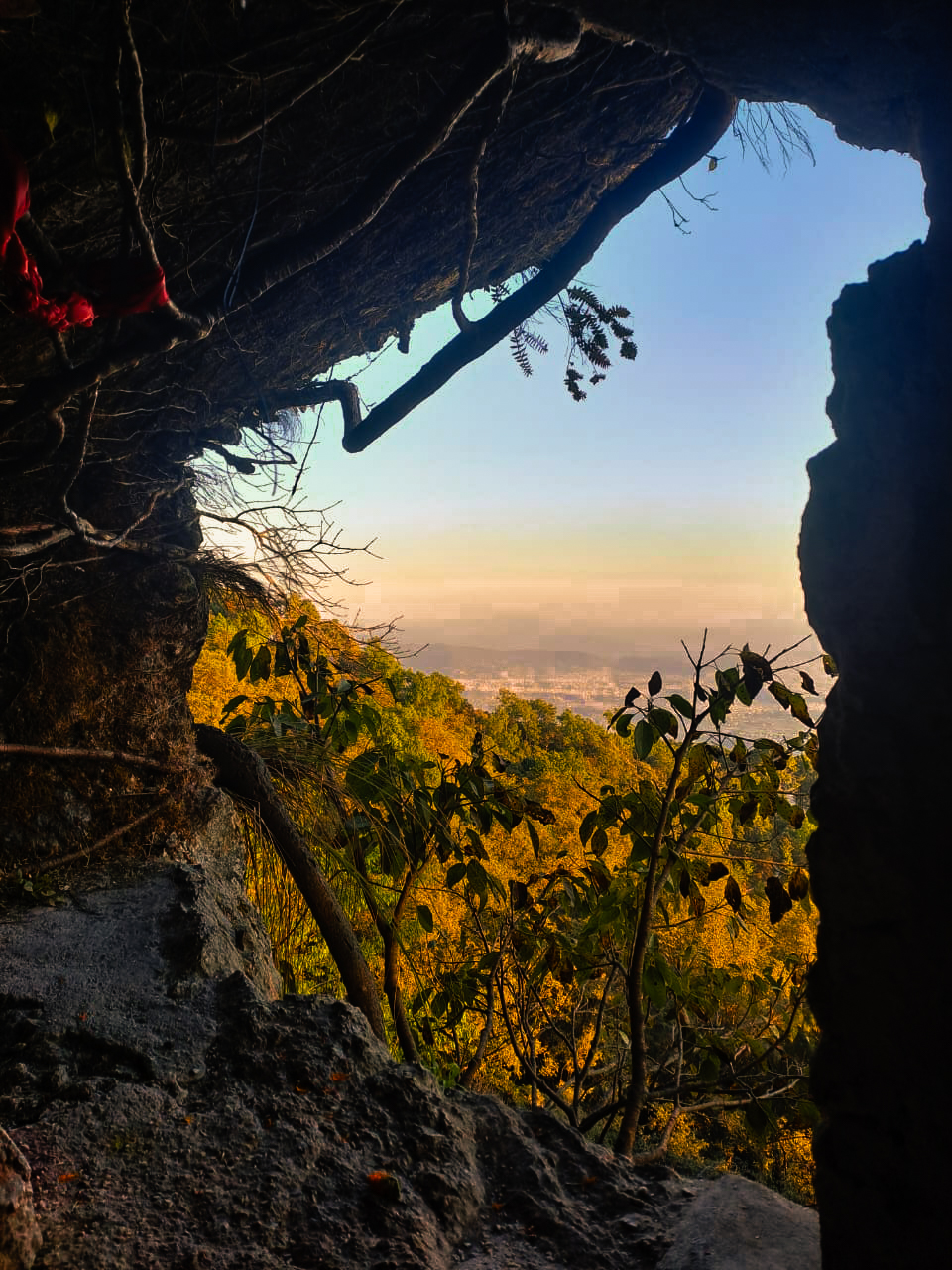
Historical Significance of the Tarakehshwor hike
Before the large establishment of highways and the widespread use of modern means of transportation. People, especially those who settled above the hills of Nepal, near and in the Himalayas, especially in the Ganesh Himal region, used Panchmaney as a transit station or resting place and route mark when traveling to Kathmandu for trading and buying salt. During the monarchy, Nepal’s most villages were still centuries behind in modernization. For the availability and fulfillment of basic goods, these places were routes for travel and were important to the people of the Himalayas.
Another importance of the Panchmaney and its route is deeply tied to Buddhism and Buddhist scholar Atisha Dipankar. According to historical records, the revered scholar arrived at Jitpurphedi in 1040 AD during his journey from India to Tibet via the Kerung Border. During his temporary stay in this elevated area, he established five manes to bless the path and the travelers.
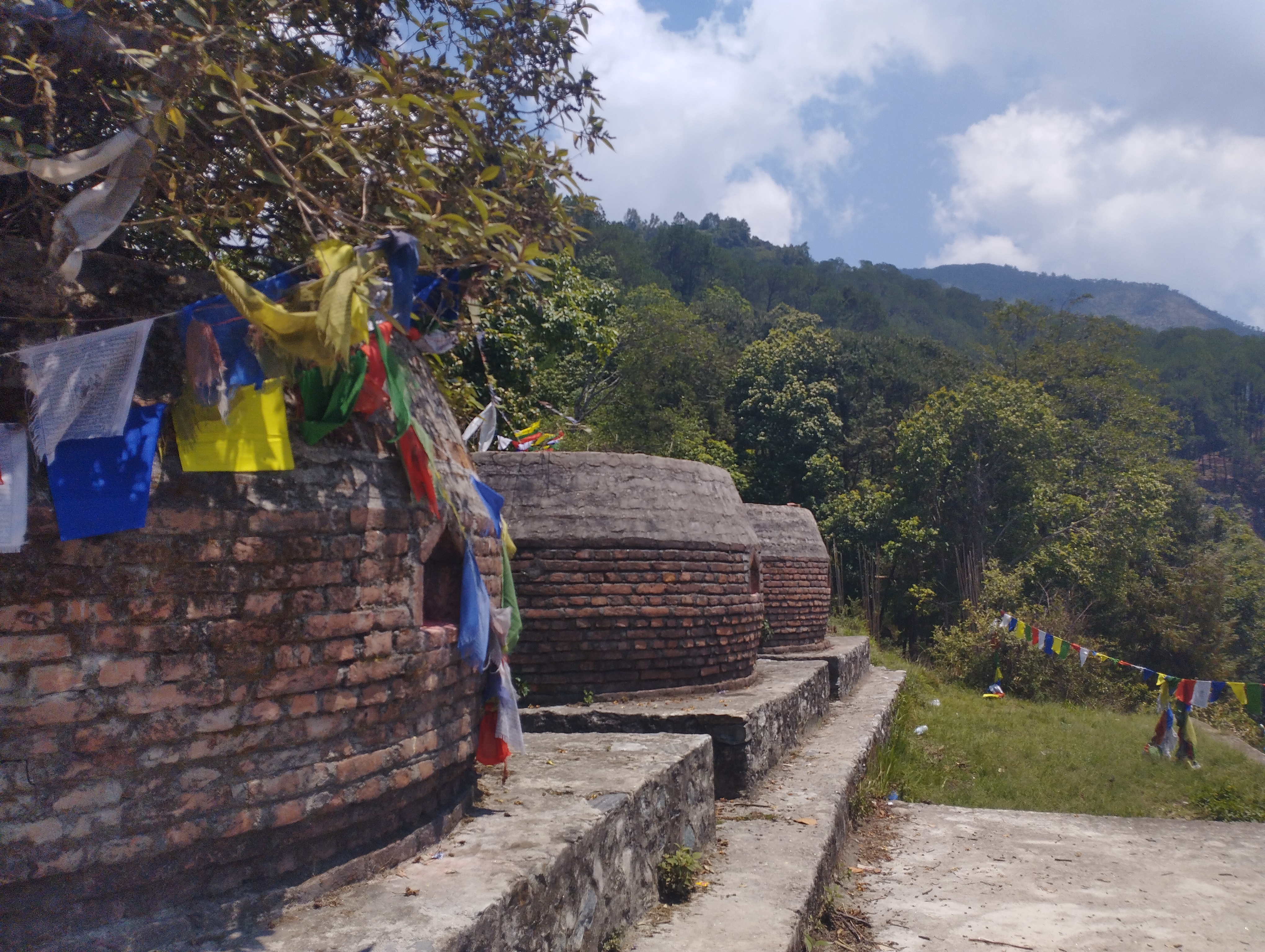
Photo: Panchmaney – Wilderness Excursion
Religious Significance of the Tarakeshwor Mahadev Temple
Unlike urban temples, the Tarakeshwor temple lacks well-documented records, where mythology is much older than documented history. Tarakeshwor likely began as numerous hilltop and forest Shiva shrines in Nepal. Local traditions describe the site as an ancient forest shrine dedicated to Shiva, and some versions connect it to Shakti Peeth associated with Sati. It is believed that when Shiva was mourning Sati’s death and carrying her throughout the cosmos, her right thigh fell and founded the shrine.
Although the surrounding structures and buildings were built in recent times through constant renovation and expansion, the original shrine is inside a small cave on a hilltop. One fascinating thing about Tarakeshwor is that it is closely associated with forest spirituality. Unlike urban temples in major settlements, Tarakeshwor remained as a temple hidden in woodland, which naturally attracted yogis. Among such historical figures was Kali Das Baba, who was a Hindu ascetic and Shiva devotee. It is believed that during the 19th and 20th centuries, he meditated near the Tarakeshwor and lived as an ascetic in the forest and remained associated with the temple till his death.
Hiking route to Tarakehsowr Mahadev temple
There are three hiking routes to the Tarakeshwor Mahadev temple, and the longest one is from the Tinpiple, Chisapani. We suggest taking the longer route, since it covers all the temples and historical places. The bus to Tinpiple is stationed in Machhapokhari, and every minute a bus leaves from there when the next one arrives. If you’re in a private vehicle, take the road from Machhapokhari to Bypass and towards Jarankhu, from where keep riding straight with every turn and corner till you reach Tinpiple. Another roadway follows the Trishuli highway for more scenic and natural experiences.
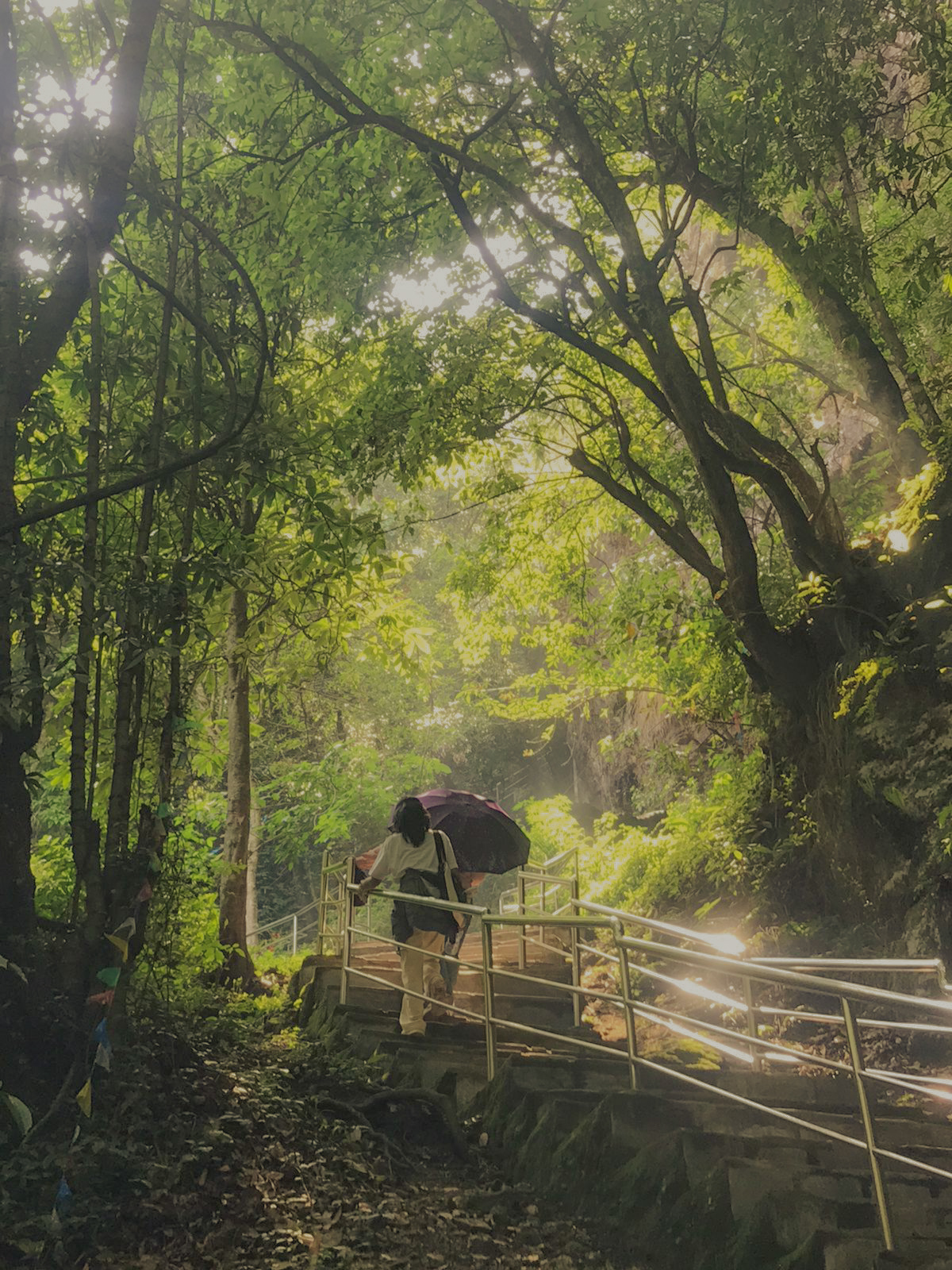
From Tinpiple, start walking on a concrete road towards a school, from where you will see a long stair that leads towards the Bhuwaneshwori Temple. After a break at Bhuwaneshwori, there is a road behind the temple from its left side, from where you will reach Panchmaney. Along the
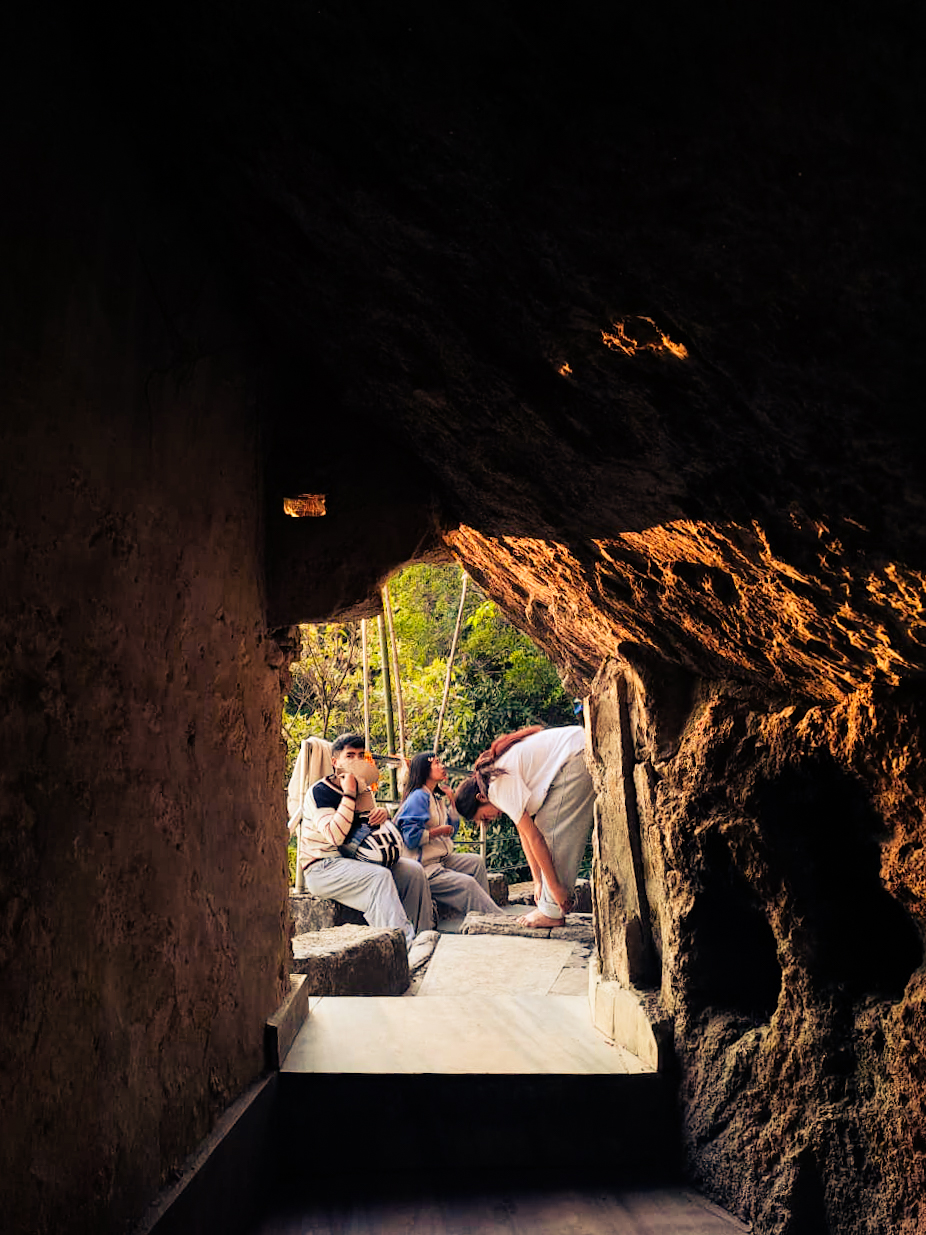
Panchamaney is the hiking trail of the Tarakeshwor Mahadev temple; the trail from this side is well-maintained with stairs and natural trails mixed alike. After reaching the temple, you can either retrace the same trail or take another route that follows the roadway from the temple gate. Once you reach the temple gate, hike towards the opposite side of the trail or simply follow the road trail, which is also blocked by fallen trees. After a short walk, you will come across a turn that goes uphill. Take a right from there, and you will see a resting place with large holes used as a garbage disposal. Follow the trails from there; although the trail is used by locals, you can follow a water pipe that leads you downhill through pine trees. After continuous downhill, you will reach an underdeveloped staircase, which will take you near a water tank. Follow the road from there till you reach Kavresthali and take a bus back to Machhapokhari.
Highlights of the Tarakeshwor hike
- 3-point hike: Bhuwaneshwori Temple, Panchmaney, and Tarakeshwor Mahadev Temple.
- Natural wildlife encounters along the route.
- Scenic view of the Kathmandu Valley.
Champadevi hiking from Hattiban
Located at the southwestern rim of the Kathmandu Valley, reaching an altitude of 2285 meters, the Champadevi hike is another of the most popular and scenic religious hiking routes and destinations. This trail offers a perfect escape from bustling city life, with panoramic views of the Himalayan Range, especially the Langtang and Ganesh Himal Ranges, behind the hills of Nagarjun. The hiking route is easily accessible for beginners, solo travelers, and fitness enthusiasts alike. The walking trail varies from 3 to 6 km depending on the route you take. The shortest route is from Hattiban, bypassing the initial steep uphill stretch from the highway.
Historical and religious importance of Champadevi
At the top of the Champadevi Deurali lies the Champadevi shrine, named after Goddess Champadevi, also known as Champa-wati, a protective manifestation of the Hindu goddesses Durga or Parvati. Local legends state that goddess Champadevi lived on this hill to guard the surrounding forests from evil deities and natural disasters. Every Nepali New Year, full moon, and Dashain, hundreds of devotees hike uphill to perform rituals and make wishes, believing that worshiping the goddess on this day fulfills their wishes and desires.

The Champadevi Hill is the symbol of religious harmony, where the site is deeply rooted in Hindu origins but is also equally sacred to Buddhists. The summit blends cultures, featuring Hindu statues alongside peaceful Buddhist chortens and vibrant prayer flags.

Locals also state that Champadevi Hills were used as a strategic hill during King Prithivi Narayan Shah's conquest of the Kathmandu Valley. Alongside his generals, King Prithivi Narayan Shah used these hills to attack Kirtipur, where his right-hand man, Kalu Pandey, was defeated and later buried in the Dahachowk hills, from where he could see his hometown, Gorkha, fulfilling his last dying wish.
Hiking route to Champadevi Hills from Hattiban
The Champadevi hiking route is actually well-maintained despite not falling directly under the national park's heavily guarded areas. There are multiple hiking routes to Champadevi, and the shortest one starts from the Hattiban resort. To reach the starting point, you can get a local bus departing from Balkhu near Kalanki. The bus directly takes you to the starting point; you can either ask the bus driver to stop on the way to the Hattiban Resort.

From the highway, you start uphill towards the resort and hike on a plain route through the pine trees. After an hour, you will reach stone stairs leading to the Champadevi temple and prayer flags along the route.
After reaching Champadevi, you can either retrace the same route back or hike downhill from the Champadevi hills towards Kirtipur. If you like more adventures and have more time in hand, you can hike uphill towards Bhasmasur Dada, which offers an even more panoramic view of the valley and nearby Himalayas.
Highlights of the Champadevil Hills
- Adventurous and safe hiking route.
- Flexible hiking destinations.
- Temple and scenic views of the Himalayas.
- Touristic destinations near the valley.
Sundarijal and Shivapuri Hills
Everyone knows about the hills of Kathmandu, which house popular hiking destinations and routes. But most destinations are scattered throughout the whole valley. But the Shivapuri National Park area has probably the most reputed and safe hiking trails and destinations. Even in the proximity of the national park lie popular places like Tarevir, Sundarijal, and Dhap Dam. All the trails inside and near the Shivapuri are heavily guarded and regulated, securing the safety of hikers and travelers.
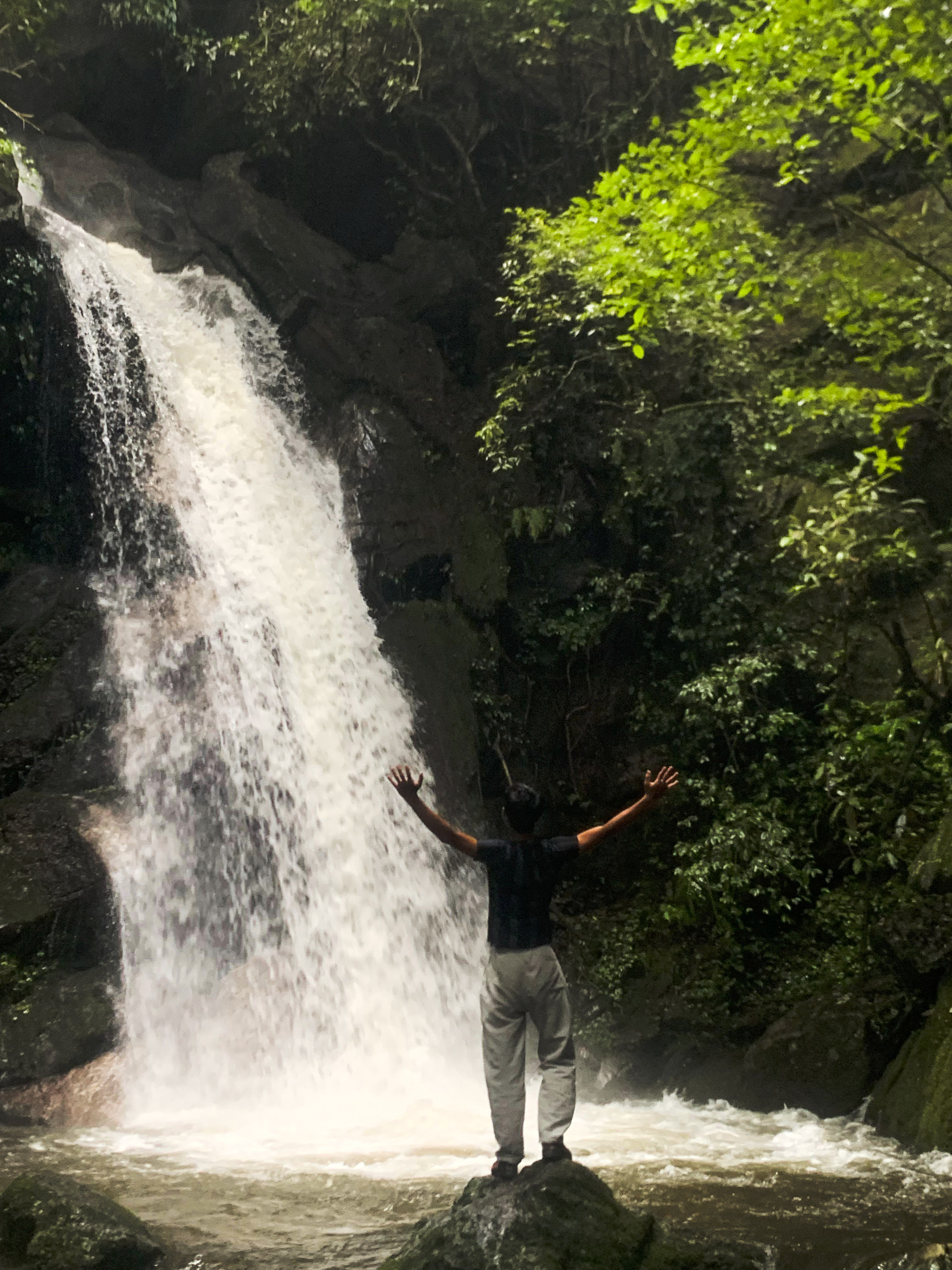
From Budanilkantha, you can hike to places like Bhagdwar, Bishnudwar, and Nagi Gumba, which offer religious experiences immersed in the deep forests and waterfalls. These trails are mostly on roads and short uphills, which are beginner-friendly, whereas the Shivapuri Apex Hills can be an option for more adventure and a long hiking experience.
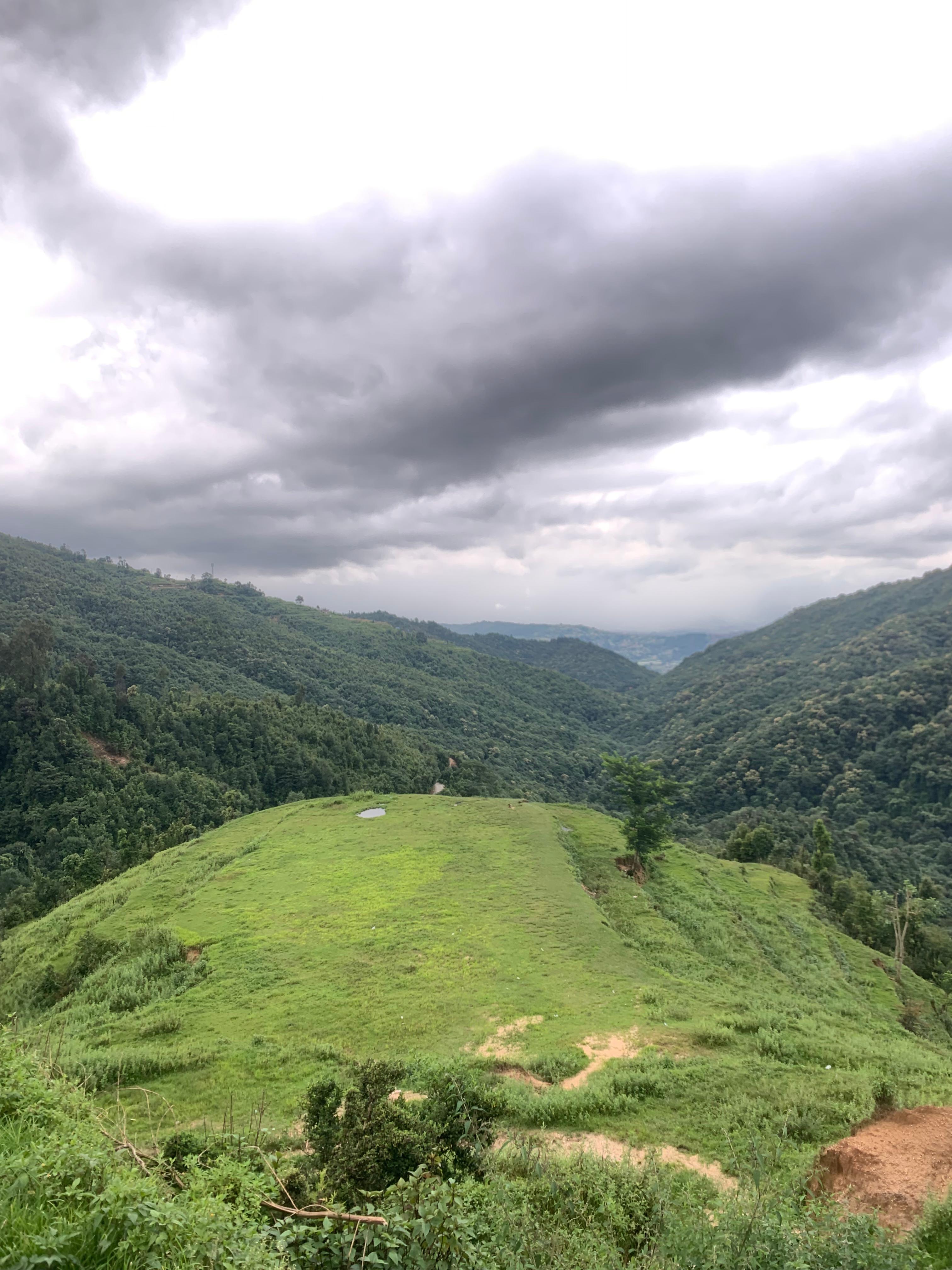
From Sundarijal, you can either hike to Dhap Dam and Okhreni or walk around the Sundarijal area. Sundarijal is known for different waterfalls and dry picnic experiences, as well as remote hiking experiences.
Need Help? Call Us+977 9851042153orChat with us on WhatsApp
Latest Travel Blogs

Need Help? Call Us+977 9851042153