Langtang Valley Trek – The ultimate short and scenic trek from Kathmandu, an 8-day detailed itinerary with a map guide and alternate route comparisons.
Following a steady trail through forested valleys, riverside paths, and traditional mountain settlements, the Langtang Valley Trek 8 Days itinerary offers a well-paced journey into one of Nepal’s closest Himalayan regions from Kathmandu. Designed for trekkers seeking a shorter yet complete experience, this route balances gradual altitude gain with meaningful stops in culturally rich Tamang villages and high-alpine landscapes.
The 8-day itinerary is structured to provide both accessibility and acclimatization, allowing trekkers to progress from the lower river valley of Syabrubesi through dense rhododendron and bamboo forests toward the open landscapes of Langtang Valley and Kyanjin Gompa. Each day’s walk follows a natural transition in terrain, from shaded forest trails to expansive mountain views dominated by Langtang Lirung and surrounding peaks.
Unlike longer expedition-style treks, this itinerary focuses on efficiency without compromising the core experience of the region. It includes key highlights such as Langtang Village and Kyanjin Gompa while maintaining a comfortable pace suitable for beginners with good fitness and moderately experienced trekkers. The route also allows time to explore the upper valley, take short acclimatization hikes, and explore local surroundings before descending along the same trail.
This detailed day-by-day itinerary outlines walking hours, altitude changes, and overnight stops, helping trekkers understand the flow of the journey and prepare accordingly for both physical and logistical aspects of the trek.
The following is Wilderness Excursions' customized itinerary, which is widely practiced and accepted by most trekkers.
Day 1: Drive from Kathmandu (1300 m) to Syabrubesi (1503 m) (116 km / 8-9 hrs).
Our journey begins with a long bus or jeep ride from Kathmandu, depending on the mode of transportation. The total kilometers from Thamel, Kathmandu, to Syabrubesi is 116 km, which can be covered in 8-9 hours. The buses to Syafrubesi depart from Machhapokhari at 15-minute intervals starting at 7:00 AM. So, you won’t have to worry about not catching the early bus. If you have a private jeep booked, it will pick you up from your given location and depart at your preferred time. Once departed from Kathmandu, buses and jeeps both take the same route to
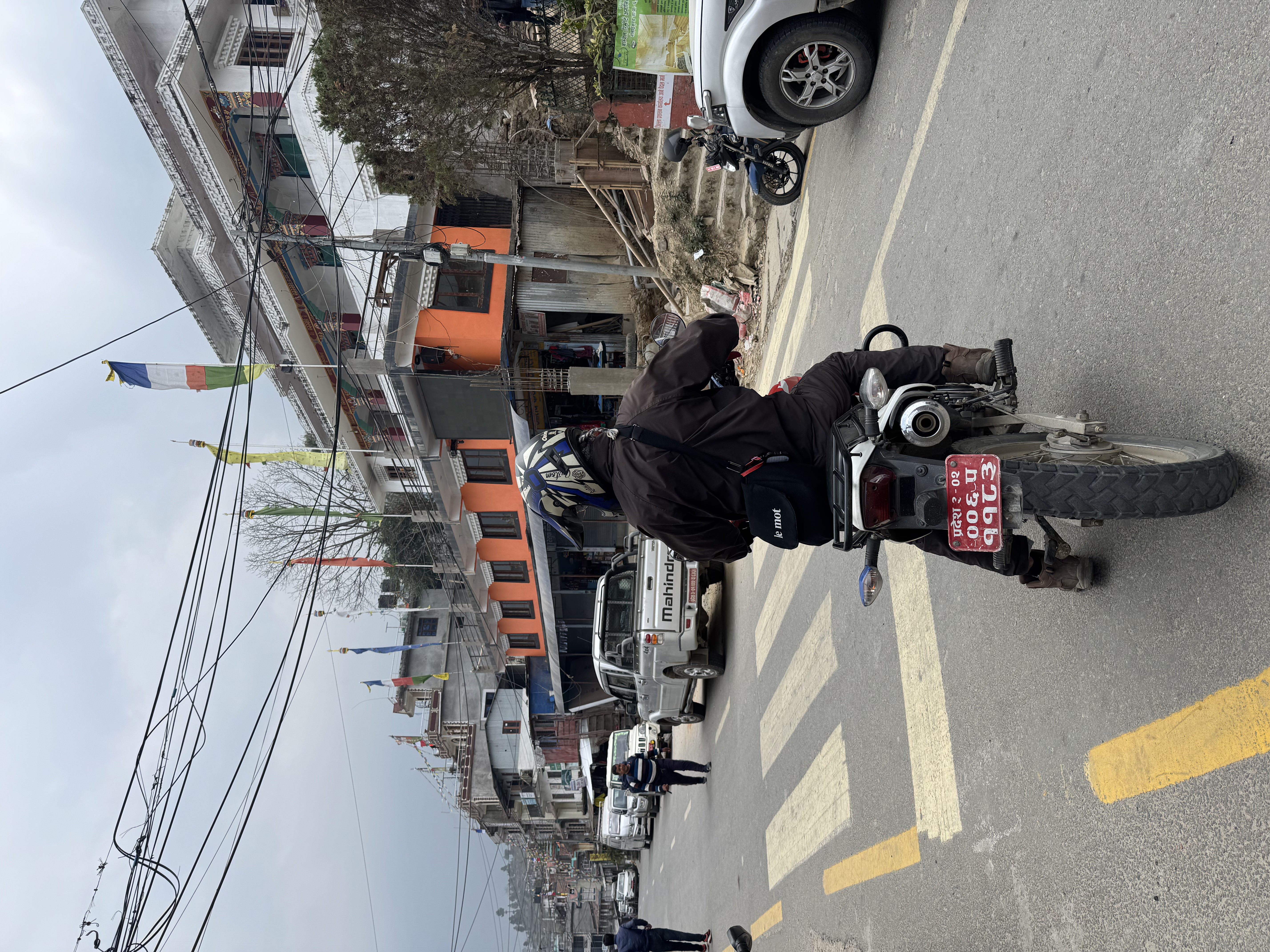
Photo: Dunche village, Rasuwa – Yogesh Tamang
Syafrubesi from Gurjebhanjyang to the Bidur-Tokha road. The road conditions from Bidur are well-maintained, making the long journey comfortable. Once you reach Trisuli, you will have a lunch break and a short rest at Jimbu Restaurant & Bar. After lunch, you follow the Pasang Lhamu Highway till Syabrubesi. The roads after Betrawati are mixed, with some parts still under construction. But 90% of the total highway is well-maintained with asphalt and gravel. By 1:00 PM, the early buses do reach Syafrubesi, from where independent trekkers can choose to start trekking right away, following the new route along the rivers, or stay at Syafrubesi. If you plan to trek right after reaching Syafru, you will have two choices: start walking from Syafru to Bamboo or book a local jeep to the damside and trek from there to save time.
Day 2: Trek from Syabrubesi (1503M) to Sherpagan (2563M) via Khanjim (2287M) (5-6 hrs).
Although the trek began with a long ride from Kathmandu, the trek officially begins from Syafurbesi with a knee-breaking uphill to Sherpagaon from Kyanjin. We will discuss later why to use this route, avoiding the more commonly followed route to Bamboo and Lama Hotel.
After a quick breakfast at 7:00 AM, the trek will follow the route to Khanjim, crossing the Trisuli River and going straight uphill for more than an hour. Honestly, the trails to Sherpagaon are mixed with roads due to unfinished construction. Once you cross the Trisuli River, you follow trails mixed with roadways. After reaching Khanjim, you will have lunch and a rest break in a tea house or lodge. From Khanjim, trails are mostly through dense forests of pine and oaks, with village trails to Sherpagaon at an altitude of 2563 m. The average walking time from Syafrubesi to Sherpagaon is approximately 5-6 hours, although it depends on the trekker's personal ability.
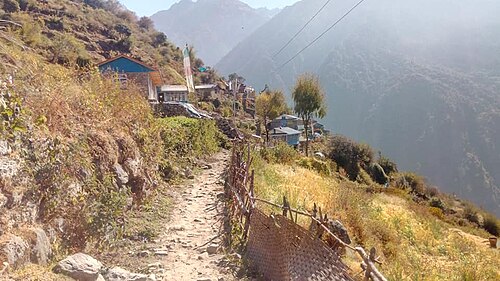
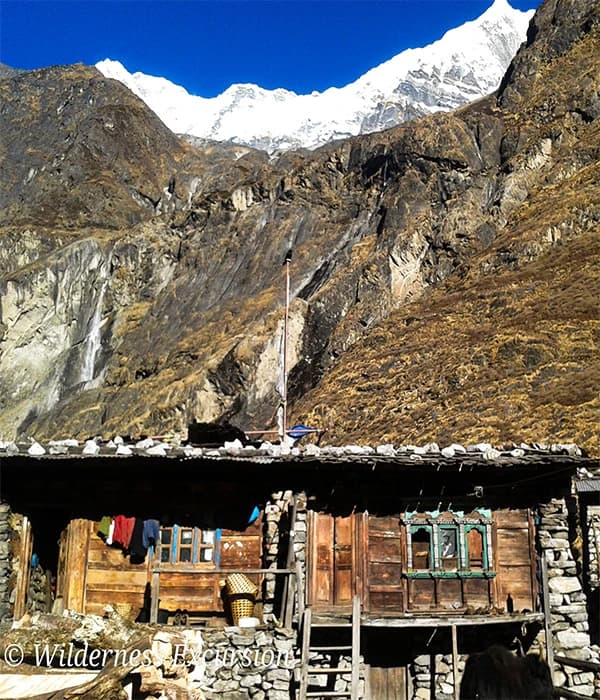
Photo: Sherpagaon, Rasuwa – Wikipedia
Sherpagaon is a small settlement of Sherpas and Tamang mixed village at an altitude of 2563 m. It is more of a lodge camp than a village due to the growing tourism opportunities in the region.
Day 3: Trek from Sherpagaon (2563M) to Thangsyap (3140M) (6-7 hrs).
The third day of the trek is visually awe-inspiring. Continuing the trek, the trail after Sherpagaon descends to Rimche and joins with a new trekking route from Bamboo. From Rimche, the trail shifts from mid-hill to valley trails. Following Langtang Khola, you take a lunch break at one of the tea houses on the riverside/Chunama.
Leaving Riverside behind, the trail crosses a steel bridge and goes uphill to Pering Kharka, a large grassland typically used by local herdsmen. From Pering Kharka, the vegetation now takes a different form, transitioning from shaded forest to open, dry alpine grasslands at Ghodatabela. The Ghodatabela serves as a checkpoint to Langtang Village; once crossing, you’re now officially in the Langtang Region and National Park. Thangsyap is an hour's walk from Ghodatabela at an altitude of 3140 m, where you will be staying for the night. The views from Ghodatabela when the weather is clear are mesmerizing, with the Langtang Khola flowing from Langtang village, with a glimpse of the Himalayas.
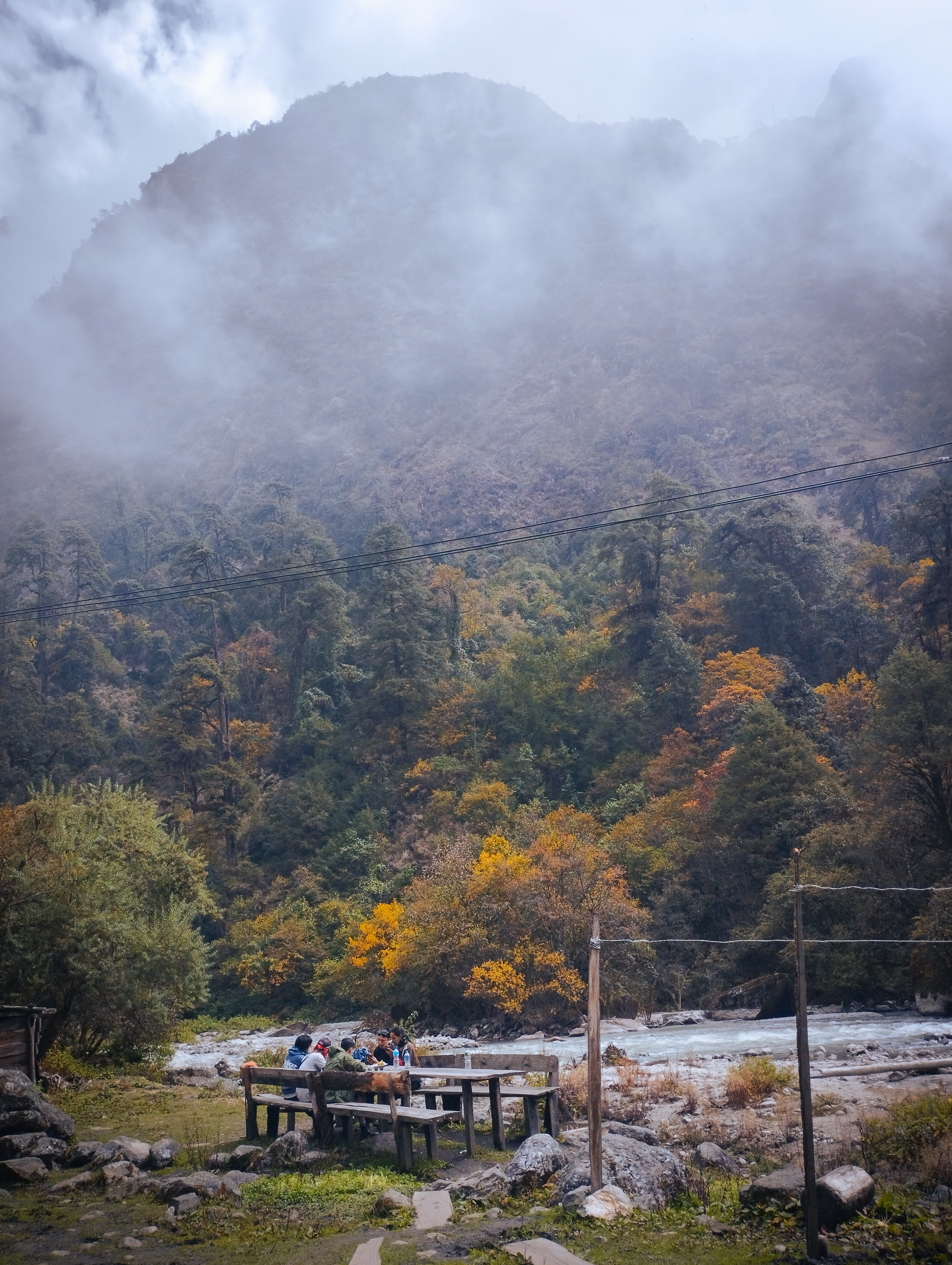
Photo: Lunch break at the riverside – Yogesh Tamang
Day 4: Trek from Thangsyap (3140M) to Kyanjin Gompa (3830M) via Langtang (3430M) (5-6 hrs).
Leaving Thangsyap behind, the trek becomes more enchanting as you traverse from subalpine to alpine vegetation. You’ll notice the terrain becomes more open as you gain altitude. The trek continues along mid-hills and alpine grasslands to old Langtang Village, which was swept away by the avalanche in the April 2015 earthquake. The old Langtang now remains under the massive landslide, but the locals, with new hopes, have moved behind the landslide, marking the start of the new Langtang Village. After crossing Langtang, the trails are now spiritually alive as well, with mani walls and wind flags marking the lands and trails to Kyanjin Gompa. A historic key monastery, along with Langtang, serves as the final stop and
hub for acclimatization for the Langtang Valley Trek. The total walking hours are approximately 6-7 hrs from Thangsyap to Kyanjin. With few uphills, the trail is mostly on mid-hills and terraced fields near Langtang village.
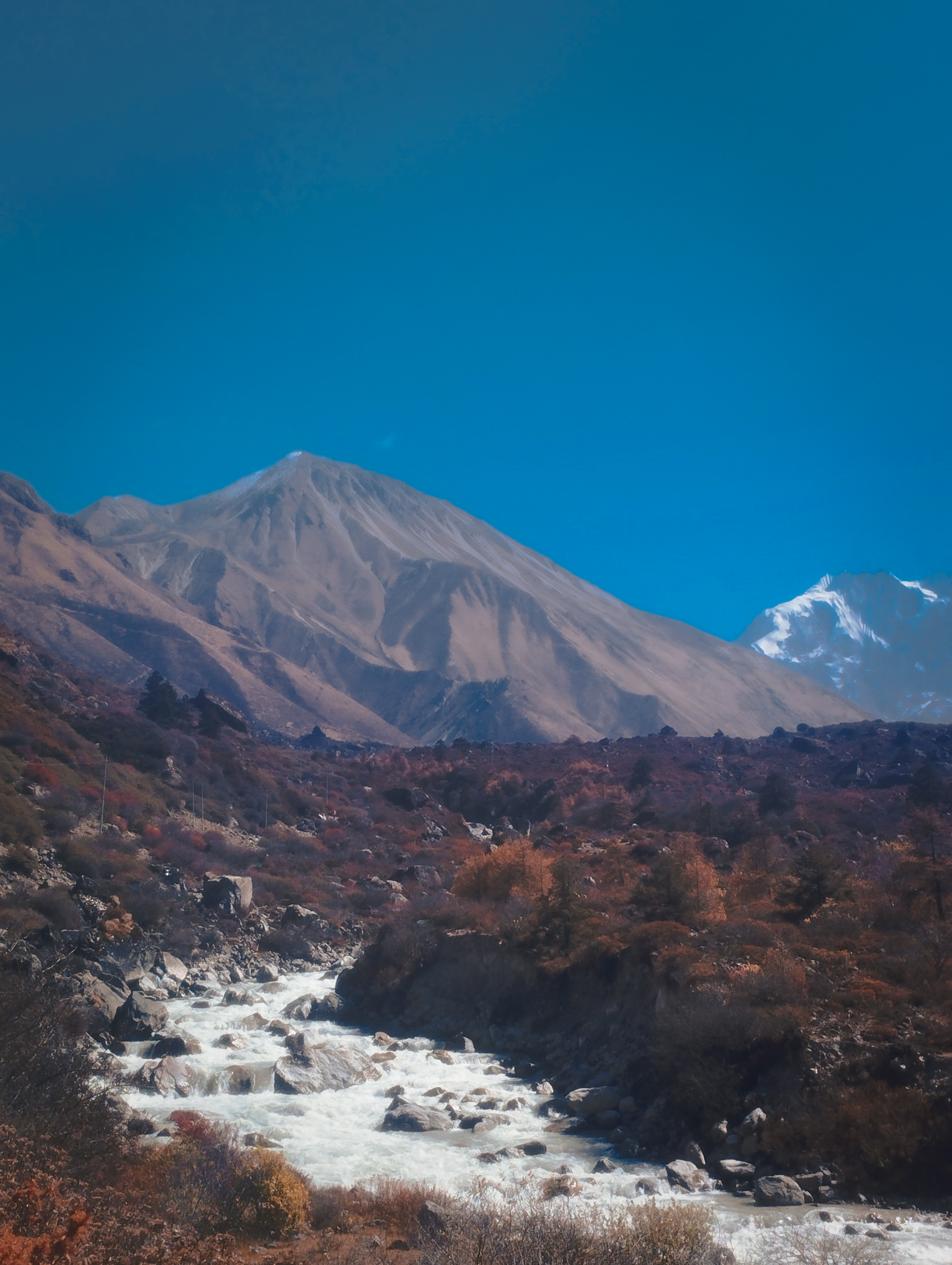
Photo: River valley trail to Kyanjin Gompa – Yogesh Tamang
Day 5: Hike to Kyanjin Ri (4700M)/Tsergo Ri (5033M) and trek to Langtang (3430M) (6-7 hrs)/(7-10 hrs).
Today is one of the most physically demanding yet rewarding days of the trek, as you make an early morning ascent to Kyanjin Ri, reaching an altitude of approximately 4,770 meters. Starting after breakfast, the climb is steep and requires steady effort, especially due to the increasing altitude and thinner air. However, the challenge is well worth it.
From the summit of Kyanjin Ri, you start the hike before daybreak to catch the sunrise and reach both peaks of Kyanjin Ri. The reason for the early hike is to let the body adapt to the gradual altitude change and also to not miss a panoramic view with sunrise from Kyanjin Gompa. with a breathtaking panoramic view of the Langtang Himalayan range, including peaks such as Langtang Lirung, Gangchempo, and the distant Ganja La Pass. The wide-open alpine scenery, combined with the sense of achievement, makes this one of the most memorable highlights of the entire trek. After spending some time at the viewpoint and descending back to Kyanjin Gompa, the trail continues down through familiar landscapes to Langtang, where you will spend the night.
Another option from Kyanjin Gompa is to hike Tsergo Ri at an altitude of 5033 m, which takes a whole day to hike. Most trekkers start their hike from 2:00 AM to summit the peak on time before dawn. The approximate hiking time is around 7-10 hours from Kyanjin and heavily depends on the trekkers' overall capability. Before starting the hike, request your respective lodge to make a packed breakfast and, if possible, a light lunch and snacks before departing for Tsergo Ri.
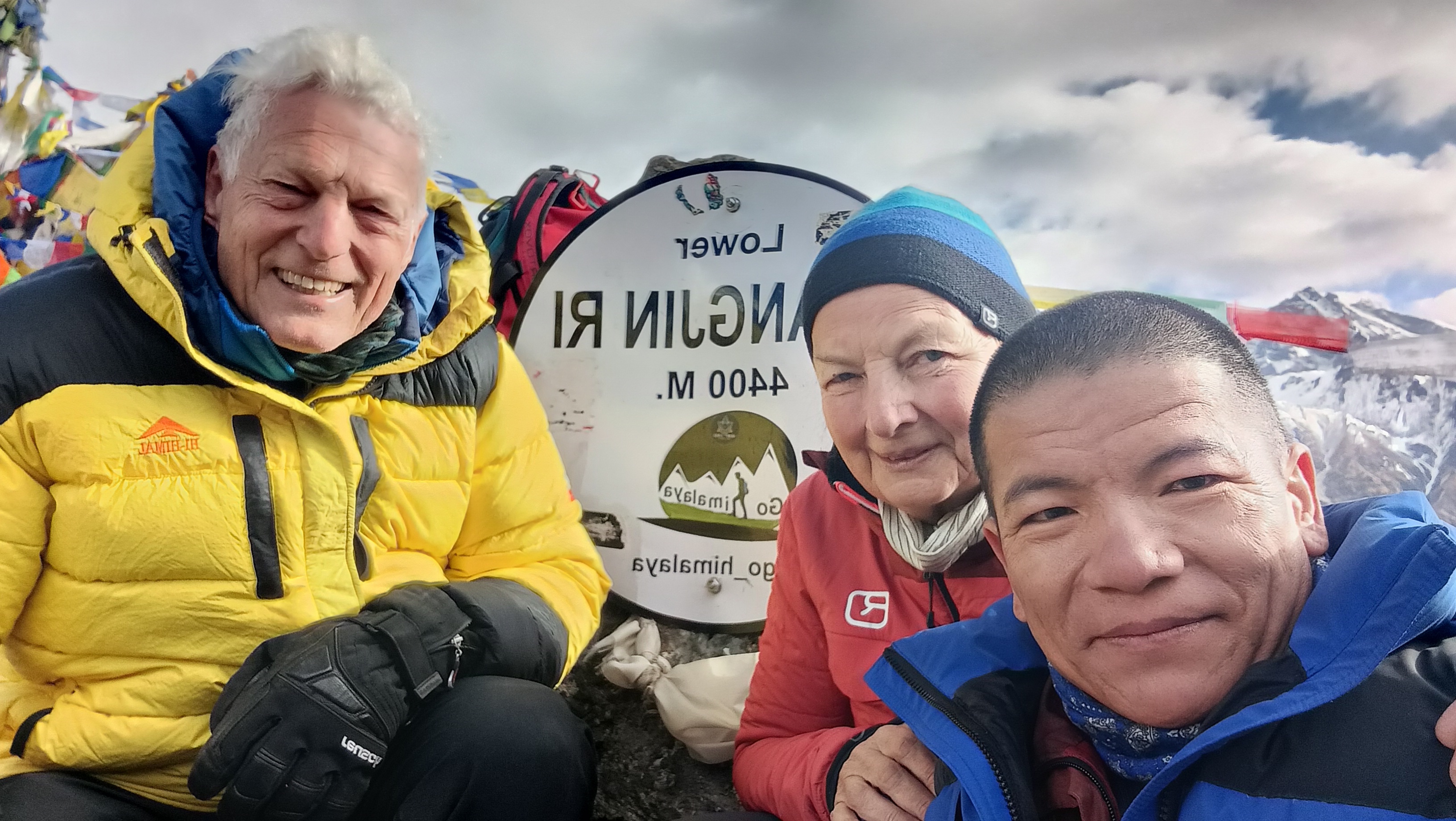
Photo: Kyanjin Ri – Garap Sangpo Lama
Day 6: Trek to Lamahotel (2480 m) from Langtang (7-8 hrs).
Leaving what you came for can be hard, that one plan and visit you made after years of research and determination now being left behind and stored in the memories. With a last glimpse of Langtang and the surrounding Himalayas, you trek the same route from Thangsyap and Ghodatabele to Lamahotel. It serves as a trekker’s hub in Langtang. Trekkers who are starting their journey with hopes and trekkers with memories all naturally gather in Lamahotel, a small place of teahouses near the Langtang Khola. Accommodation can be quite difficult in the Lama Hotel due to the congestion of trekkers.
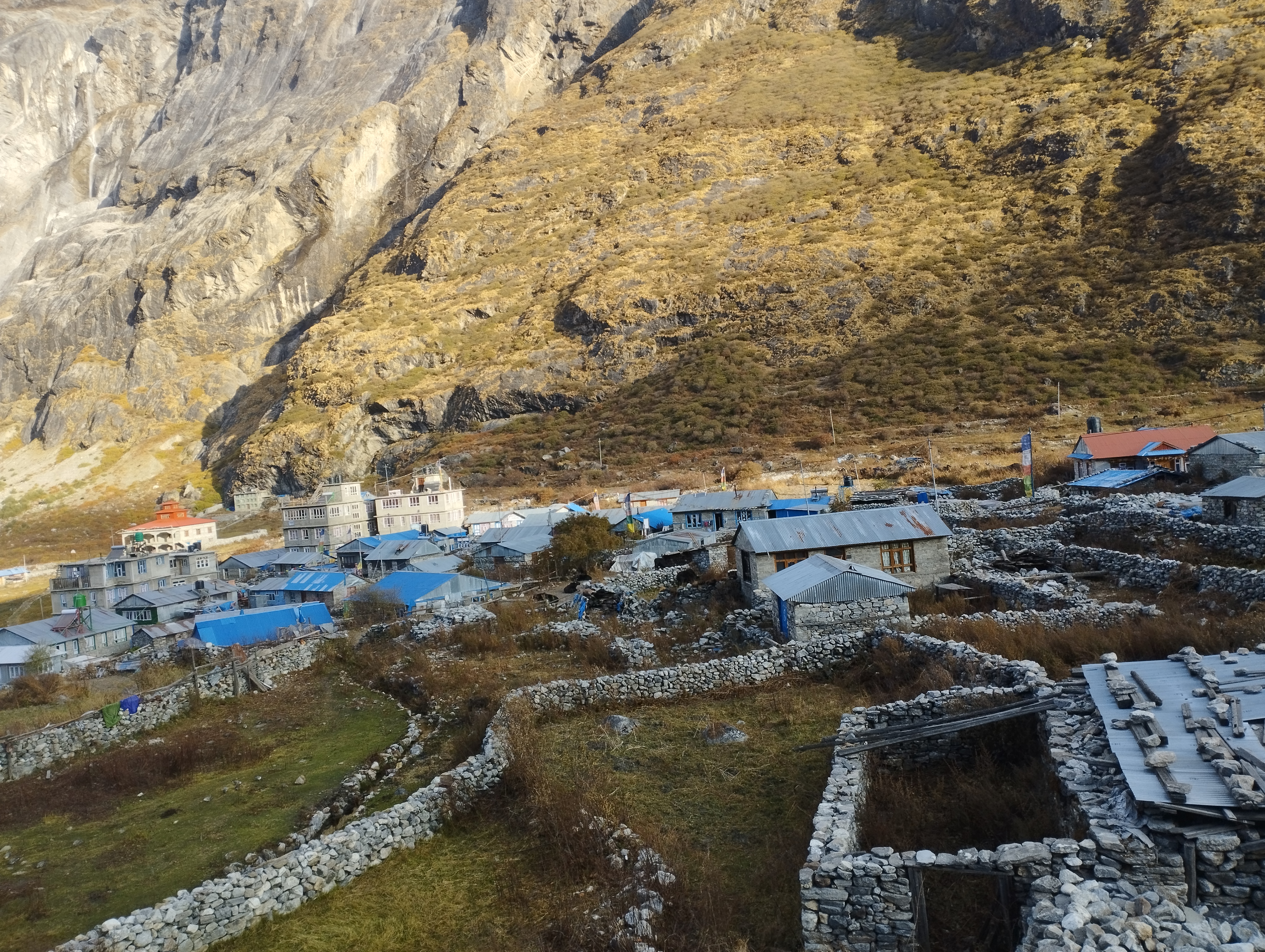
Photo: Langtang Village – Yogesh Tamang
Day 7: Trek to Syabrubesi (1503 m) from Lamahotel (2480 m) (5-6 hrs).
We begin the descent along the Langtang Khola to Rimche, from where a different route will begin. The usual route would be uphill to Sherpagaon, but instead, we will be taking a detour towards Bamboo to keep the trail interesting. The trail is now again through the shaded forest, where you will meet countless trekkers heading towards the same dream you just achieved. Along the river that guides you back, we take a lunch break in Pahiro, near Langtang Khola. The approximate walking time is 3-4 hours from Lamahotel to Pahiro. From Pahiro, the trek begins with a quick downhill and uphill till an intersection to Thulosyafru, from where Gosaikunda can be reached. After an hour of uphill and downhill on river valleys, we will reach an ongoing constructed dam, and in another hour we will reach Syabrubesi. Although the trek ends the day after, Syafrubesi marks the beginning and ending of the Langtang Valley Trek. You can rest for the day or explore the surroundings.
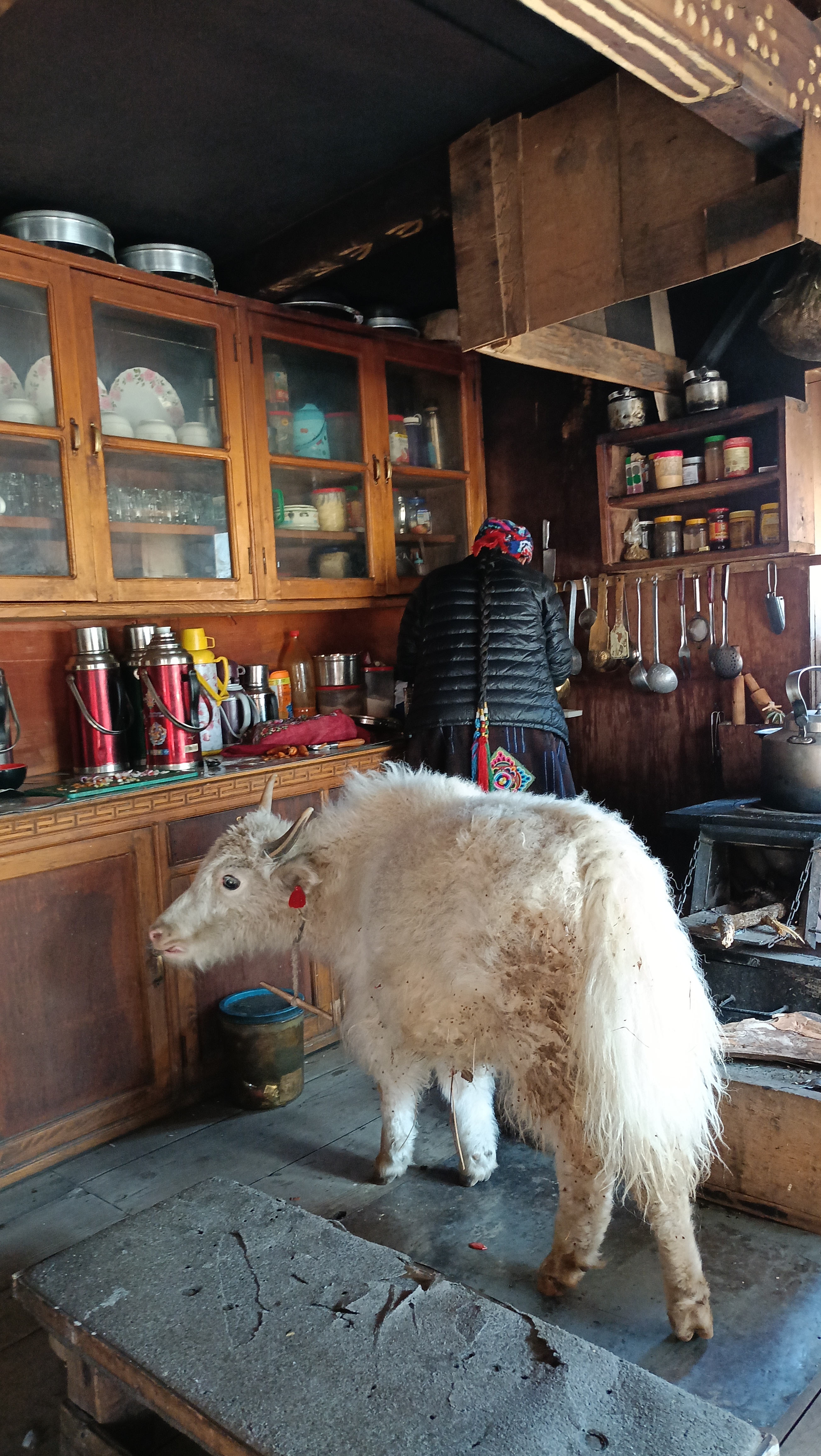
Photo: Yak guest – Garap Sangpo Lama
Day 8: Drive back to Kathmandu from Syabrubesi (8-9 hrs).
The trek wraps up as we drive back to Kathmandu, marking the end of our Langtang adventure and your weeklong holiday with us. We take an early bus from Syabrubesi to Kathmandu and take the same route through small peaceful towns. With another 7-8 hours of riding, we again reach the bustling city of Kathmandu. The bus will drop you off at Machhapokhari, from where you will be escorted back to your hotel by our guide, who will wish you well for the rest of the journey.
Why trek from Khanjim and avoid the new route via Bamboo to Lama Hotel?
I previously mentioned discussing trekking from Khanjim, even though trekking from Damside is far easier. There is no straightforward answer for it. I will give you a personal opinion on why to avoid it when starting the Langtang Valley trek.
First of all, the trail from Khanjim may seem ridiculously uphill and hard for beginners, but the trail shifts to mid-hill and terraced fields after Khanjim. But why choose this route just because of its shifting trail? Actually, the trails via Khanjim may seem difficult at first, but the trails pass through shaded trees and open fields to uplift trekkers' spirits. In comparison, the Damside route is constantly through dense forest along the river, and at first it may seem like there are no uphills, but after crossing the dam, you have to constantly walk uphill until you reach Rimche, from where the trails are mixed until Lamahotel.
Another reason is the hot zone, like Pahiro, Bamboo, Rimche, and Lamahotel. These places are geographically located near the Langtang River and are the very places that can’t be avoided by either trekkers starting in the Langtang Valley or those who are ending it. Meaning, places like Rimche and Lamahotel are camps where trekkers starting from Damside stay, and trekkers who are ending the trek from Langtang also have to stay a night here due to its geographical advantages of distance in camps. These reasons alone make the place particularly packed with visitors and make it hard to find room for independent trekkers. Now the room problem can be solved with temporary tents, but as I said, these places are located near a river where dense trees and boulders naturally form, leaving only a small section to place a tent. Also, due to various uncounted reasons, the places are not able to develop due to conflicting laws of the national park, which makes accommodation facilities not satisfactory.
These are the reasons why it's best to avoid the route from Bamboo, because I personally believe, why start the trek through gloomy trails and congested camps? When booked with Wilderness Excursions, we can manage rooms for our beloved guests, but due to conflicting facilities and limited options, we have always recommended avoiding that route.
A typical day during the Langtang Valley trek and things to do in Langtang and Kyanjin Gompa
During the trek in Langtang, your day starts with an early morning tea and breakfast around 7-8 AM. You wake up at 6 in the morning, pack your things, and wear your daywear. The breakfast is served in the dining hall, fitted with heaters in the center and tables surrounding it. The dining hall throughout the treks has the same design to accommodate large numbers of trekkers. The dining hall not only serves as a hall to eat but also as a resting place and a hall where trekkers gather and have conversations, sharing their personal experiences. After having breakfast, we start trekking in accordance with the itinerary. During trekking, you can choose to rest in teahouses, have tea, or take photo sessions. We recommend taking your time doing what seems right and consulting with your guide on what you’re doing. Lunch breaks are usually in teahouses or lodges, so it depends on when you reach the place. Mostly, lunches are served around 12-1 PM, so do carry some light food or energy bars to replenish your stamina. After lunch, we again start trekking to our destination, the lodge where we will be staying. After reaching the lodge, you can have a tea break, explore the place, or stay at the dining hall for warm and cozy entertainment. I personally recommended that you stay at the dining hall. Why?
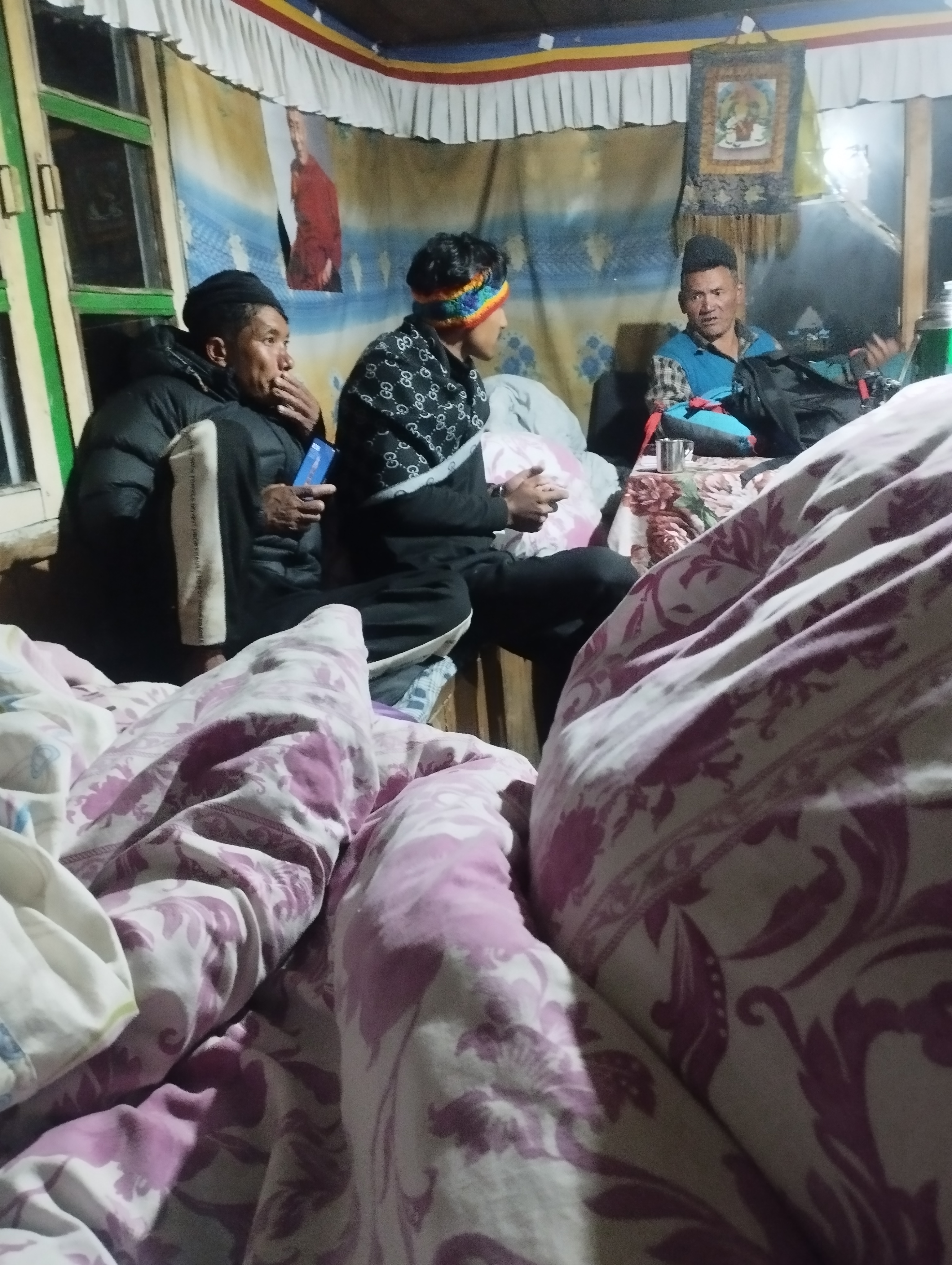
Photo: Dining hall in Lama Hotel—Yogesh Tamang
The dining hall of trekking lodges is like a small room built for sharing experiences and joy. Even the interior design of the halls is filled with tables placed along the walls and a heater in the middle. In the evening, the halls are filled with porters, guides, hotel staff, and foreigners who are enjoying their own time and interacting with each other. The whole place becomes lively, and that small room is filled with huge dreams and countless stories, among which you will also become one.
Things to do in Langtang Village and Kyanjin Gompa
Langtang Village and Kyanjin Gompa represent the cultural and spiritual core of the Langtang Valley Trek in Nepal, deeply rooted in Tamang heritage and Himalayan traditions. Langtang Village, rebuilt after the 2015 earthquake, stands as a symbol of resilience, preserving traditional stone houses, monasteries, and community life. Kyanjin Gompa, located higher in the valley, is an important Buddhist site surrounded by dramatic alpine peaks and glaciers. The region reflects a strong connection between people and nature, with livelihoods based on yak herding, local cheese production, and seasonal trade, offering trekkers an authentic insight into mountain culture. These are some activities you can do when staying in Langtang and Kyanjin Gompa: -
- Explore the village and visit monasteries.
- Sightseeing of the cheese factory in Kyanjin Gompa.
- Enjoy natural scenery and take a photo session.
- Have a tea break in the bakery of Langtang and Kyanjin.
- Play board or card games in the dining hall.
The average walking distance and hours during the Langtang Valley trek are 15 km with 6-7 walking hours. Why?
The reason is to let the body adapt to environmental conditions and avoid the possible risk of altitude. The trek always starts from low altitudes and gradually acclimatizes to higher altitudes, which allows the human body to slowly adapt to the changing environment. The average walking hours of 6-7 may seem short, but a short trekking duration helps in avoiding extreme fatigue. It also creates more time for rest and tea breaks during the trek for comfort.
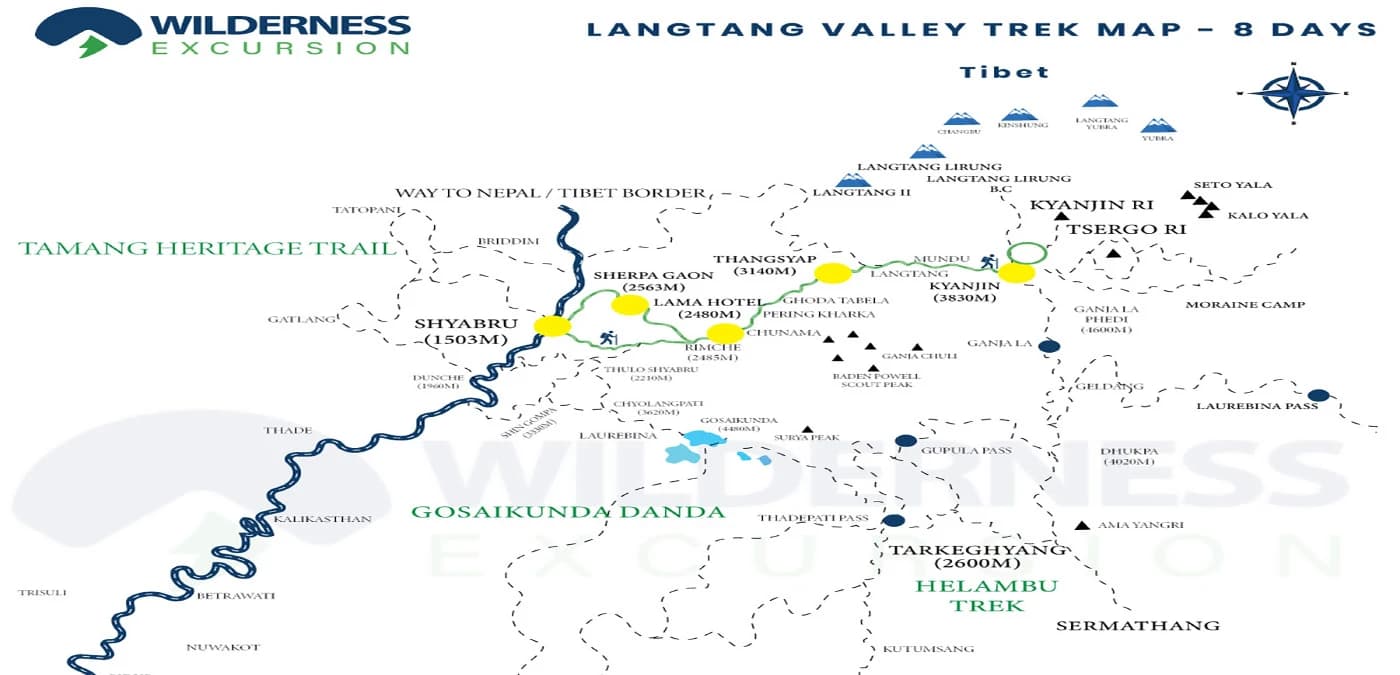
Langtang Valley Trek 8-day itinerary outline map with altitude chart
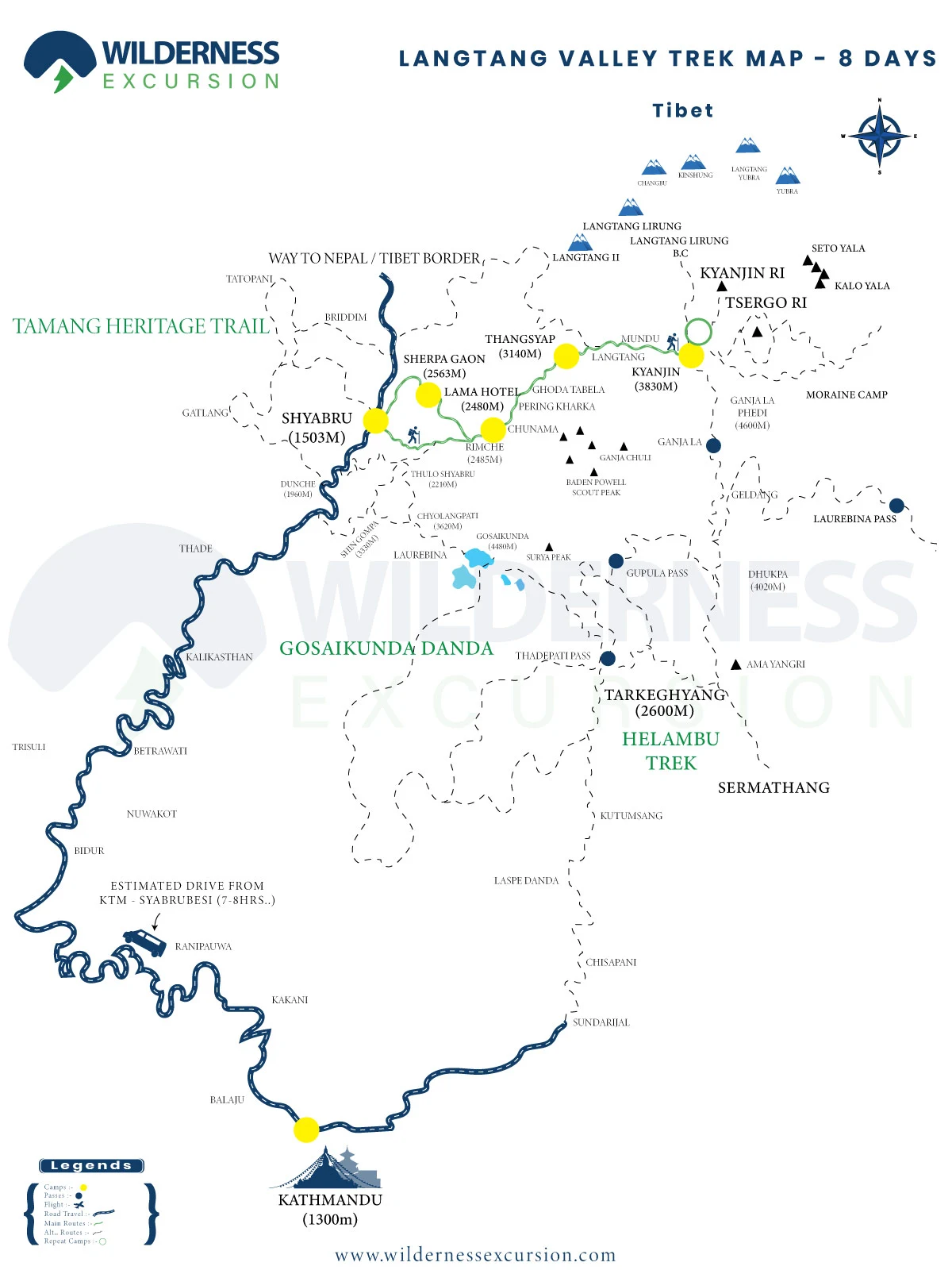 Photo: Langtang Valley Trek 8-day itinerary outline map
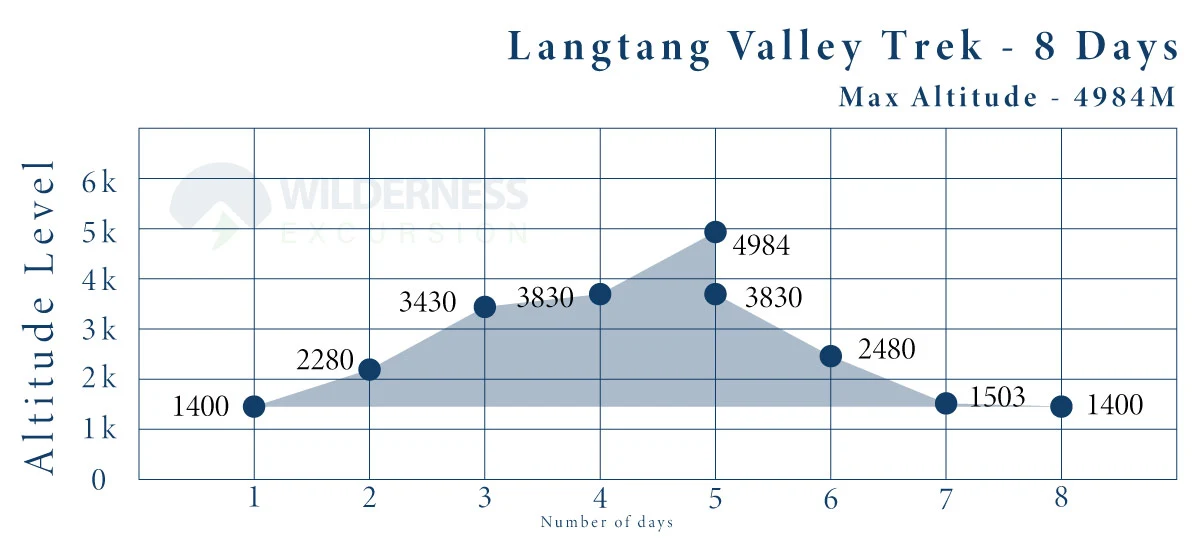
Photo: Langtang Valley Trek 8-day itinerary altitude chart
Alternate 7-day itinerary for the Langtang Valley Trek
The alternate 7-day itinerary for the Langtang trek is carefully planned and knit for those who are short on time yet want to experience the best of Langtang. Although it may seem a day shorter than the original itinerary, the 7-day focus is on minimizing time input and possibly makes use of short time.
Langtang Valley Trek 7 Days Itinerary – Detailed Route Plan
Day 1: Drive from Kathmandu (1300M) to Syabrubesi (1503 m).
Distance: 122 km
Duration: 6–7 hours' drive
Road Condition: Asphalt + gravel (partly off-road)
Your journey begins with a scenic drive north from Kathmandu, following the Trishuli River through terraced hills, rural settlements, and winding mountain roads. The route offers a gradual transition from urban landscapes to remote Himalayan foothills.
Key Highlights:
- Scenic river drive along the Trishuli corridor
- Views of terraced farmlands and hillside villages
- Entry point to the Langtang National Park region
Activities:
- Hotel pickup and departure after breakfast
- Lunch stop at Trishuli or Kalikasthan
- Arrival at Syabrubesi and trek briefing
Overnight: Teahouse in Syabrubesi
Day 2: Trek from Syabrubesi (1503M) to Sherpagaon (2500m) via Khanjim (2287M)
- Distance: ~12 km
- Duration: 5–6 hours
- Elevation Gain: ~1,100m
The trail diverges from the classic Lama Hotel route, taking a quieter path through Khanjin village. The ascent is steady, with forest trails, suspension bridges, and early mountain views.
Key Highlights:
- Off-the-beaten trail via Khanjim
- Views of the Ganesh Himal range
- Traditional Tamang settlements
Trail Features:
- Steep uphill sections
- Forested paths and ridge walking
- Overnight: Local teahouse in Sherpagaon
Day 3: Trek from Sherpagaon (2500M) to Thangsyap (3140m)
- Distance: ~10 km
- Duration: 5–6 hours
Today connects back to the main Langtang trail. The route passes through dense forest, gradually opening into wider valley views with visible Himalayan peaks.
Key Highlights:
- First clear views of Langtang Lirung
- Ghoda Tabela (old army post at 3,030m)
- Yak pastures and widening valley
Route Overview:
- Descend to Lama Hotel
- Gradual ascent via Ghoda Tabela
- Continue to Thangsyap village
Overnight: Teahouse in Thangsyap
Day 4: Trek to Kyanjin Gompa (3870m) via Langtang (3430M)
- Distance: ~10 km
- Duration: 4–5 hours
The trail ascends gently through Langtang Village, showcasing Tibetan-influenced culture and alpine landscapes before reaching Kyanjin Gompa.
Key Highlights:
- Rebuilt Langtang Village (post-2015 heritage)
- Views of Langtang II and surrounding peaks
- Visit to Kyanjin Monastery and cheese factory
Overnight: Teahouse in Kyanjin Gompa
Day 5: Hike to Kyanjin Ri (4500m) and Trek to Riverside (2790M)
An early morning hike to Kyanjin Ri rewards you with panoramic Himalayan views, including glaciers and surrounding peaks. After descending, the trail retraces itself back through Langtang Valley.
Key Highlights:
- Sunrise hike to Kyanjin Ri
- Panoramic views of Langtang Glacier
- Return journey with a different valley perspective
Route:
Kyanjin → Langtang Village → Lama Hotel → Riverside
Overnight: Teahouse at Riverside
Day 6: Trek from Riverside (2790M) to Syabrubesi (1503M)
- Distance: 14–15 km
- Duration: 5–6 hours
The descent follows the Langtang River through forest trails, suspension bridges, and familiar settlements.
Key Highlights:
- Gradual downhill walk
- Forest trails and river crossings
- Return to the starting point
Overnight: Lodge in Syabrubesi
Day 7: Drive from Syabrubesi (1503M) to Kathmandu (1300M)
- Distance: 122 km
- Duration: 6–7 hours
After breakfast, drive back to Kathmandu via the same scenic route or via Tokha, depending on road conditions.
Key Highlights:
- Final views of hills and river valleys
- Return to city comfort
End of Trek: Transfer to the hotel in Kathmandu
Book Your Langtang Valley Trek
The Langtang Valley Trek offers a perfect blend of Himalayan scenery, cultural villages, and accessible high-altitude adventure. If you are planning this journey, having a well-organized itinerary and proper support can make the experience safer and more enjoyable.
For a hassle-free trekking experience, including permits, accommodation, experienced guides, and full route management, you can explore our organized trekking packages designed for all levels of trekkers.
Joining the Langtang Valley trek with other popular routes and destinations
Nepal is a paradise for trekking lovers due to its geographical advantages and long history of travel on foot. Every trek has multiple destinations and trekking routes, with its own unique trails and distinct features. Likewise, the Langtang Region is not only renowned for trekking in Langtang but also for peak climbing and sacred sites.
Langtang Ganja La Pass Trek – 10 Day
The 10-day Langtang Ganja La Pass combines the traditional Langtang Valley trek with a less-traveled and thrilling route to Ganja La, which is above 5100 m altitude. It is the best possible route for those seeking a long travel journey with fewer crowds and more challenging treks.
Langtang Gosaikunda Trek – 12 Day
The Gosaikunda trek is in the northeast, right above the Langtang Valley trekking trail. A sacred historical site whose story dates back centuries. The Langtang Gosainkunda trail combines both these religious and historical destinations.
Tamang Heritage Trail with Langtang Valley – 12 Day
The Tamang Heritage Trail is in the northwest of Langtang, right above Syafrubesi. The customized trail combines the alpine route of the Langtang with the heritage trails of the local Tamang community. This route is perfect for those who seek to experience the cultural values and beliefs of one of the local communities.
Langtang Helambu Trek – 14 Day
Another trekking trail that combines the cultural depth of Tamang communities is the Langtang Helambu Trek. Although the trek experience may seem similar, there are vast differences due to the geographical location of both tribes.
Tilman Pass Trek – 16 Day
The Tilman Pass Trek is one of the most difficult and least-traveled trekking routes in Langtang Valley that crosses above 5300 m in altitude. This trek is recommended for only those who seek peak thrills and less luxurious travel plans.
Yala Peak Climbing – 10 Day
At an altitude of 5500 m, Yala Peak is one of the accessible peaks near Kathmandu. The trail extends beyond the Kyanjin Gompa behind the Tsergo Ri, where the infamous Yala peaks lie.
H2 Important Trekking Update
The given above itinerary cannot be execudet currently. Due to the recent flash flood in the Rasuwagadhi, the highways and towns leading to Syafrubesi were disrupted. If you have any plans for the Trek in 2026, we request you to contact us or government authorities before departing.
Contact us for changed itinerary for a safer trek, if you do plan on departing for Langtang in 2026.