This blog breaks down the Pikey Peak trek itinerary, including the route, distance, and practical itinerary most trekkers follow. The itinerary is beginner-friendly and includes side cultural & religious trips. If you’re looking for a complete guide that explains cost and logistics, feel free to contact us.


Day-to-day itinerary for Pikey Peak: trails, routes, & transportation
Pikey Peak Trek – A Short Introduction
From Kathmandu, Nepal’s central city, the Gaurishankar Conservation Area lies east-northeast, bordering Nepal’s most hidden gems and trekking routes known to few in the general public,
Stretching from the border of Langtang National Park in the west to Sagarmatha National Park in the east, and between two dominant tourism regions, the Gaurishankar region offers quiet, calm trekking trails with less commercial activity in its early sections, which is its main charm. And on the lower borders of the conservation area and Sagarmatha national park is a locally known village trails of the Pikey Peak.
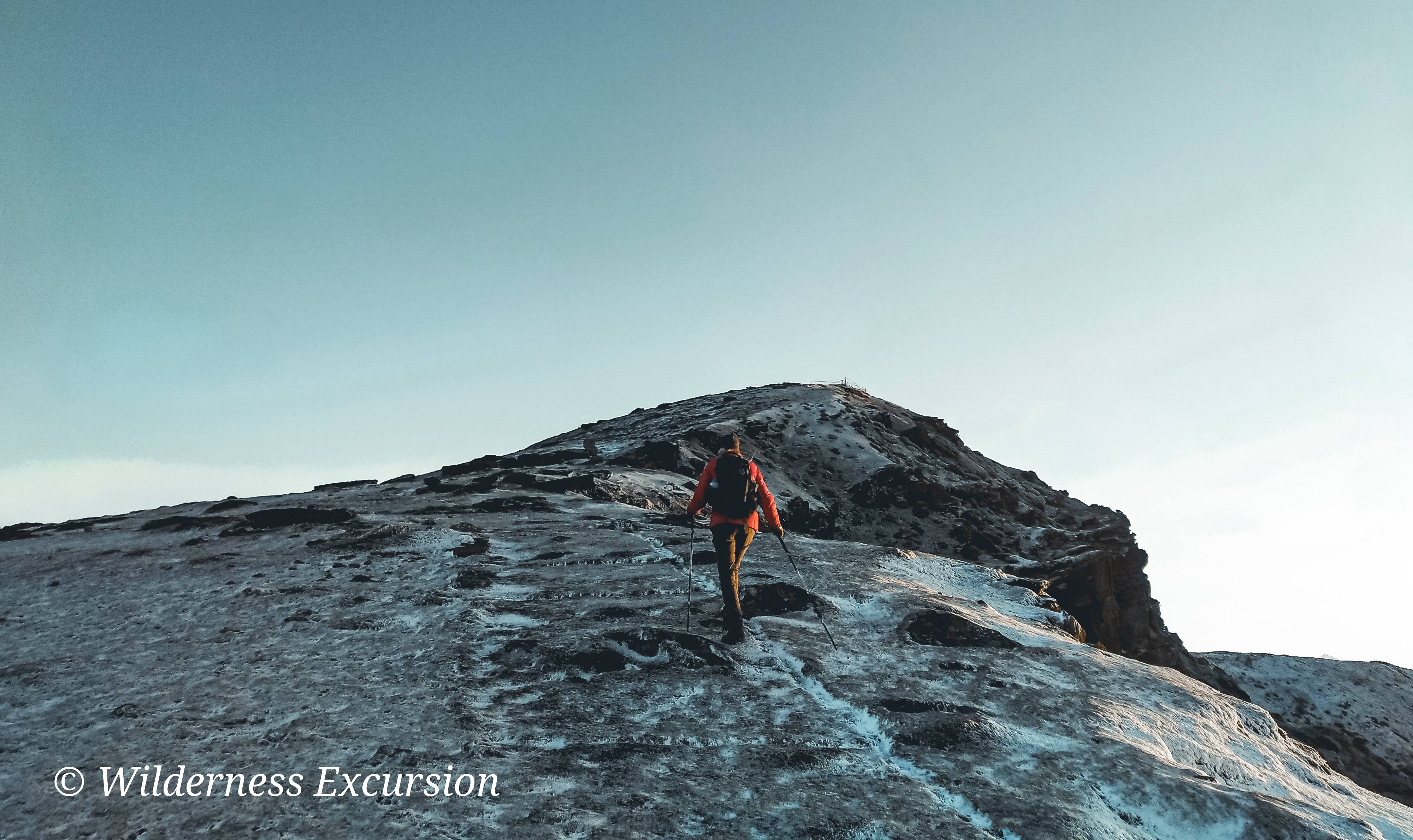
Photo: Pikey Peak II – Garap Sangpo Lama
Tucked in the hills of the lower Solu district of the Khumbu trekking region, the Pikey Peak is a cultural round trip in the hills of Nepal, not the Himalayas, a different kind of trekking experience. Most trekking in Nepal features a close walk to the Himalayas, or trails that pass glaciers, and lets you walk in the Himalayas itself between giant mountains.
Pikey Peak is similar to viewpoint trekking like the Ghorepani Poon Hill Trek in the Northwest of Nepal; the difference is that, from Pikey Peak, you can see most of the Himalayas, starting from the Annapurna range on the left to Kanchenjunga on the right, including the tip of Mount Everest.
So with this, let’s not preach more about the trekking region, since you’re looking for the detailed itinerary, which means you might have already weighed your options and chosen Pikey Peak.
Knowing the Trekking Itinerary
Now, there is only one most common trekking itinerary for Pikey Peak, but it doesn’t mean you can’t be creative. The itinerary should always be flexible and accommodate unexpected situations, including unplanned side trips; who knows, you might wanna visit another place or stay for more than a day in some places. So, let’s look into the details of the standard itinerary followed by the Wilderness Excursion, and start weighing options for alternate itineraries or travel plans.
But before that, for a novice, concepts like itineraries might seem confusing, and knowing what an itinerary is helps later in building one's own preferred plans and confidence for the trek.
What is an itinerary?
This isn’t a frequently asked question since most people already grasp the basic idea from the word itself or do some basic research. But knowing more won’t hurt either.
Now, I have previously mentioned what an itinerary is in one of our blogs (The complete guide to Langtang Valley), but I will explain it thoroughly here as well.
An itinerary is a set of plans on a day-to-day basis that revolves around your ultimate goal and the steps toward achieving it. For example, let’s say you’re planning to visit point F, but you can’t instantly teleport there, right?
To reach point F, you will have to go through multiple Points from A to B, B to C, and so on. Now, reaching point F won’t be the end of it either; you have to return to Point A as well. And mapping this entire plan- what to do, how to do it, and when to do it- is an itinerary.
This point explanation might sound more confusing, so let’s take an example from an already made itinerary and understand it. For this example, I will use the Langtang Valley Trek Itinerary;
Day 01: Drive from Kathmandu (1300m) to Syafrubesi (1503m), approx. 6/7 hours drive……….
Day 02: Trek to Sherpagaon (2563m) via Khanjim from Syafrubesi, 6 to 7-hour walk……………
As you can see, the given itinerary plan includes two days of the Langtang Trek. On Day 01, the plan is to drive from Kathmandu (Point A) to Syafrubesi (Point B), and it ends there.
On the second day, the plan is to trek from Syafrubesi (Point B) to Sherpagaon (Point C) via Khanjim village.
With this, the itinerary continues until you reach the main destination and return to Point A. The most crucial part when drawing an itinerary is knowing the distance between the two points, since you don’t want to include an activity that can take more than a day.
Like on day 01, it takes approximately 7-8 hours to drive from Kathmandu, which takes up most of the whole day, so the first day includes only a drive and trek to Sherpagaon directly.
With this, you might have a basic idea of what an itinerary is, so let’s look into the detailed itinerary guide for Pikey Peak.
Pikey Peak Trek Detailed Itinerary
Finally, let’s get into the main part: the detailed itinerary for Pikey Peak. Follow the short headings to know the daily activities in summary. The body paragraph includes the most important parts, from lunch places to where signboards are, and diverting trails.
Day 01: Drive to Dhap (2932) from Kathmandu (1300), 8- 9 hrs (236km)
The starting point of Pikey Peak is Dhap Bazar, above Okhaldhunga in Solukhumbu. Since there are multiple places with similar names, I have embedded the Google Maps location of the actual Dhap Bazar you need to reach.
To reach Dhap, Solukhumbu, a jeep departs daily from Chabahil, Kathmandu, every morning. To book a ticket, you can either search for the counter contact online or head to the counter in Chabahil. After crossing the Purple Bridge, the jeeps are mostly stationed on the open ground near Kumaristhan conservation. Ask the locals for the accurate directions to the counter once you reach there.
Both buses and jeeps are available to Dhap, but it's much more time-saving to book a jeep seat or book a private jeep if your budget can cover the expense.
Once you depart from Kathmandu, your driver will choose where to stop for breakfast, lunch, and short breaks until you reach Dhap. I recommend packing some snacks to enjoy the scenic ride with music.
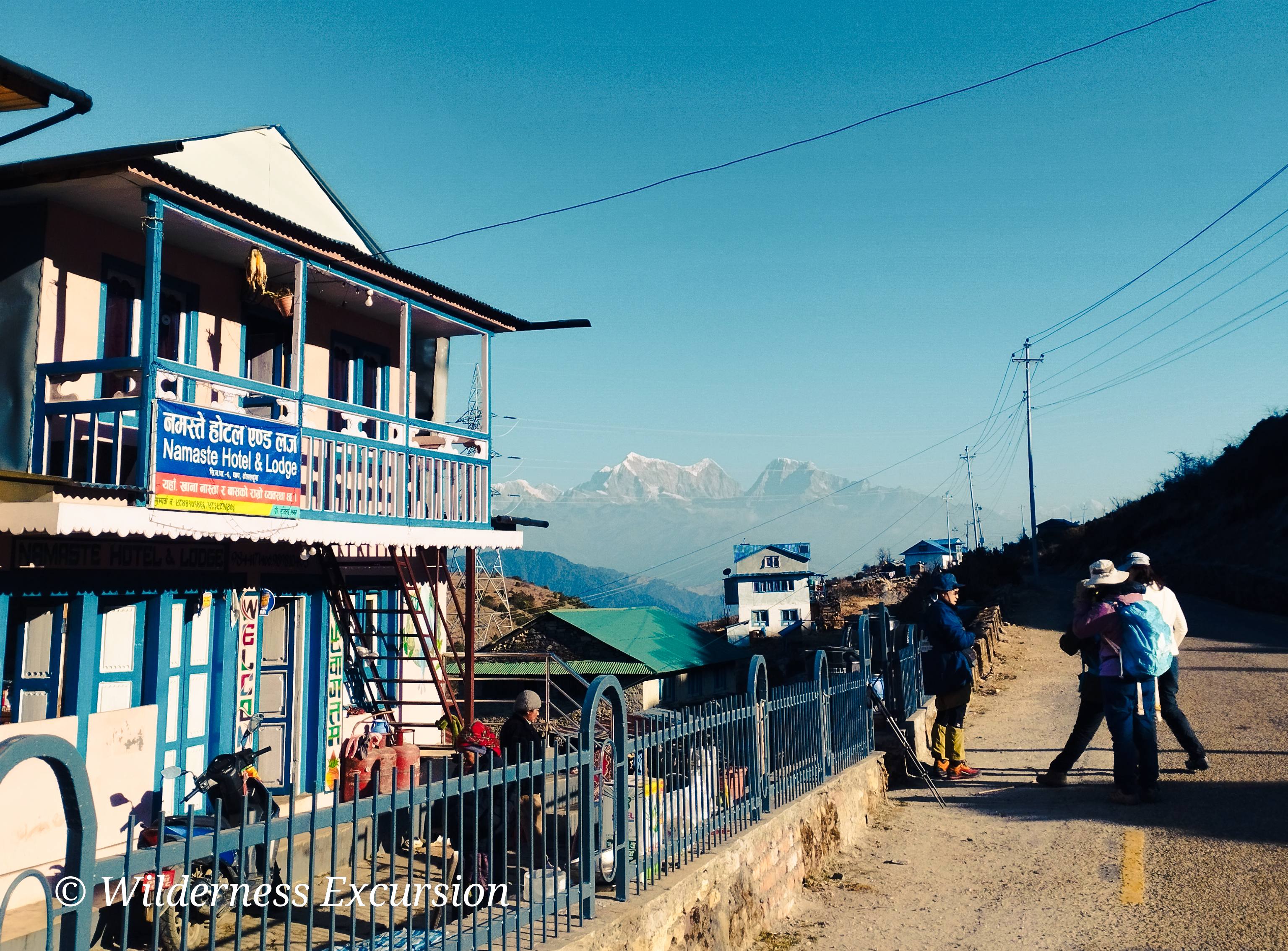
Photo: Dhap Bazaar – Yogesh Tamang
Tips: Dhap doesn’t have a well-established number of lodges, so during the peak trekking season, it might be hard to find a room right away; it's best to contact the lodges before departing from Kathmandu.
Day 02: Trek to Jhapre (2820) from Dhap (2932), 3-4 hrs (11km)
The trek starts from Dhap, since the first day is spent on a jeep ride from Kathmandu. To make the trip easier and beginner-friendly, the first day is short for acclimatization. Since you drive directly to 2932 meters above sea level from 1300 in a day, it is better to have short trekking durations for the first two days.
The trails from Dhap to Jhapre are mostly on dusty roads, and it is the same for the second day and the last day of the trek. Since the Pikey Peak trek isn’t as popular as other trails, conservation of its trails was not prioritized by the local-level governments. Navigating shouldn’t be hard; the trails are mostly the roads themselves, and there are proper signs as well, including arrow markings on trees and rocks.
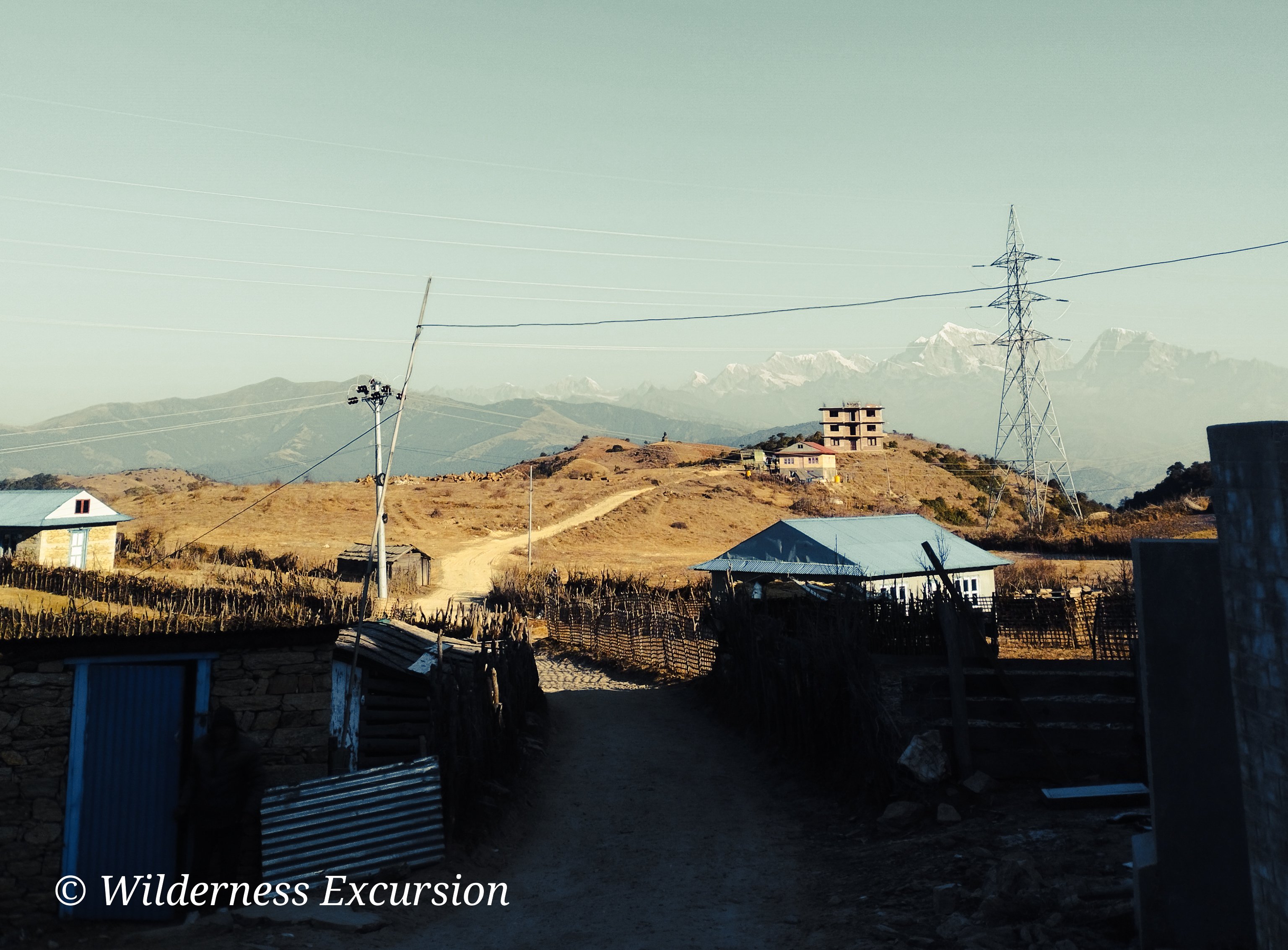
Photo: Road Trail to Jhapre – Yogesh Tamang
If you feel confident in your direction, you can also look for short trails along the roads; there are old trails that can be used for shortcuts instead of following the same curves, which are obviously going to be connected to old trails.
When you reach below the Jhapre village, there is a small, short trail deviating from the roads, which leads directly below a lodge and road; you can use it as a shortcut and practice walking on trails. Since the trekking duration is short, you will probably have lunch at Jhapre, and for breakfast you can make a quick stop in teahouses below Dhap or anywhere you feel comfortable.
Tips: Before departing from Dhap, make a call to one of the lodges in Jhapre and book a room. In peak seasons, walk-ins have major difficulty finding proper rooms, and it's the same throughout the whole trek. So before departing from one place, book a place in another, and inform them of where you’re going and when you will arrive.
Day 03: Trek to Pikey Base Camp (3640) from Jhapre (2820), 6-7 hrs (14km)
The third and fourth days of the trek are the longest trekking days; starting today, there are major uphills in most sections. After a quick breakfast in Jhapre, the trek follows mixed trails: roads and footpaths.
Once you depart from Jhapre, follow the same road while looking for the foot trails on the left side. There should be a signboard as well; if not, ask the locals or a worker from the lodge for directions. The trail leads through a dense forest and is mostly uphill until you reach a small open grassland. The trail cuts across a major road section, which is time-saving, and you can also enjoy a short trail.
At the end of the trail, it again merges with the roads, and there is a small hut as well, from where there are two paths, a diverging foot trail leading downhill, although it connects at some part but its best not to follow it continuously. To be on the safe side, keep following the road, and at some point there should be small, short foot trails that intersect the turning hilly roads until you reach Bhulbhule.
From Bhulbhule, it's mostly on the road till you reach Lhamuje (3500), which is approximately 8km from Jhapre, where you can stop for a lunch break. From Lhamuje, an isolated foot trail of the Pikey Peak trek begins. The last road development project was only up to this section, and from here on out you follow the old shepherds' trail to Pikey Base Camp.
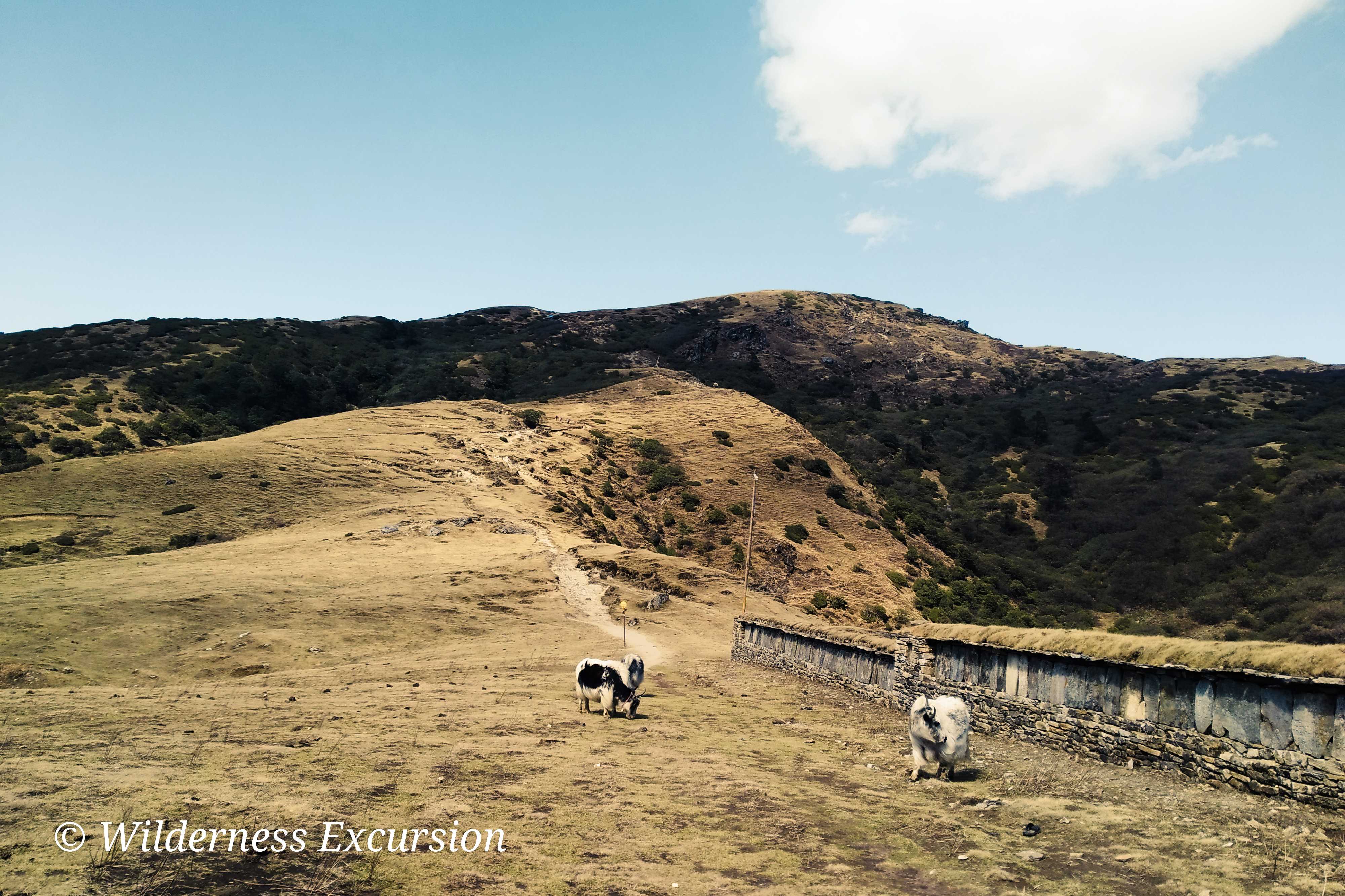
Photo: Uphill trail to Pikey Base Camp – Garap Sangpo Lama
Along the trails, there are abandoned sheep and yak huts, and long mani walls before the final uphill to base camp. If you don't find these chortens, mani walls, and abandoned huts, you're probably going the wrong way.
If you pass the mani walls before the final uphill, keep going; it should take an hour or two to reach a sign board pointing to Pikey Peak, but don't follow it. You don’t want to freeze at peak hiking that late. Even if it gets misty, follow the trail straight, and you should reach the base camp filled with lodges.
Tips: It gets really windy at night in Pikey Base Camp, to the point that you will feel like the roof might just fly away. Request additional quilts or blankets from the lodge owner if you only have one per person in your room.
Before heading to your room after dinner, ask the cook if it is possible to have a packed breakfast for the hike the next day.
Day 04: Hike to Pikey Peak (4065) and Trek to Taktor (2950), 6-7 hrs (11km)
Since this day is the most anticipated and main highlight of the trek, you might not wanna miss even tiny moments. The hike usually starts really early in the morning, before sunrise, when you can see the mountains glowing in the dark, and the sunrise hitting each mountain one at a time.
Make sure you have everything, and set out for the peak with mobile torches or headlights; the trail starts from the first lodge seen when heading to base camp. Follow the raw trails and stone steps to the peak, where you can find fluttering prayer flags at the center of the peak. Rest your bags; there is a small stone resting place. Have your breakfast and enjoy the scenery for an hour or two. There is no rush; you have reached what you came to find, and it is important that your time is well spent.
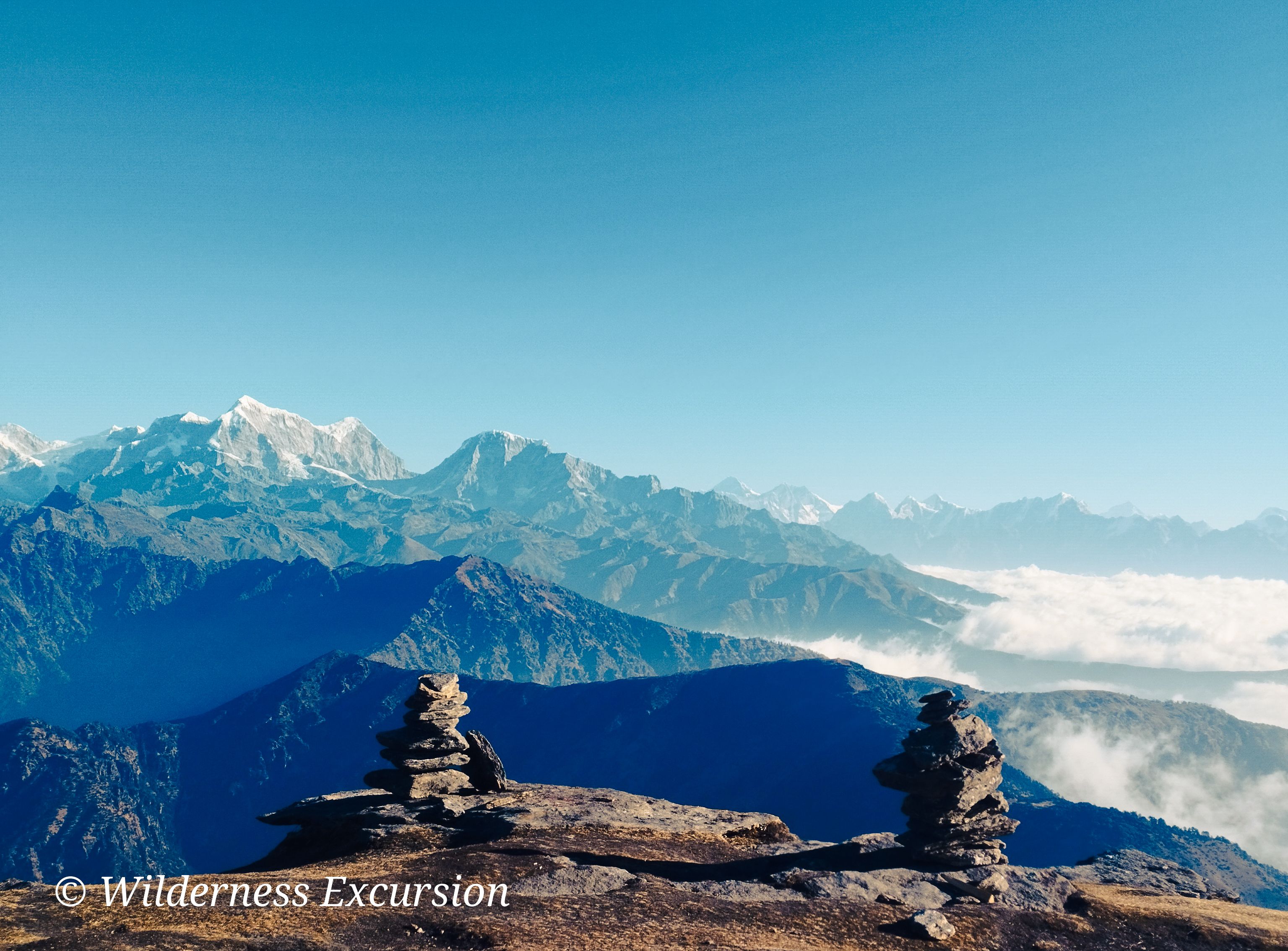
Photo: Pikey Peak II – Yogesh Tamang
Once your heart and mind are filled, follow the foot trails that lead downhill on the north side to a small pass. There is a lodge at the pass, which can be visible from the trails, that’s where you can find lunch.
From the pass, you start uphill till you reach a sign board pointing the trail to Jasmane Bhanjyang. There are two trails, and you should follow the right trail leading to Jasmane Bhanjyang, from where it's mostly open grassland. After some time, the trail transitions to a forest trail, constantly downhill, with wooden bridges along the trail. Follow the trail to a village, from where the rest of the section is on the road till Taktor.
Day 05: Trek to Junbesi (2700) and visit Thupten Choling Monastery (3000), 3-4 hrs (6km)
From Taktor, Junbesi is really close, a hill side parts the two villages. The reason for such a close distance is to include a side religious trip to Thupten Choling Monastery.
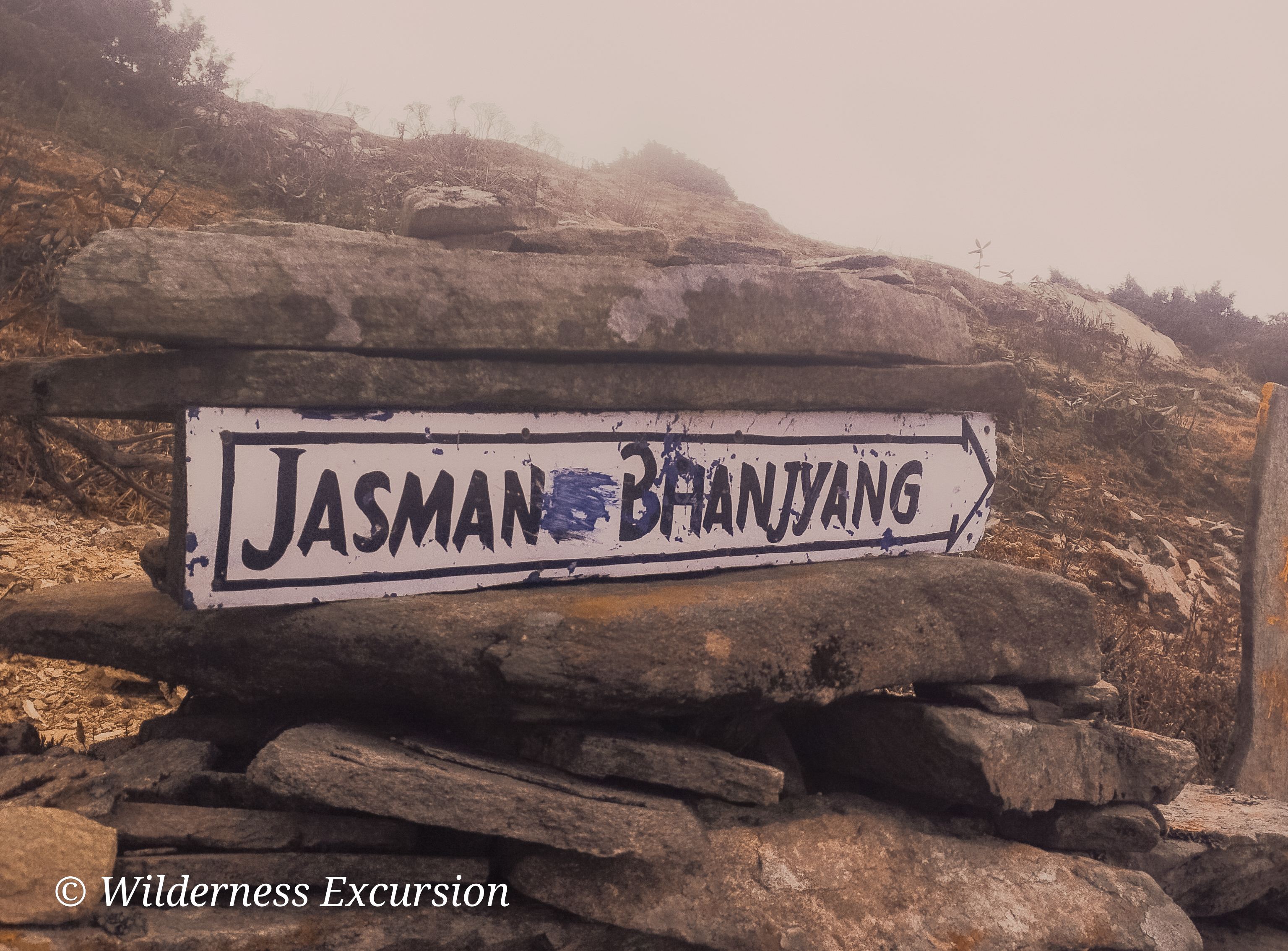
Photo: Trail Sign after Pikey Peak – Yogesh Tamang
Start an early hike from Taktor, have lunch at Junbesi, and book a room there. After having a lunch and rest break, you can do your side trip to the Monastery; the monastery also has there own café for outsiders to let you enjoy visit. Make a round trip to the monastery, and when you feel like it, head back to Junbesi village and spend the rest of your time there, since there won’t be any rush to get anywhere.
This way, you can enjoy the visit to the monastery and spend a relaxing night at Junbesi village.
Day 06: Trek to Phaplu (2469) from Junbesi (2700), 5-6 hrs (11km)
This is the last day; you will be walking down trails and roads. From Junbesi, it's mostly on the road till you are near the Phaplu airport. Navigation is also easy, and for lunch break, there are small teahouses, lodges, and even restaurants on the way. The road section from Junbesi is mostly used for travelling to Jiri and upper regions, so finding a good place for eating won’t be hard.
Once you are near the airport or below it, there is a small village trail on the left side; it leads directly to the airport. There should be a few lodges and hotels available near the airport, which are quiet and peaceful. Lodges further below, in Salleri, can be noisy, since it’s the heart of the town where buses and jeeps are stationed. It's best to rest at lodges near the airport since the airport rarely has landings and takeoffs.
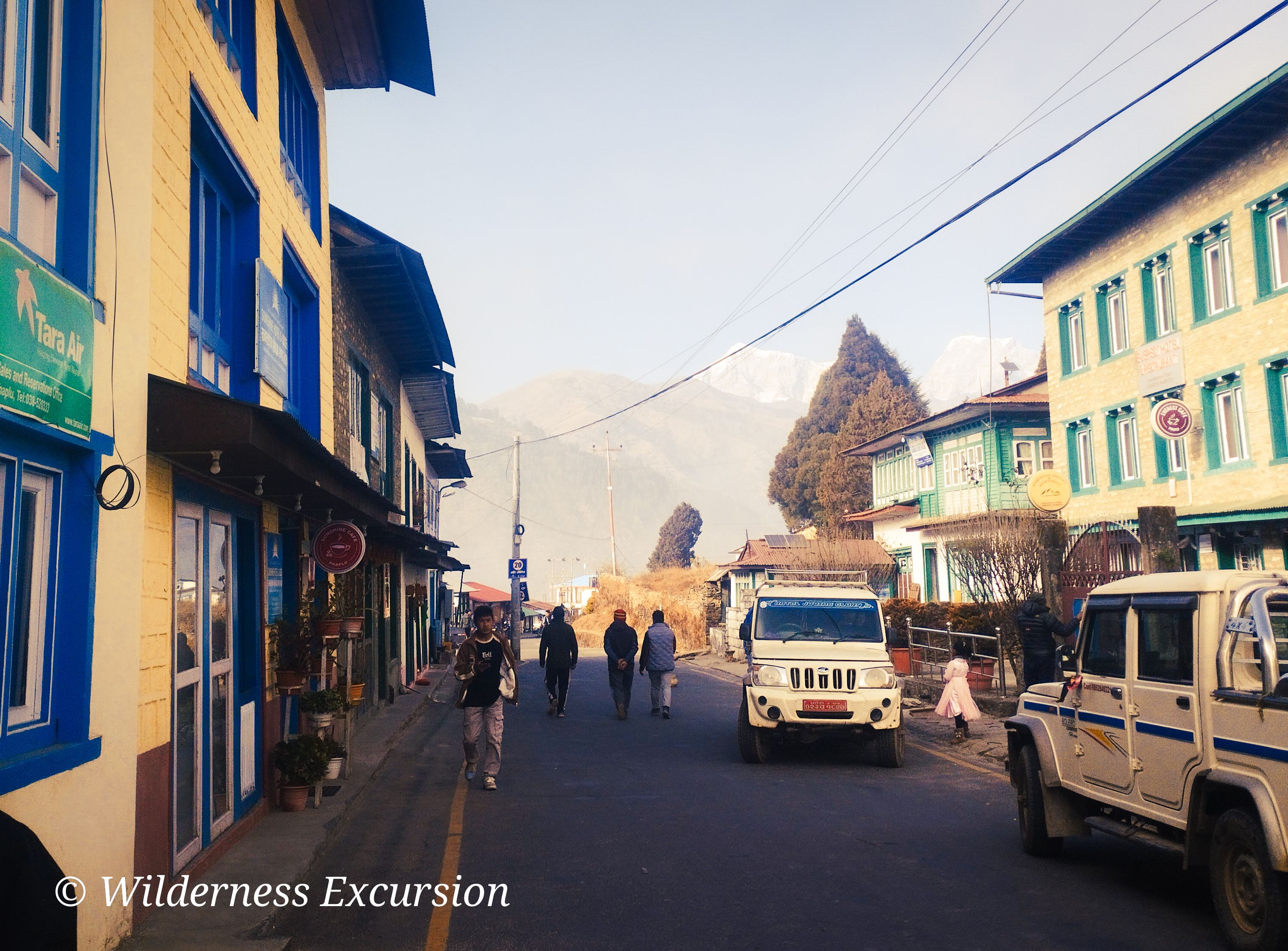
Photo: Local Jeep station, Phaplu – Yogesh Tamang
Tips: Before heading to bed after dinner, it is best if you visit the jeep counter to book a seat to Kathmandu, and make sure the jeep departs from Junbesi and also picks you up from your lodge. Once the payment and booking are through, request the driver's contact details and vehicle number.
Day 07: Drive back to Kathmandu (1300) from Phaplu (2469), 9-10 hrs (270km)
Since this will be the last day of the trek, you might think of taking it slow. But the drive to Kathmandu from Junbesi has to cover a long distance. The local jeep typically picks you up at 4’0 in the morning.
If you have requested the driver's details, you can contact the driver and tell him/her your location so he/she can pick you up. The drive takes approximately up to 10 hours including both traffic and breaks.
Once you are in Kathmandu, the jeep will drop every passenger at the very same counter mentioned in the beginning. From there, you can book a cab using online platforms like Pathao, inDrive, Yango, Uber, or Sajilo.
Tips: Late evening ride booking can be expensive on online platforms; make sure to book at a fair price for better options and faster booking.
Now, this is a leisure itinerary meant for enjoying the time and not rushing anything. But of course, not everyone can follow the same itinerary and have enough time. So, there is an alternate itinerary, but it is not recommended for complete beginners.
And about being creative, we will explore a few possible options that I personally thought of when visiting Pikey Peak after looking at the shorter version of Pikey Peak.
6-Day Pikey Peak Trek outline itinerary
Day 01: Drive to Dhap (2932) from Kathmandu (1300), 8- 9 hrs (236km)
Day 02: Trek to Jhapre (2820) from Dhap (2932), 3-4 hrs (11km)
Day 03: Trek to Pikey Base Camp (3640) from Jhapre (2820), 6-7 hrs (14km)
Day 04: Hike to Pikey Peak (4065) and Trek to Junbesi (2700), 6-7 hrs (11km)
Day 05: Visit Thupten Choling Monastery (3000) and Trek to Phaplu(2469), 6-7 hrs (14km)
Day 06: Drive back to Kathmandu (1300) from Phaplu(2469), 9-10 hrs (270km)
Although it is the shorter version of the Pikey Peak, the itinerary is only shortened by a day, and there is an important reason. When you drive from Kathmandu, you reach an altitude of approximately 3,000 meters. So, you must take time for acclimatization.
In the last days, you also have to include a short trip to the monastery, which is also a highlight of the whole Pikey Peak route. Overall, the trip still lasts for 6 whole days. But of course, there are creative ways you can trek to Pikey Peak.
Creative itineraries for Pikey Peak
Option A: In the itinerary, I have mentioned multiple times that you have to walk on dusty roads. These roads are used by the lodges and the nearby village to travel and transport goods, and what you can do is book a private Jeep for an extra cost and request the agency to drop you off farther than Dhap, somewhere around Bhulbhule or Lhamuje.
And after trekking to Pikey Peak and Junbesi, including a monastery visit, you can already book a private Jeep back from Junbesi to Kathmandu. This way, you can shorten it by half, but it will cost a lot and also has a major drawback, which I will point out after all the alternatives are mentioned.
Option B: Another option is for those who have two-wheelers (motorbikes), especially for Nepalese who own a bike and are planning to go to Pikey Peak. Personally, what I have witnessed is that locals tend to ride on their own bikes in pairs up to Lhamuje and hike to base camp. Afterwards, hike to Pikey Peak and return the same way to Lhamuje and ride back. This way, you can either return to Kathmandu after the Pikey hike or continue towards Junbesi and the monastery, since the road to Salley, Phaplu, and Junbesi is from Dhap.
Now, the major drawback of both options is acclimatization. Even on the original itinerary, you already drive approximately 3000 meters in a day, and continuing with this option, you will drive up to 3500 meters above sea level and hike to base camp (3640) and Peak (4065), so there is barely any room for letting your body rest.
Beginners and trekkers with no prior high-altitude experience will face severe problems with altitude sickness due to fatigue and sudden changes in altitude. So, these options are not possible unless you are a local with enough high-altitude experience and are confident. But here’s what you can do instead.
Safe alternative itinerary outline
Day 01: Drive to Dhap (2932) from Kathmandu (1300), 8- 9 hrs (236km)
Day 02: Trek to Jhapre (2820) from Dhap (2932), 3-4 hrs (11km)
Day 03: Trek to Pikey Base Camp (3640) from Jhapre (2820), 6-7 hrs (14km)
Day 04: Hike to Pikey Peak (4065) and Trek to Junbesi (2700), 6-7 hrs (11km)
Day 05: Visit Thupten Choling Monastery (3000) and drive to Kathmandu (1300), 10+ hrs (285km)
This is the safest itinerary, where most activities are included on the last day. And on the last day, you have to book a private jeep back no matter the cost; if not, it is not possible with local jeeps at all. You can visit the monastery in the really early morning, have breakfast at the monastery café, and drive straight from there back to Kathmandu by jeep.
Let me warn you, the drive can last more than 12 hours, and most drivers prefer to depart really early, which can restrict the time for a monastery visit.
Things to prepare before departing
From personal experience, here are small things you can do before departing for the trek, which make the whole experience even more enjoyable and memorable.
- Pack a neck pillow; drives tend to last for more than 10 hours.
- Carry small snacks; there are few teahouses from Dhap to base camp.
- Pack a small flask (thermos), a teabag, sugar packets, milk powder, or coffee; you can enjoy the view from the peak with tea and snacks.
- Carry earbuds or foldable headphones to enjoy music on the long drive.
Things to pack for the Pikey Peak
If you have made up your mind for the Pikey Peak, there are certain specific things you need to pack for this trip.
Clothing
- Woolen cap, muffler, gloves, and sunglasses; Pikey Peak gets really windy and cold.
- Windbreaker, moisture-wicking T-shirt for the day, and a down jacket for the night.
- Two sets of trekking pants and comfortable trousers for the night in lodges.
- Trekking socks for the day and woolen socks for the night.
Gears
- Durable and proper trekking boots or hiking boots.
- Trekking poles
- Headlights or torches (headlights preferably)
- 35-40L Trekking bags
- Water bottle
Sanitary and other items
- Hand sanitizer, wet wipes
- Toilet paper
- Toothbrush and toothpaste
- Towel
- Soap bars, shampoo, and face wash
- SPF 50+ Sunscreen
These are most of the basic things you can pack for the trek. You can also pack other personal items if there is enough space and you are confident in carrying them.
Need Help? Call Us+977 9851042153orChat with us on WhatsApp
Latest Travel Blogs
Need Help? Call Us+977 9851042153