Prelude to Rainbow Valley: The Death Valley of the Everest
"Trouble is at 8,500 meters; it's extremely difficult to keep yourself alive, let alone anyone else alive." Russell Brice
A controversial statement given by the New Zealand mountaineer and expedition leader during the historical moment of Mark Inglis, surrounding the death of British climber David Sharp, where Mark was criticized by many for not helping David. But the controversial story of Mark Inglis revolved around his humanity, mostly in the eyes of those who had never faced the same situation.
Unlike Mark Inglis, the stories of the “Green Boots” and “Sleeping Beauty of Everest” were tragic, yet each has been given a poetic name that has circulated in the expedition world. Such informal names carry a tragic burden of story behind them. And all these stories, accomplishments, and series of events revolve around one name and place: “Everest”.
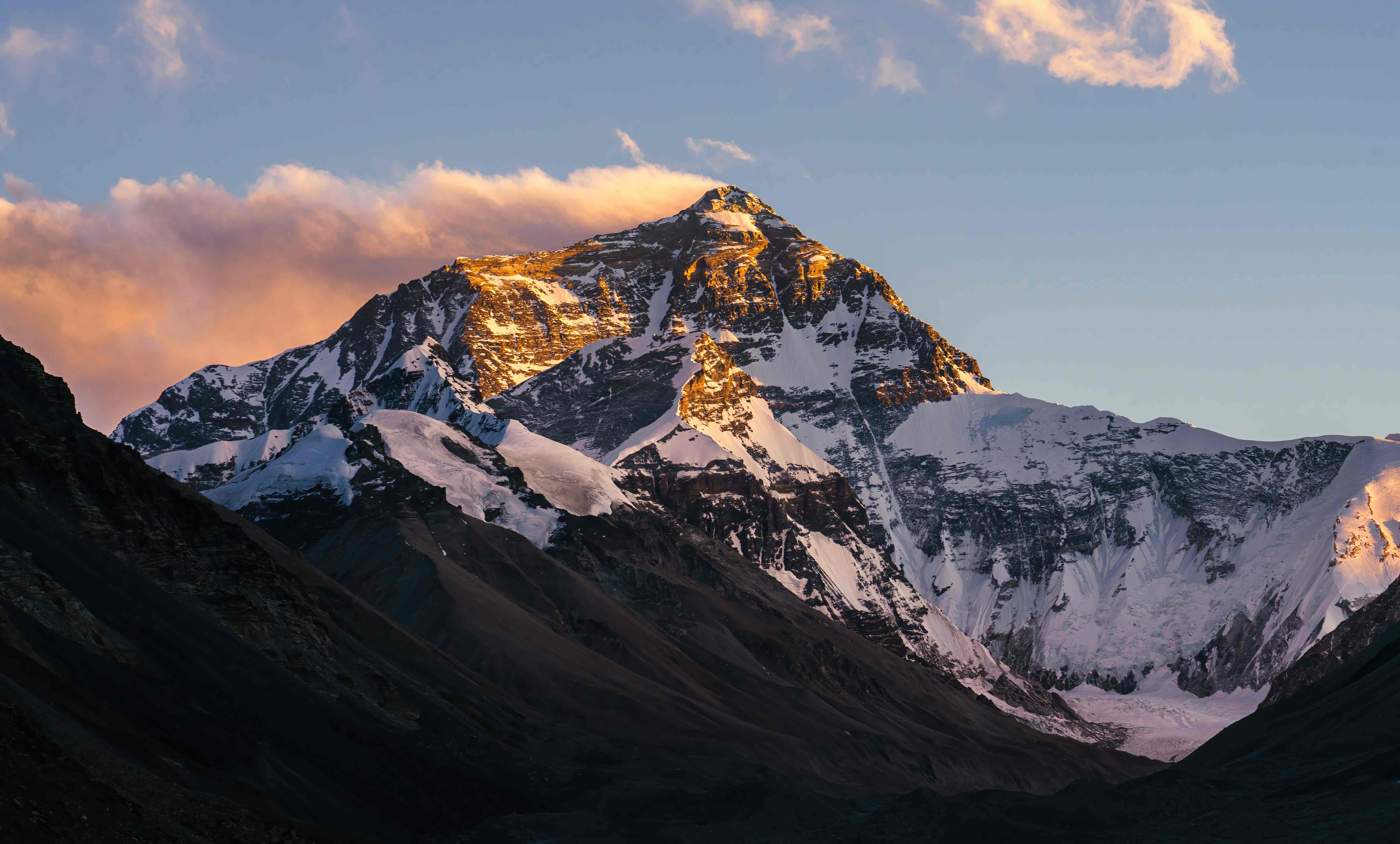
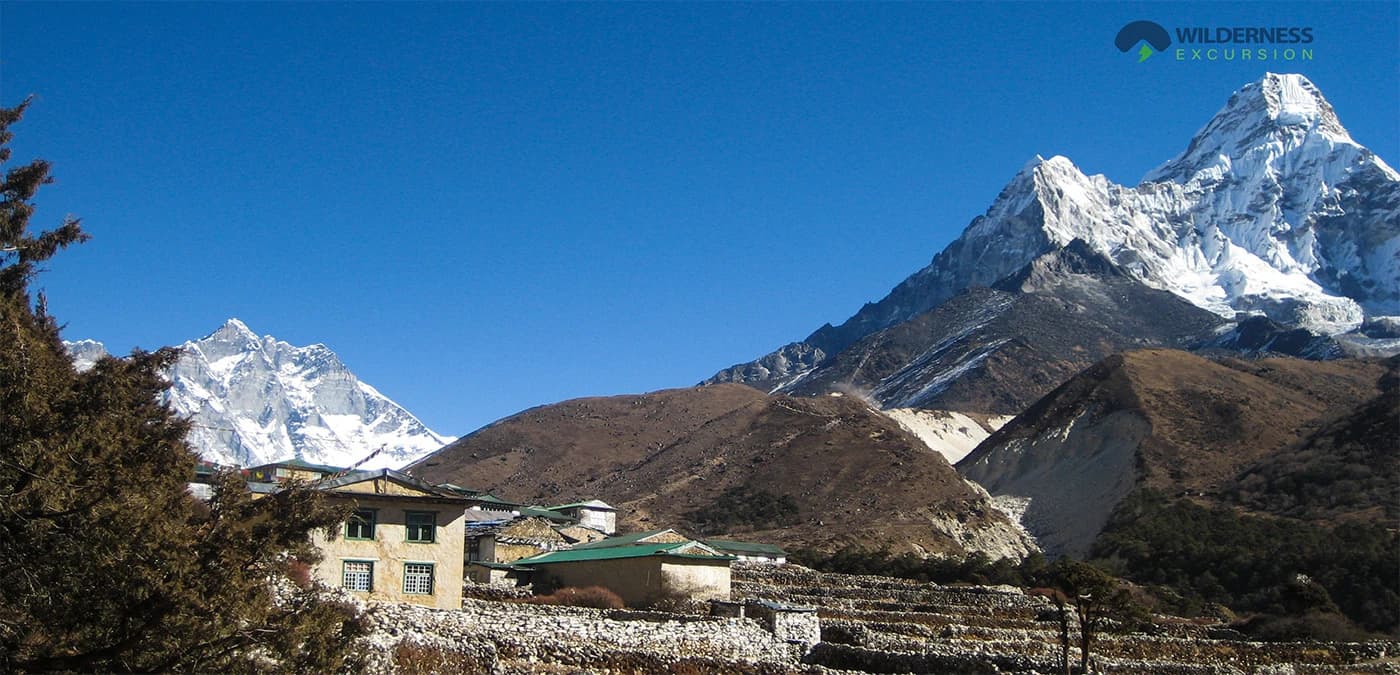
Photo: Mt.Everest – Weichao Deng (Unsplash)
Before its first inauguration in 1953 from the South Col (Nepal), the first team to set foot on the mountain was the 1921 British Reconnaissance Expedition. They didn’t successfully summit the mountain, but mapped out the route and found the North Col Route from Tibet/China, as Nepal was closed to foreigners for decades under the Rana Regime.
For a decade, from 1921 to 1938, before Nepal officially opened its borders to foreigners, the British sent several expedition teams from the North Col, Tibet/China side. While they reached incredibly high elevations, nobody officially made it to the top, and many climbers died, including George Malloryhimself. Now, most of these deaths occurred 8000 meters above sea level, which is considered a Death Valley, and beyond this height, between 8300 and 8500, is a chilling scene in the North Col right before the second step: a graveyard with vibrant colors of gear, called “Rainbow Valley”.
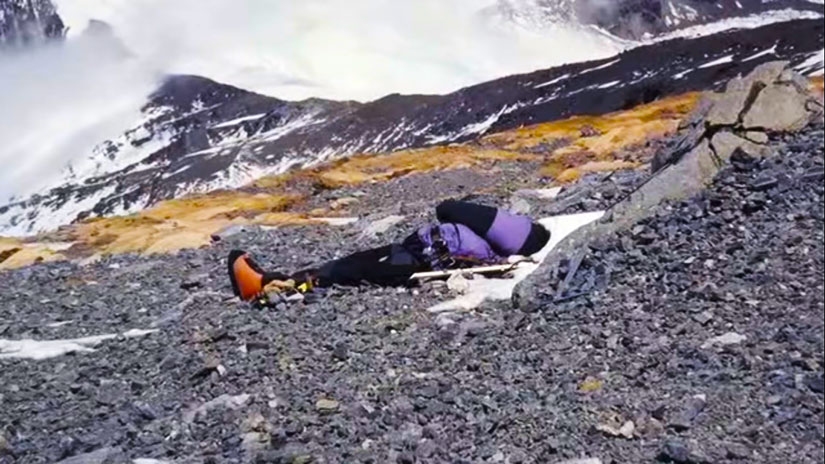
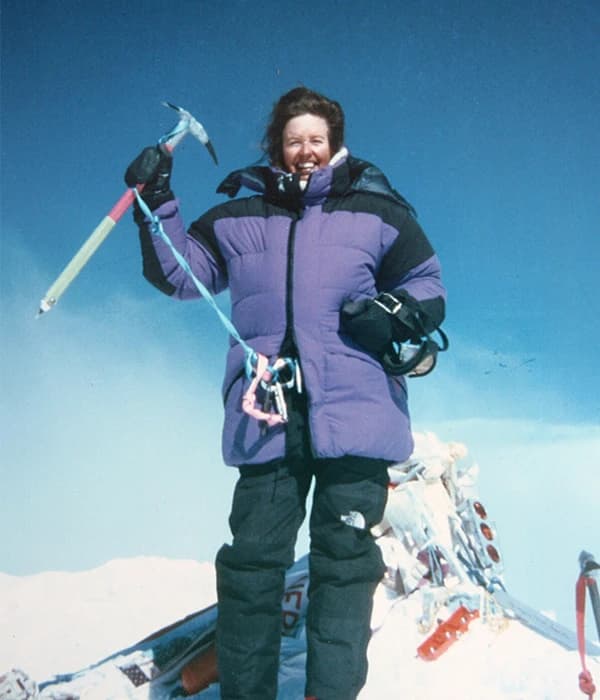
Photo: Sleeping beauty of Everest - Francys Arsentiev
What exactly is Rainbow Valley, and why is it called Rainbow Valley?
Behind its poetic name, Rainbow Valley is a metaphor for a chilling scene on the route to Everest summit from the North Col. Nobody knows when the scene was called Rainbow Valley, nor was it given its official name. Most believe it originated from local climbers or expedition teams who saw it during the summit. So, what did those climbers see during their summit?
Above 8000 meters, after the first step, there is a graveyard where bodies of climbers date back as early as 1924, with the death of George Mallory making him the earliest resident of the graveyard. But the death of George Mallory or any climbers from the years 1921 to 1938 doesn’t contribute to the graveyard's name, as modern synthetic materials didn’t exist during that time, which actually contributes to the “rainbow effect”.
Modern climbers coined the name because the slopes are scattered with the unfading, neon shades of synthetic down suits, tents, and plastic boots worn by climbers who perished from the late 1970s onward, which made the graveyard earn its name, Rainbow Valley, which is, in fact, a Death Valley.
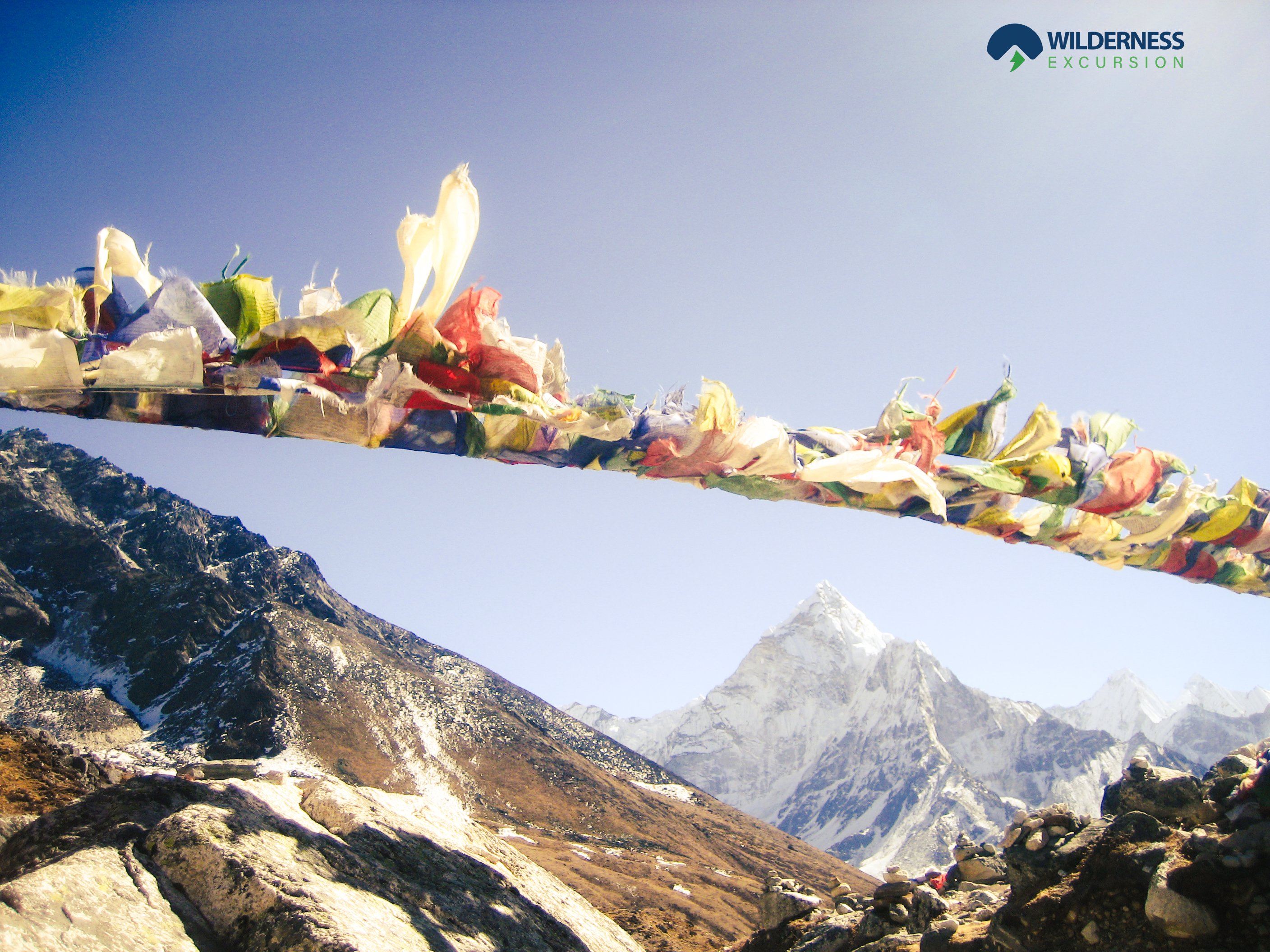
Photo: Prayer flags along the trail in Everest region – Pradip Tamang
The key difference between Death Valley and the Rainbow Valley of the North Col route is the rainbow effect from modern colorful equipment and gear scattered on the slope, which earned this specific altitude or area on the northern route its unique name.
Where is the Rainbow Valley located?
Most people already know that Rainbow Valley is somewhere in Everest, but confusion arises about which side of Everest. Since 1921, there have been multiple expeditions to Everest, and from the early summits until today, the most used route is the South Col from Nepal and the North Col from Tibet/China.
Statistically, the South Col route from Nepal is overwhelmingly the most used route after the successful summit by Sir Edmund Hillary and Tenzing Norgay Sherpa, accounting for approximately 70% to 75% of all historic and modern ascents. This led to the confusing belief that Rainbow Valley exists somewhere above 8000 meters on the southern side of Everest. But in reality, the specific term for the death zone and scene is on the Northern Col route from Tibet/China, right before the Northern Ridge.
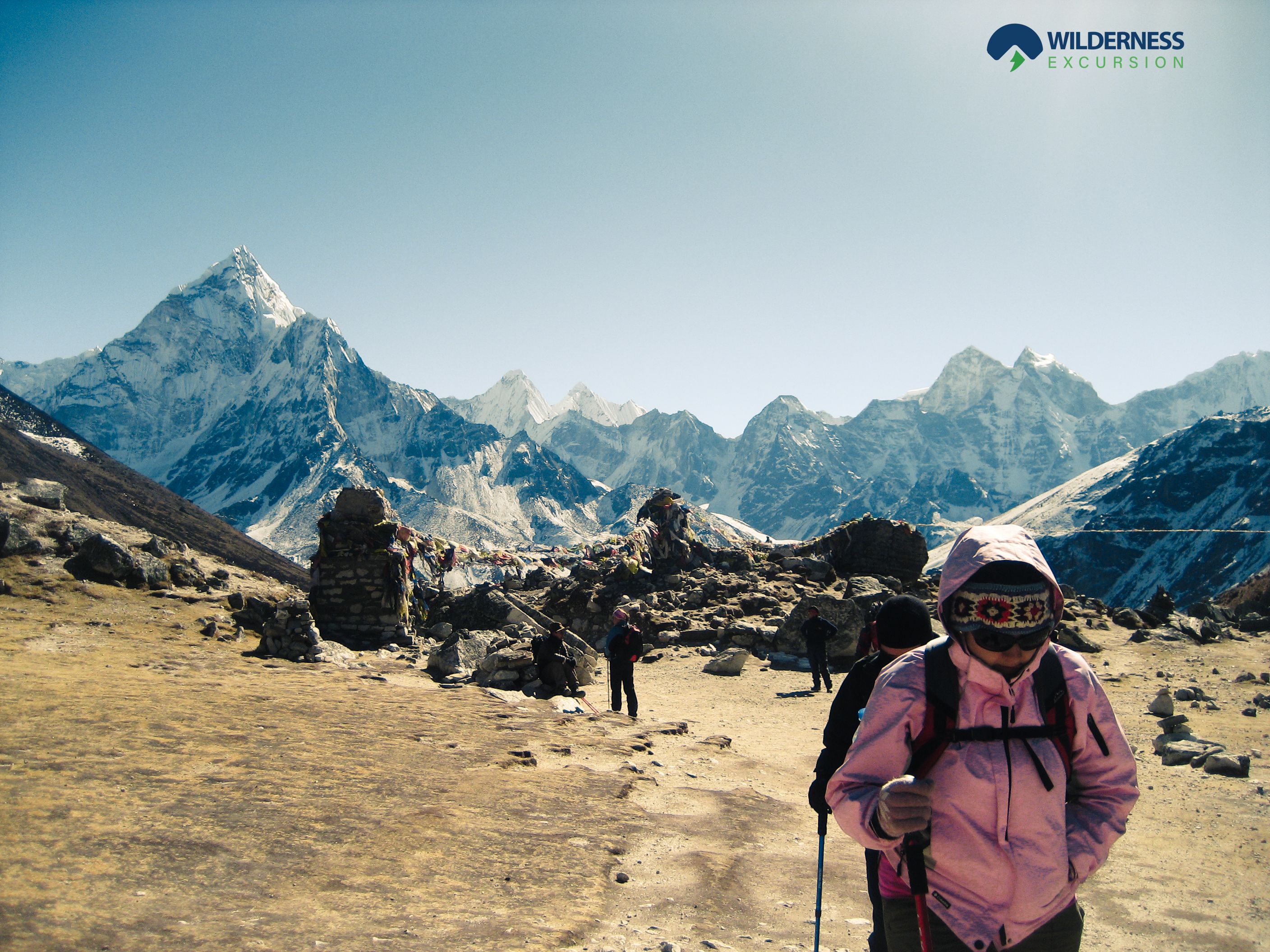
Photo: Alpine trails of Everest – Pradip Tamang
The Rainbow Valley is actually a name given to the death zone on the Northern side of Everest, above 8500 meters till summit; everything is death zone, where the air pressure is 1/3 of sea level, and the normal human body ceases to function. Due to technical difficulty and the final three steps of the Northern Route, the difficulty and risk are significantly higher on the northern side, where the fatality rate is up to 2.8% due to its brutal Siberian winds and colder, exposed ridges before the second step.
The rainbow valley starts from the first step above 8500 meters after Camp 3 and extends up to the summit, where the first step is a chaotic boulder field of massive, unstable limestone rocks and cliffs; it is also famous for being the location of a well-known landmark, “Green Boots”. The second step is a 90ft bare vertical rock wall, and the final step is the steep rock buttress located just below the summit. Along this route are the eye-catching dead bodies of colorful gear, down jackets, and equipment like tents, supplemental oxygen, etc.
What happens above 8000 meters in the death zone?
Everyone basically knows that the higher you climb, the lower the air pressure, and your body has to adapt to the changing environment; if it can’t, you get altitude sickness, which can be fatal in the most serious cases. But altitude sickness varies from person to person; a well-adapting body may not face the same serious situation as another body that has a hard time adjusting. But this remains factual only up to a certain altitude.
So, what actually happens at altitudes above 8000 meters, which is labeled as a danger zone or the death zone?
See, above 8000 meters, the boundary that defines the “Death Zone” on Everest, including other 13 peaks that cross it, the human body stops adapting past it and starts dying, just slowly enough that people can still function for a limited time. That is why you’re required to carry supplemental oxygen and use as little as possible.
The core problem: Barometric pressure, not just thin air
“At high altitude, the air pressure changes drastically, and there is less oxygen or other molecules”. Part of it is true, but not entirely.
At sea level, air is roughly 21% oxygen, and it remains the same even at the death zone and summit of Everest. The chemical composition of air remains constant, with 21% oxygen, 78% nitrogen, and 1% other gases; what changes is air pressure. At sea level, due to high air pressure, with every breath we inhale a tightly clustered pack of oxygen molecules, but at higher altitude, especially from the death zone to the summit, the air pressure is only third of sea level (33%), and so oxygen molecules are widely scattered and when we take a breath, we inhale fewer oxygen molecules, even though air itself is still technically 21% oxygen.
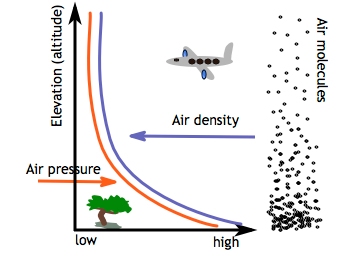
Photo: Air molecule distribution in different altitude - CMMAP
Our lungs rely on high atmospheric pressure to push oxygen through our lung membranes into the bloodstream. But in the death zone, the pressure inside the lungs is equal to the thin air outside, where our lungs can’t function efficiently, triggering hypoxia (severe oxygen deprivation) and eventually life-threatening conditions like HAPE (High Altitude Pulmonary Edema) and HACE (High Altitude Cerebral Edema).
What does Supplemental oxygen do?
The supplemental oxygen tanks do not change the outside air pressure; they artificially force a high-density, concentrated stream of pure oxygen directly into the climber's lungs. This is why climbers must use supplemental oxygen in Everest’s death zone. But of course, there have been climbers who have summited Everest without any supplemental oxygen.
The story of Francys Arsentiev, who summited Everest without supplemental oxygen but met a tragic end while descending, and her story of “Sleeping Beauty of Everest”, became a tragic story in the death zone of Everest.
Why were the bodies never recovered from the death zone?
It is much easier to say to recover the dead body than it is to do it. If recovering itself were easy, then maybe none of those tragic stories would have existed. None of those souls would have been hopelessly abandoned there.
When summiting Everest, you’re risking your life itself, where every second matters and any delay or variables can cost you and your whole team's lives. In those moments, everyone values their life more than a stranger they met in the snowy lands.
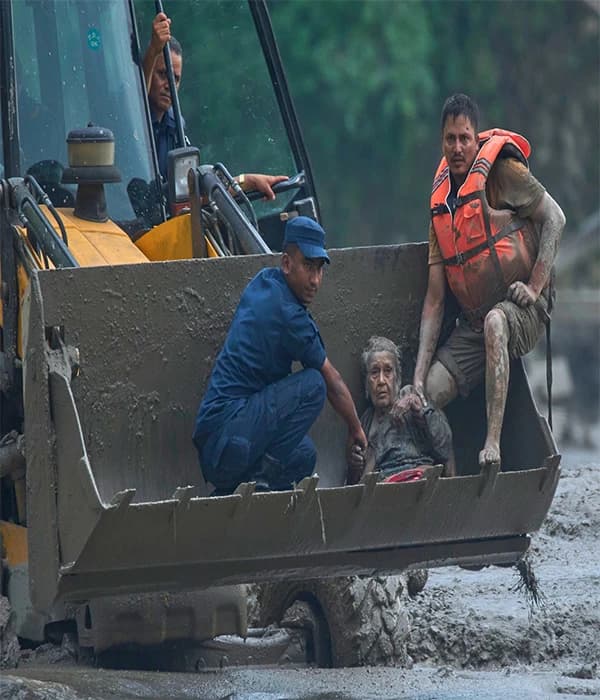
“The most recent case of a successful rescue dates back to May 2023, when a Nepali guide, Gelje Sherpa, was guiding his Chinese client to the summit when he found Ravichandran clinging to a rope near the Balcony at 8300 meters. After persuading his client to give up the summit to rescue a life, Gelje wrapped Ravichandran in a sleeping mat and carried or dragged him down 600 meters over six hours to the south col, where another guide, Nima Tashi Sherpa, joined to help him bring him to Camp 4, and a helicopter rescue was operated from Camp 3 later down to base camp. Now, this is one of the rare rescues, and the operation is really significant since it happened above 8000 meters and during the year when 12 climbers passed away.”
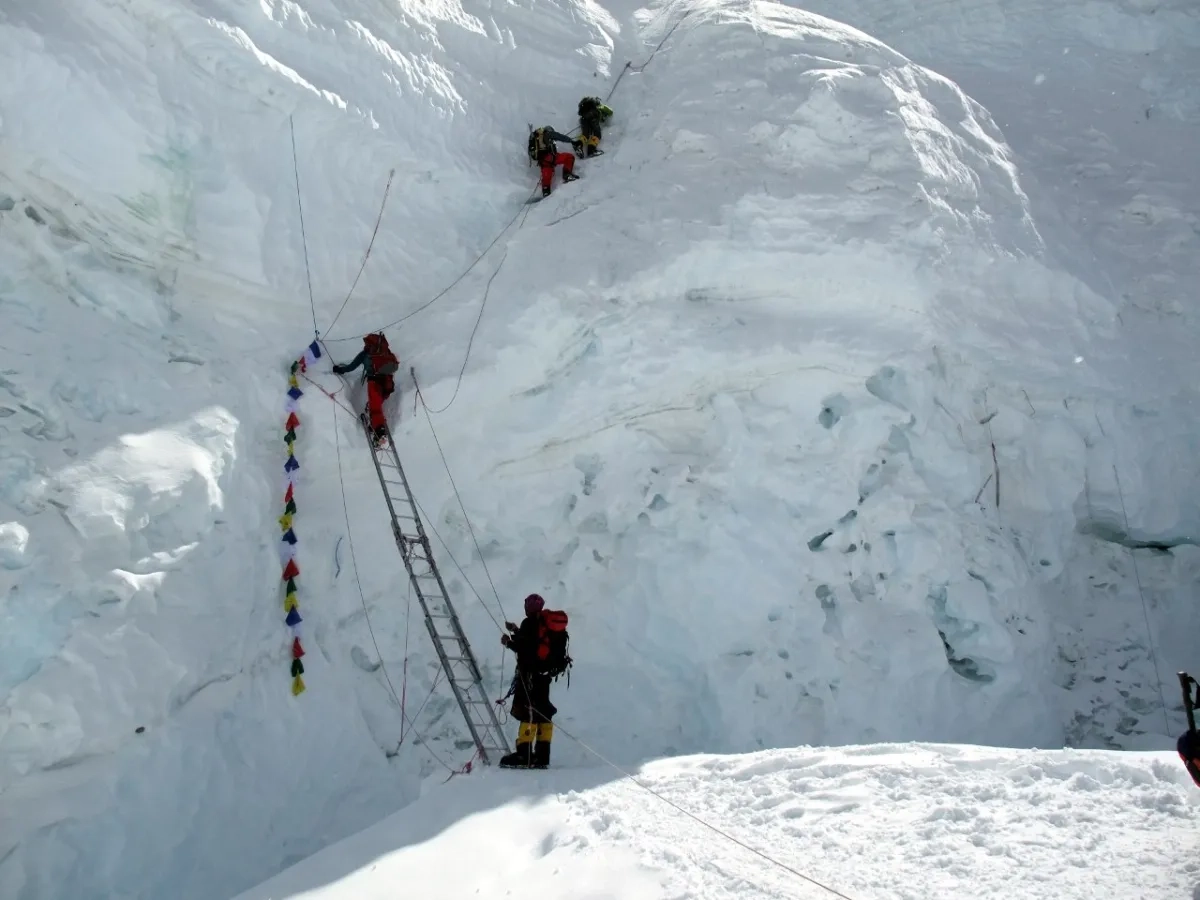
Photo: North col Everest summit - Markhorrell
Now there is a difference between rescuing a living person and retrieving a dead one. When rescuing a dead person, there are multiple checklists; for instance, the location of the deceased, the condition of the body, the cost of rescuing, and the danger to the rescue team. There are multiple processes when retrieving a body, including extracting the body from ice, loading and rigging, manpower and logistics, and cost.
In 2024, a Nepali Army-led mission required significant manpower, including specialized Sherpa teams, to conduct a cleanup campaign and body retrieval. The campaign ran for two months and successfully retrieved 11000 kg of trash and 5 bodies from base camp to camp IV (around 8000 meters). Each rescue team required roughly 4 oxygen cylinders, estimated at 400$ each. The required manpower and cost itself were high, including the life risk to rescuers themselves.
In 1984, two Nepalese climbers, Yogendra Bahadur Thapa and his guide Ang Drojee, died attempting to recover a body, reminding us that this work carries its own mortal risk and no amount of money can force someone to risk their life for a dead person. So, most families forfeit retrieving their loved ones.
Why is a helicopter retrieval operation not possible in the death zone?
Although, in a basic sense, a helicopter rescue seems to be possible since on May 14, 2005, French test pilot Didier Delsalleheld the record of landing or touching down on the 8848-meter summit of Mt.Everest, with his modified Eurocopter AS350 B3 Squirrel (lightened by removing 120kg equipment). The record was maintained after 3 minutes and 50 seconds of contact on the summit before flying back to Lukla.
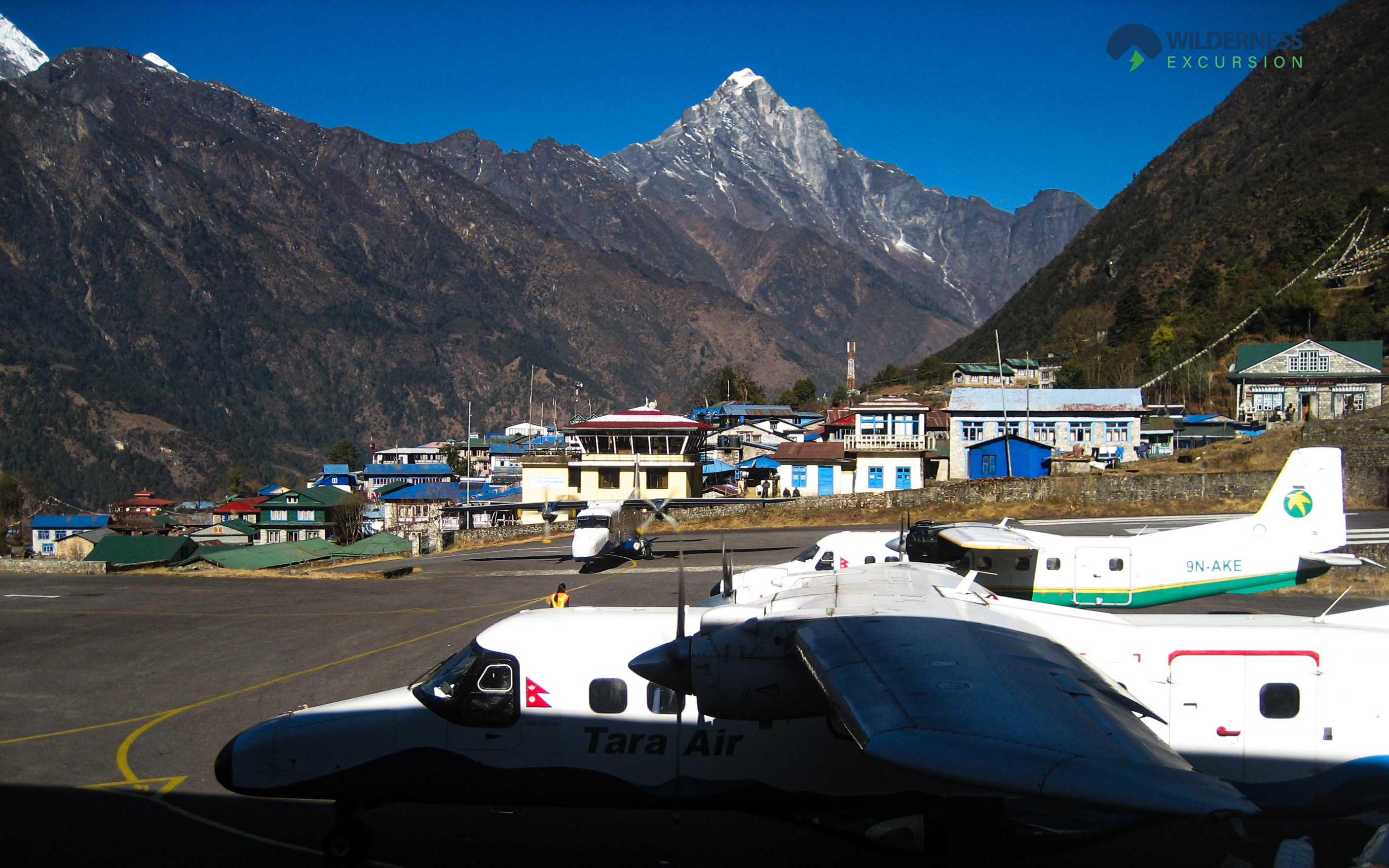
Photo: Lukla airport of Nepal – Pradip Tamang
But there is a clear distinction between setting a record with a modified helicopter and rescue-led helicopters. Flying above 8000 meters, the helicopter is already at its utmost limit, since helicopter rotors generate lift by pushing against air, and fewer air molecules mean drastically less lift for the same rotor speed. And flying straight is different than hovering or holding a stationary position to pick someone up, which demands far more power. At extreme altitude, every kilogram counts against the aircraft’s already marginal lift capacity, which is why near or in the death zone; it has to be man-hauled down to a lower camp first.
Price From
US$1299
US$1430
The most searched trek in the world!
Price From
US$1649
US$1815
Ultimate Everest Circuit Trekking